DR TARIQ MUSTAFA
SPACE SCIENTIST · NUCLEAR SPECIALIST  . FEDERAL SECRETARY · DIPLOMAT

The Searcher

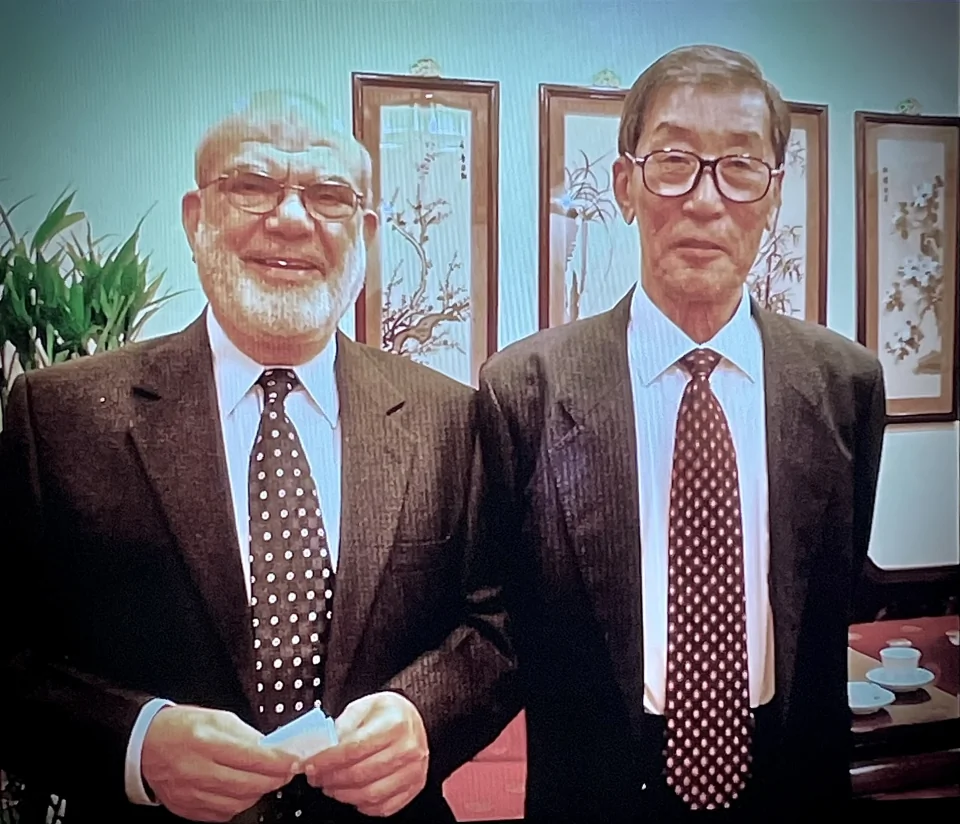
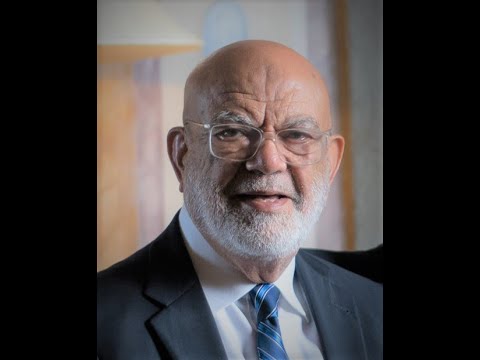
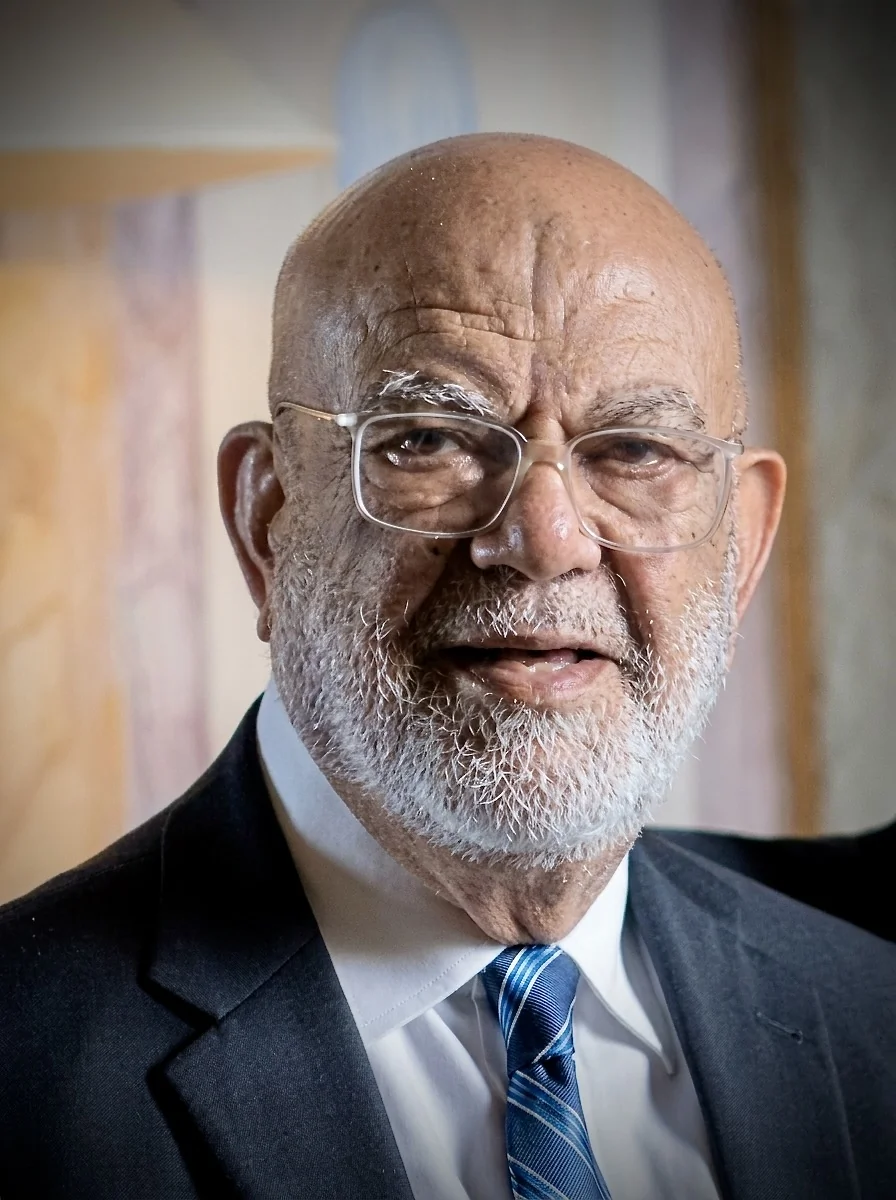
Dr Tariq Mustafa is a Pakistani engineer, scientist and former senior civil servant. He led the team that launched Rehbar-I in 1962, Pakistan’s first rocket into space, and later served as Federal Secretary in five ministries and as a diplomat in Washington. As President of the National Paralympic Committee of Pakistan and Vice-President of the Asian Paralympic Committee, he championed sport for people with disabilities. Since retiring in 1994 he has devoted himself to the dialogue between science and religion, as an author, speaker and member of the Governing Council of the Institute on Religion in an Age of Science. His book The Case for God and his 2008 paper in Zygon argue that authentic revelation can be tested by reason and evidence. Through the Future of Humankind project he now calls on universalist thinkers and world leaders to build one world, grounded in a shared Creator, a shared origin and a shared accountability.

Dr Tariq Mustafa
Pioneer of Pakistan's space programmeChosen by Abdus Salam, 1961
Former Federal Secretary, PakistanDefence Production, Science & Technology, and more
Author, The Case for GodReason and revelation — not blind faith
MOST PEOPLEPick a side: science or faith.
THE SEARCHERFollows reason and revelation.

Four chapters of a life

A life, at a glance

FULL TIMELINE →
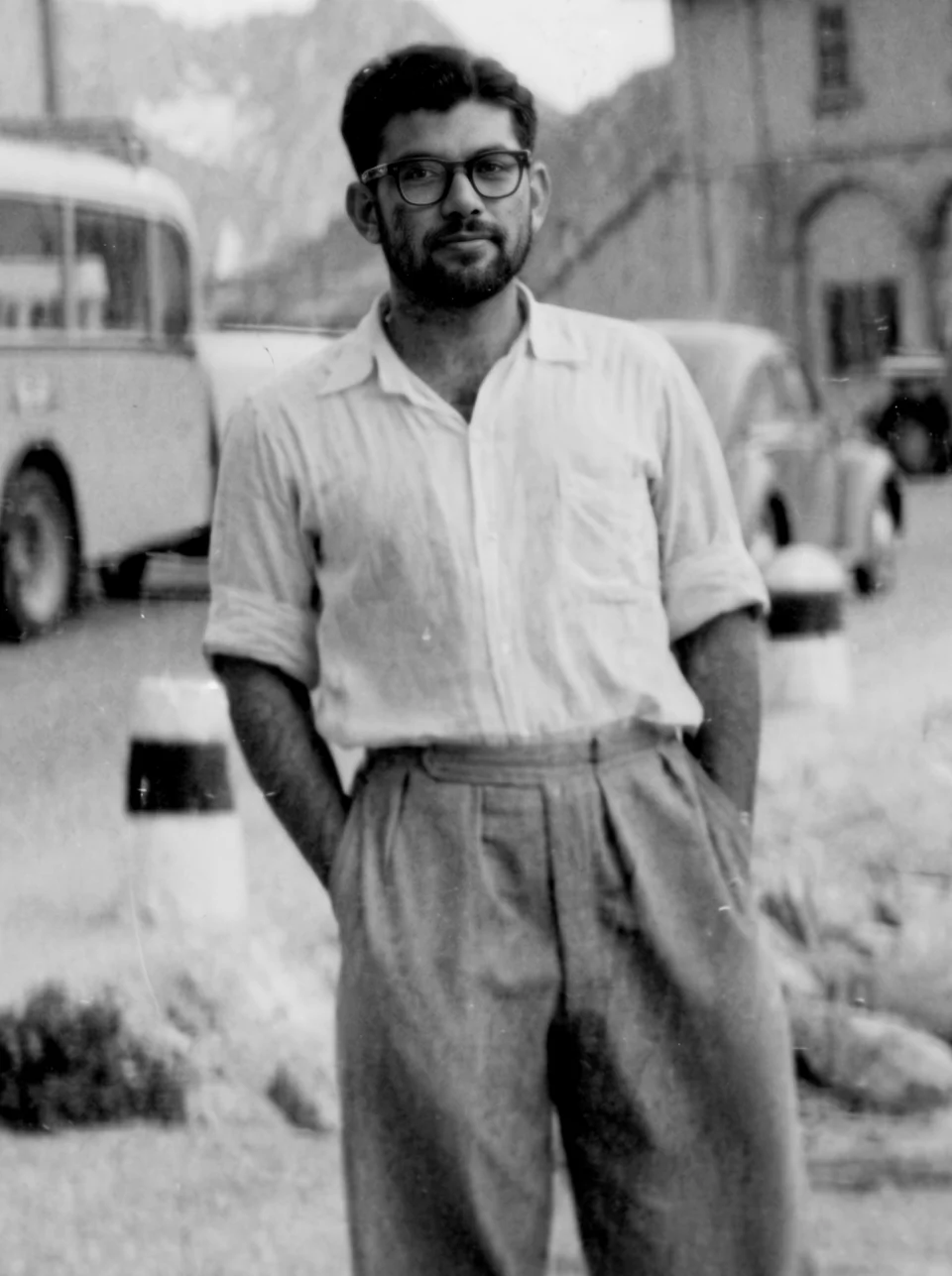
1934Born in Lyallpur (Faisalabad)
1961Salam asks him to lead Pakistan into space
1962Rehbar-I launched from Sonmiani, 7 June
1985–88Federal Secretary, Defence Production
2013Honorary D.Sc., University of Greenwich
NowThe Case for God
RESOURCES

Videos & interviews

No videos tagged for this area yet.
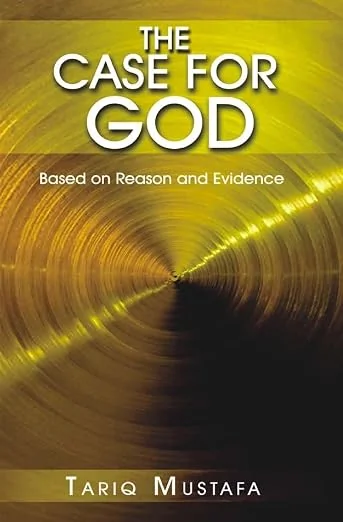
The Case for God: Based on Reason and Evidence — book cover
THE BOOK

The Case for God

Reason and revelation — not blind faith.

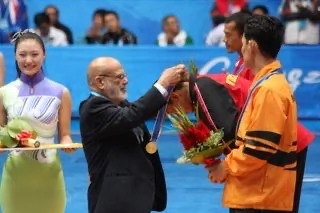
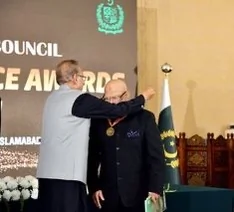
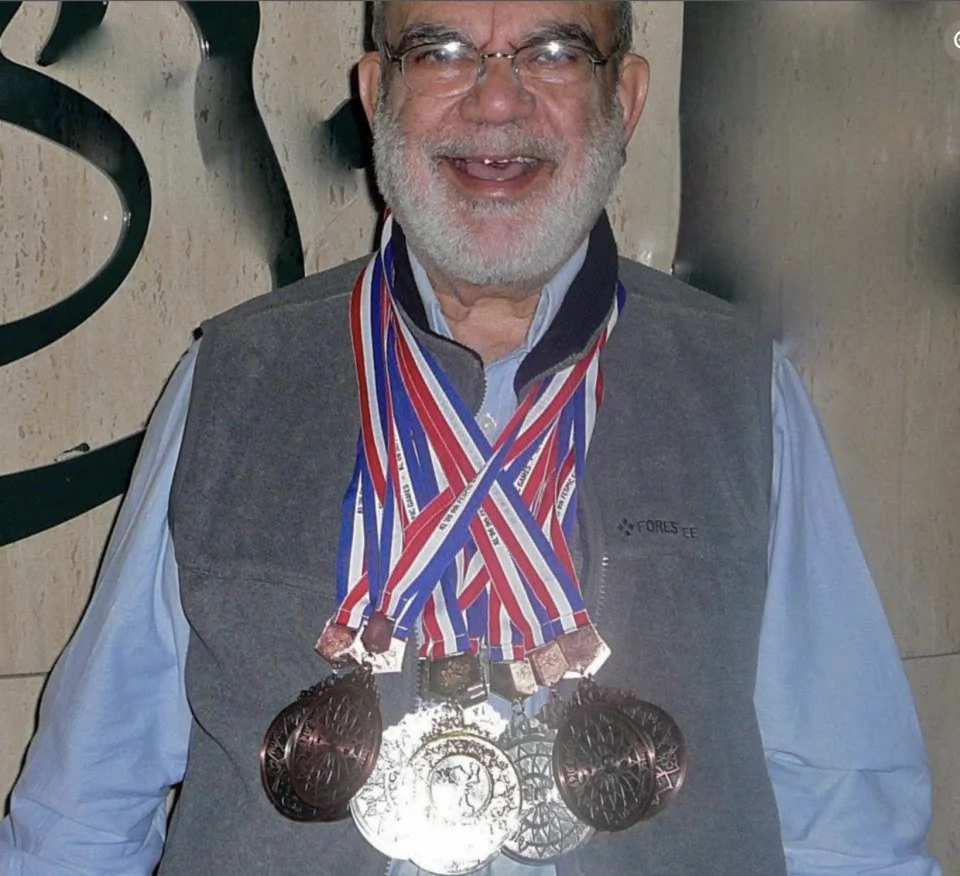
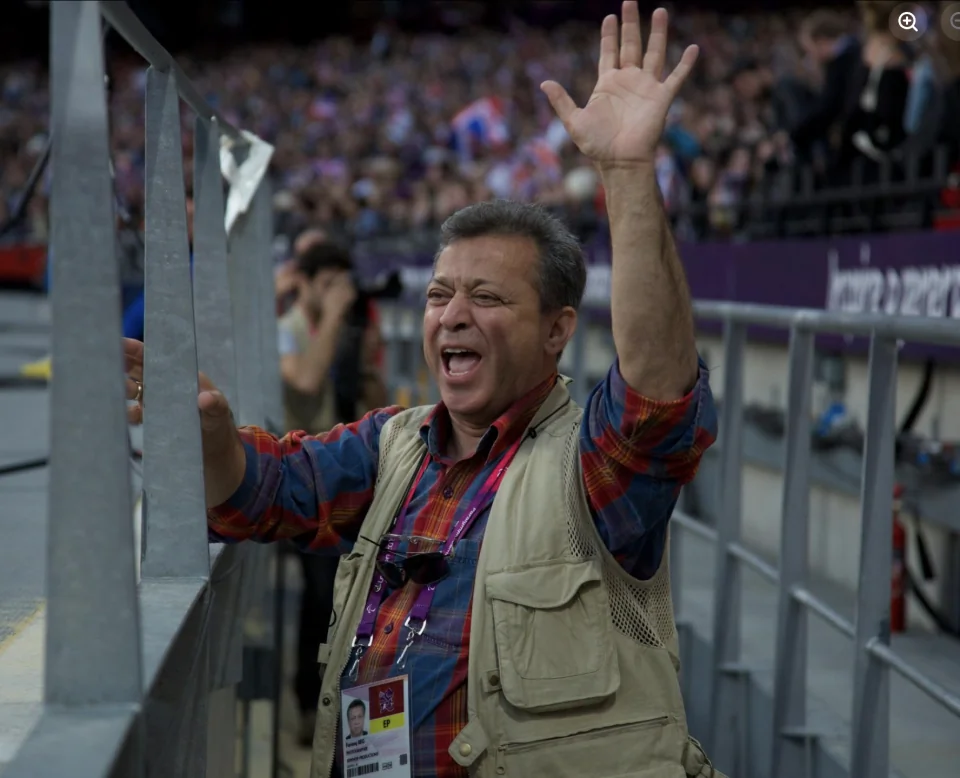
Dr Tariq Mustafa awarding a medal at a Paralympic ceremony
ALSO IN SERVICEPresident, National Paralympic Committee of PakistanFounder of Pakistan's Paralympic movement
LEARN MORE →
JOIN THE SEARCH
Connect if interested in attending further talks and sessions
Thank you — the next letter will reach you soon.
DR TARIQ MUSTAFA
LIFE · TIMELINE
A life of searching
1934 — present
Technologist, turned senior government official, turned diplomat — and all along, a searcher. Five ministries, four countries, over fifty nations visited.
ERA 01 · LIFEEarly years1934 – 1957 · Lyallpur → Lahore → London
Young Tariq Mustafa
Roots
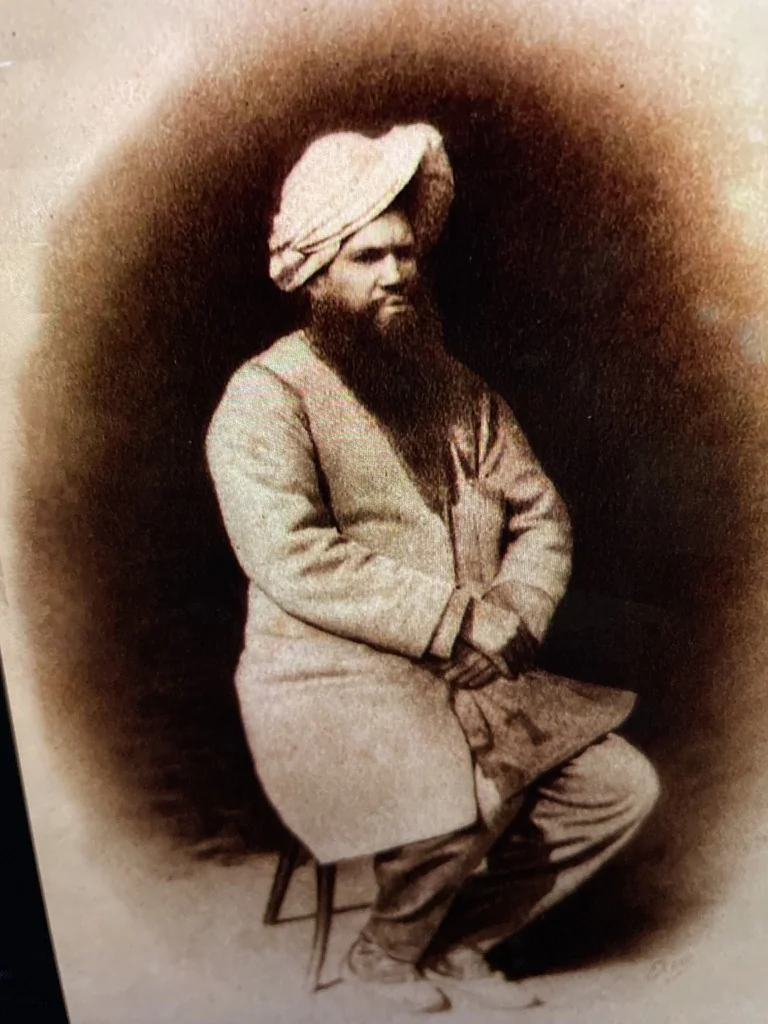
Munshi Fateh Din, paternal grandfather of Tariq Mustafa
Munshi Fateh DinPaternal grandfather — a pioneer settler of the new Lyallpur canal colony, invited by Lyall himself, who became its largest landowner. His village was known as the “Chawwi Chak (Chak #224 Rakh branch) of Munshi Fateh Din”.↓ READ: MUNSHI FATEH DIN — SOME GLIMPSES (PDF)
1934Born in Lyallpur (now Faisalabad); the family had come from Jalandhar.
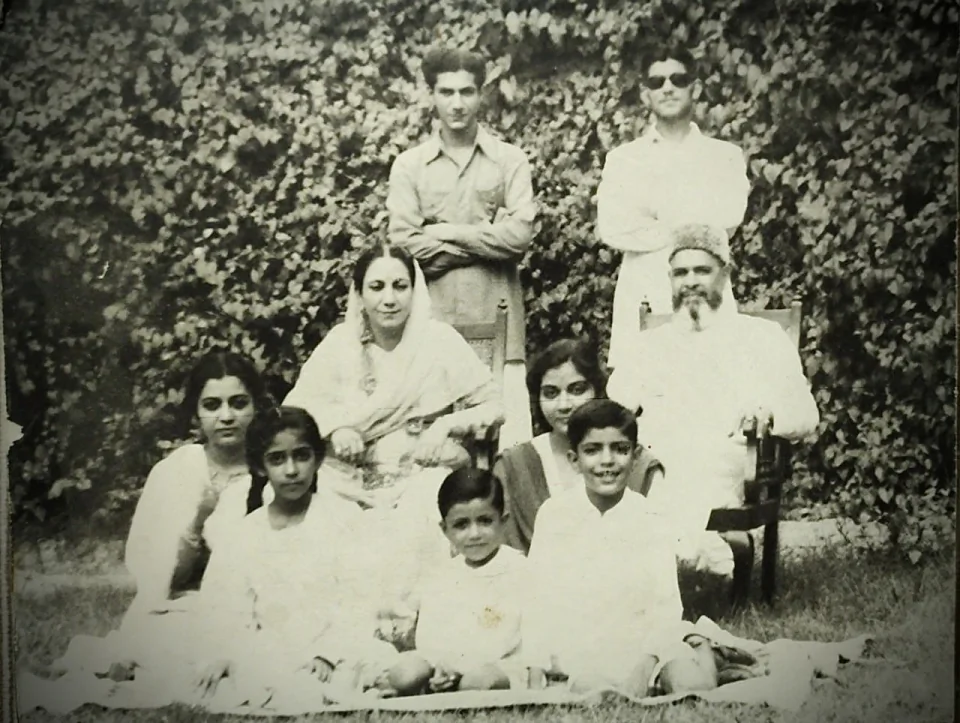
Tariq Mustafa as a child with his parents and siblings
With his parents Mian Mohammad Nurullah, Amtul Qadeer and siblings
HIS
PARENTS
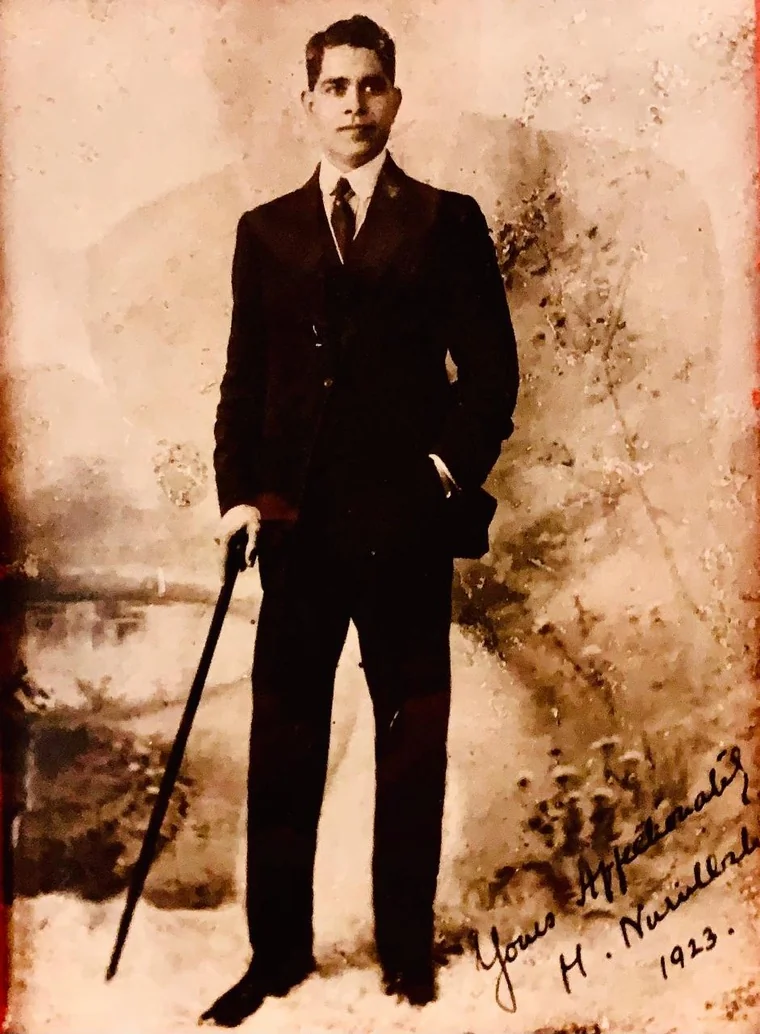
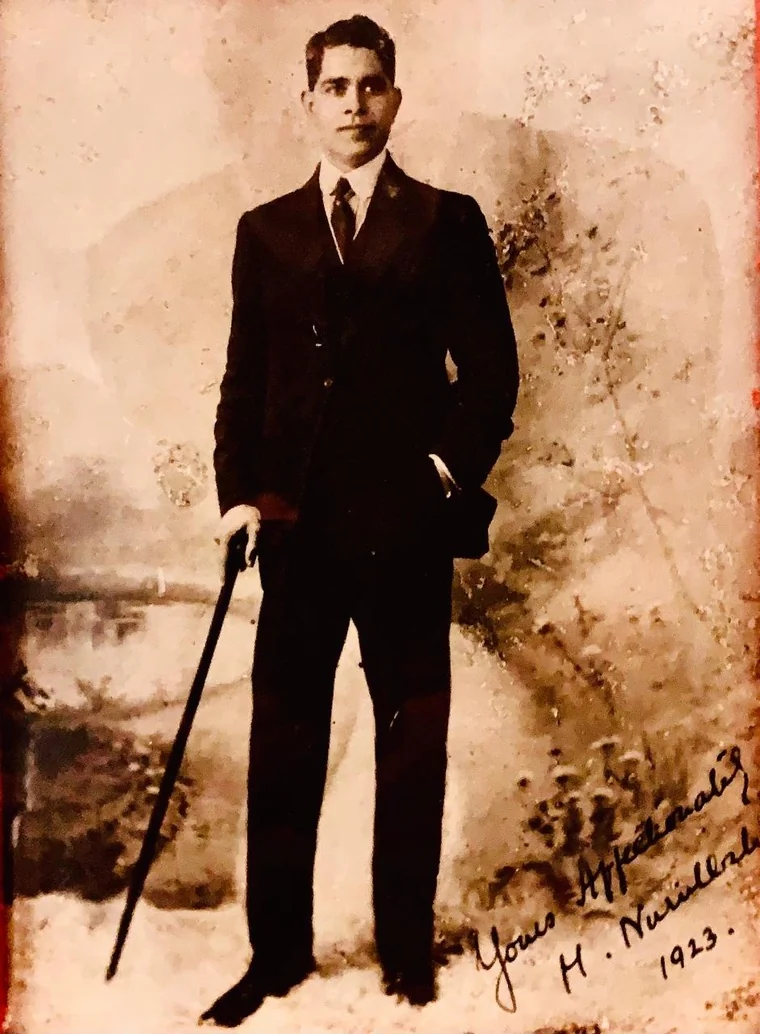
Young Mian Muhammad Nurullah in a suit with a cane, signed 1923
Mian Muhammad Nurullah, signed 1923
Mian Muhammad Nurullah on formation of Pakistan
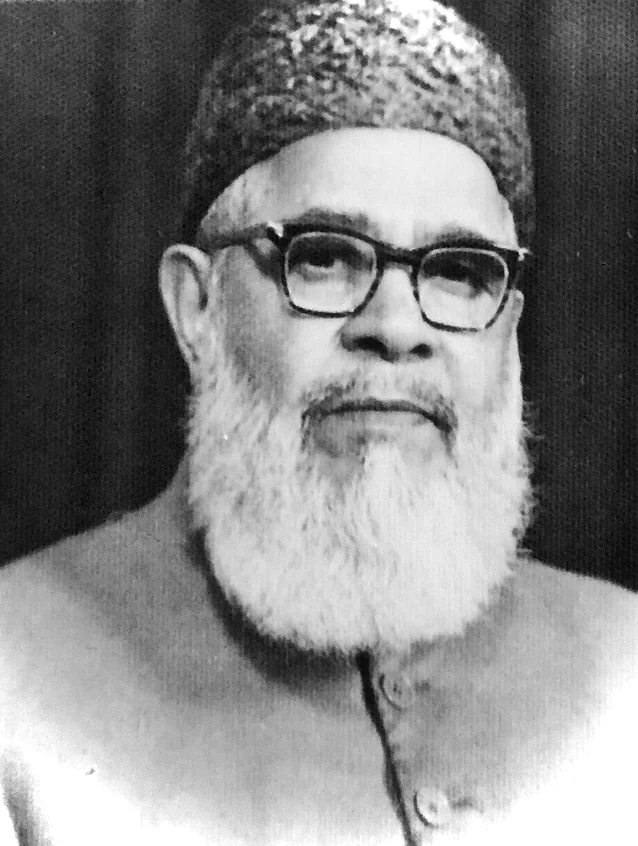
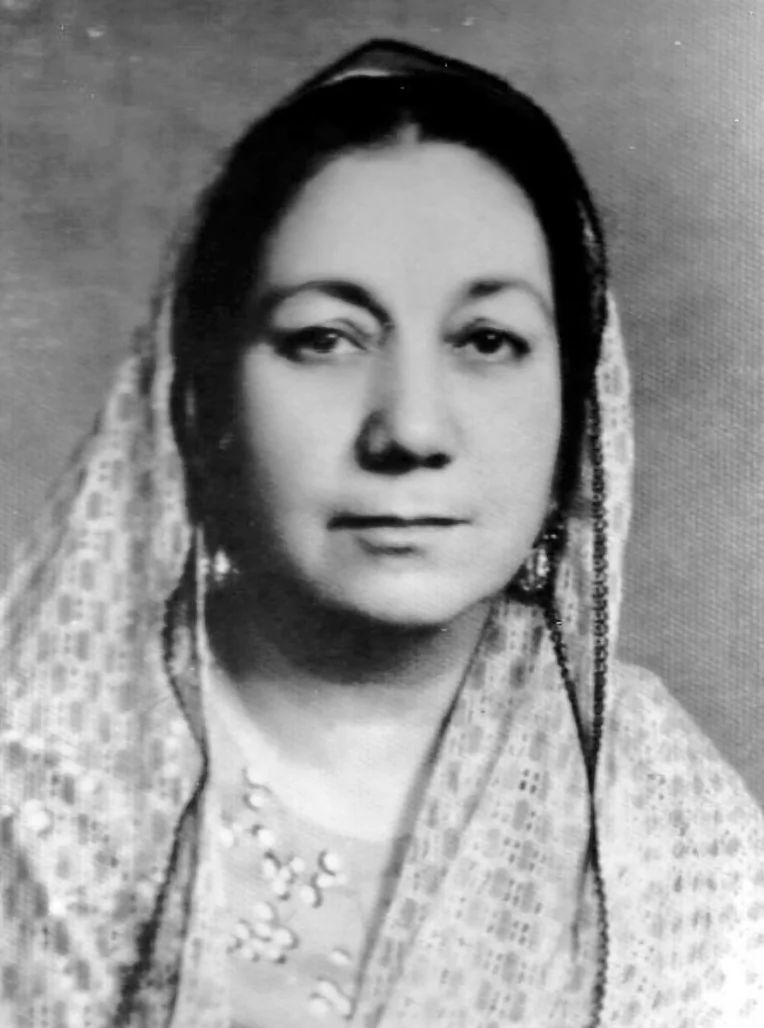
Amtul Qadeer, his mother
Mian Muhammad Nurullah, his fatherThe youngest of Munshi Fateh Din’s five children, he lost his father at about ten and was raised by his mother and siblings. He went to Vienna for an operation on his knee, then on to London, where he graduated from the London School of Economics. Back in Lyallpur he entered politics, and represented Lyallpur and Toba Tek Singh in the Punjab Assembly from 1929 to 1951. He was a prominent figure in the Pakistan Movement alongside his brother Hafiz Mohammad Abdullah, and served as Finance Minister in the Mamdot cabinet. Disillusioned with politics after Partition, he turned from the “vilayati sahib” in tail coat and top hat to a devoted Tablighi, and in the early 1950s travelled with the first ever Tablighi Jamaat to visit the United States.
Amtul Qadeer, his motherShe came from The Lohari Mandi in Lahore's old city and she was a home maker (Gulistan Bostan background) and very proud of her Islamic heritage. She was the one who named Tariq after The General Tariq bin Ziyad of Spain after naming her first son Khalid after Khalid bin Waleed.
1935First prize, Lahore Baby Show (2 year old category).
1940s
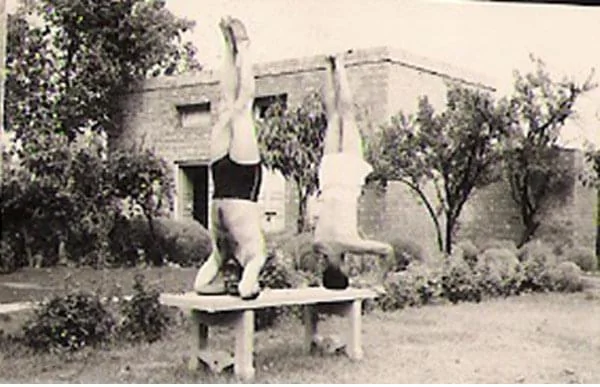
Tariq Mustafa and his brother Farooq practising headstands on a bench
Practising headstands with his brother Farooq Umar (AVM Farooq Umar)Read the novels of Pakistani author Naseem Hijazi — Khak aur Khoon, Shaheen and Tabeer — that inspired him deeply, awakening his awareness of the contributions of early Muslims in the service of science.
1949Matriculation — wins one of 30 Government scholarships from about 30,000 candidates. Captains Central Model School hockey.
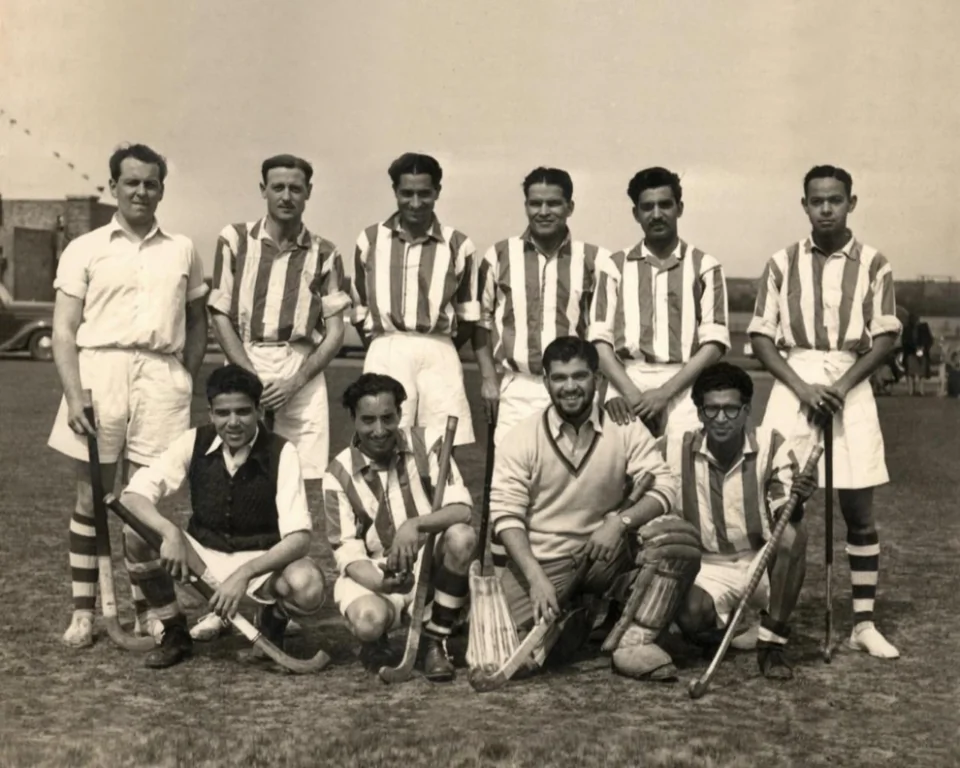
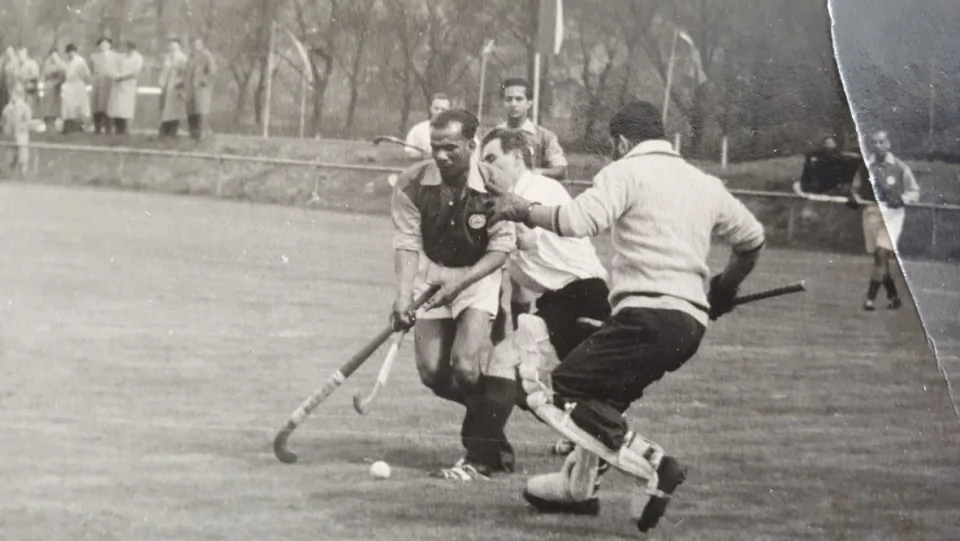
1949Government College Lahore. Goalkeeper for the College, Punjab University XI and Punjab Whites — at just 15.
Hockey team photo with Tariq Mustafa as goalkeeper, kneeling front centre in pads
Goalkeeper, Government College Lahore — front row, in pads
1951FSc, first division, University scholarship. "Amongst the top ranks of both our sportsmen and our scholars." — Principal Kazi Aslam
1952–57Five-year engineering apprenticeship at the Royal Arsenal, Woolwich, on a Pakistan Ordnance Factories scholarship — alongside a First Class Honours degree in Mechanical Engineering from London University. Best Apprentice of the Year 1953, 1954, 1955. Played hockey across Europe for the Pakistan High Commission team and participated in International hockey festival in Ramsgate in Kent, UK 1953, Knocke-Le-Zoute  Belgium 1954 and Germany in 1955.
1954
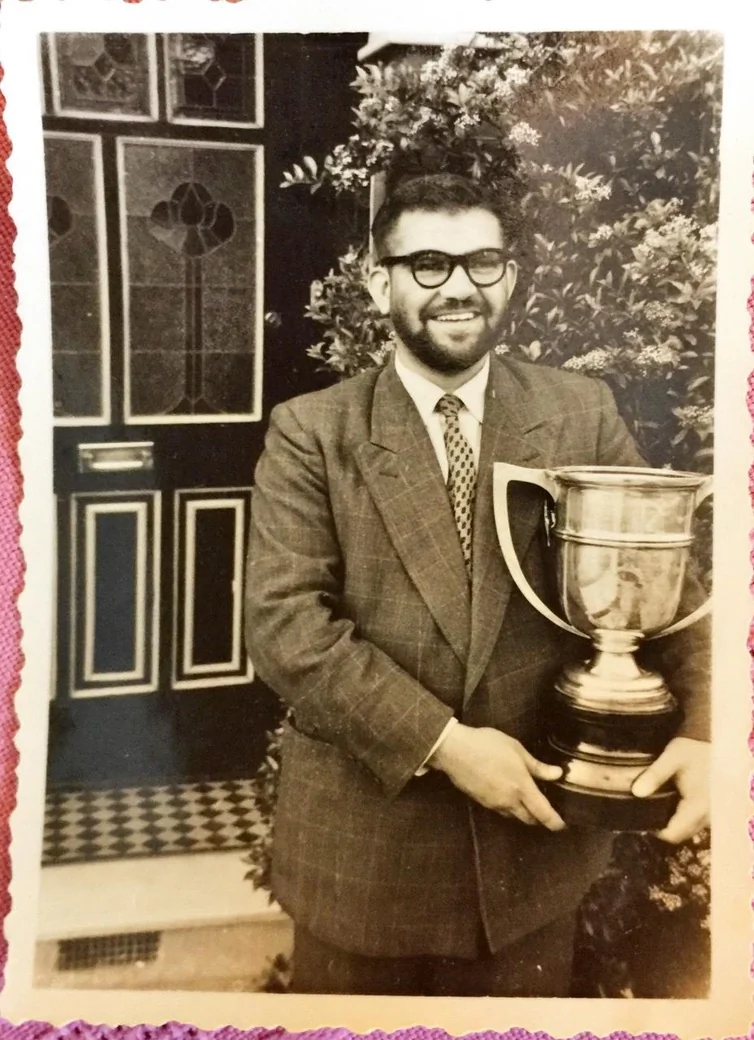
Tariq Mustafa with the billiards championship trophy, Woolwich Polytechnic, 1954
Billiards championWon the billiards championship trophy · Woolwich Polytechnic, 1954
Gathering at a London mosque, England, 1950s
England, 1950s — London mosque
1956B.Sc Mechanical Engineering, London University — First Class Honours, unprecedented for an Arsenal apprentice. Higher National Diploma with Distinction.
FROM THE ARCHIVE
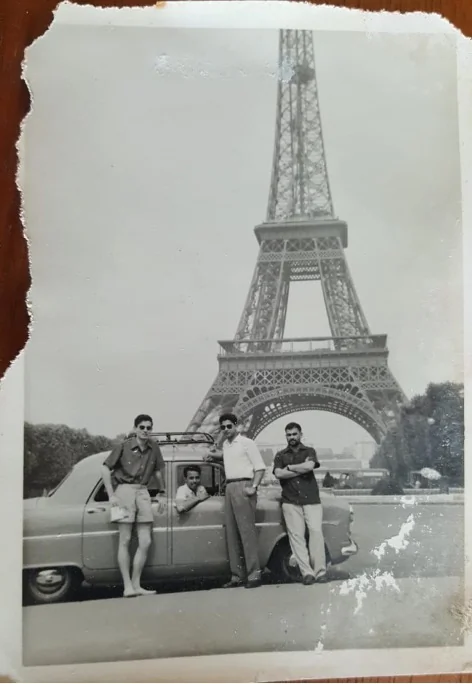
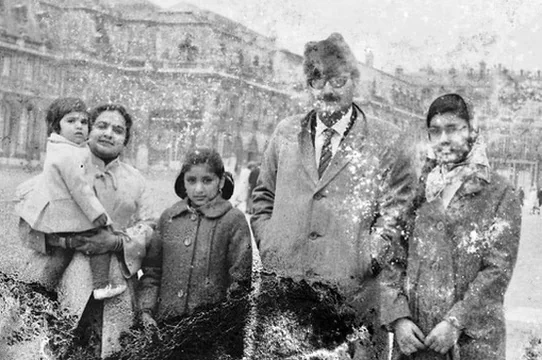
In Paris, 1950s
In Paris, 1950s
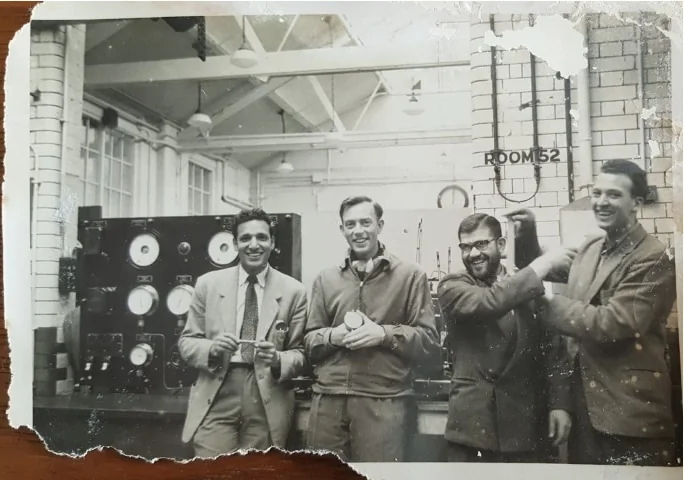
At Woolwich Arsenal, UK
Playing hockey. Tariq is the goalkeeper, seen from behind
ERA 02 · LIFE · PROFESSIONALThe atomic years1957 – 1961 · Harwell · Calder Hall · Oak Ridge
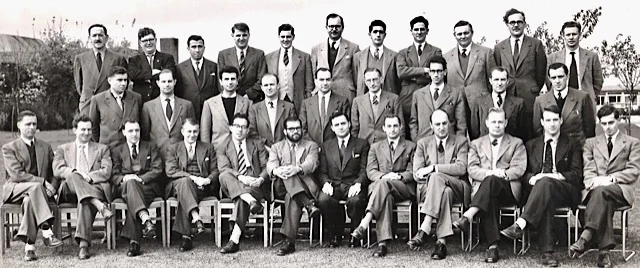
Reactor technology course group, UKAEA Harwell
Reactor technology course, UKAEA Harwell, 1957
1957Interviewed in London by Prof. Abdus Salam, Prof. Hill of Imperial College and High Commissioner Ikramullah — of 17 candidates, the only one selected for the new Atomic Energy Commission. Joins PAEC in September; Reactor School, UKAEA Harwell (Sept–Dec).
1958Attended the International Power Reactor Course, Calder Hall (Feb–Mar). Back in Karachi as Scientific Officer, then Senior Scientific Officer, at PAEC HQ and the West Wharf Lab.
1960–61Fellowship at Oak Ridge National Laboratory, Tennessee, under Eisenhower's Atoms for Peace programme — specializing in reactor shielding design (Jan 1960 – Sept 1961). Helps AMF Atomics optimise the design of Pakistan Institute of Nuclear Science & Technology- PINSTECH laboratories.
ERA 03 · ROCKETRYFather of Pakistan's space programme1961 – 1974 · Wallops Island · Sonmiani · Paris
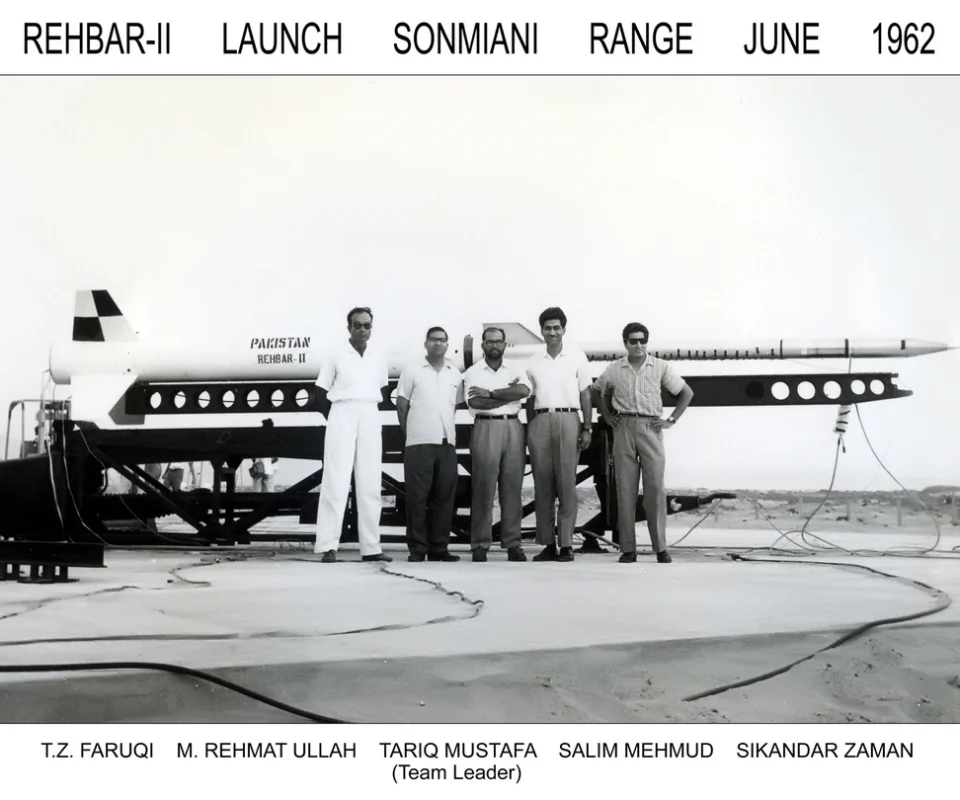
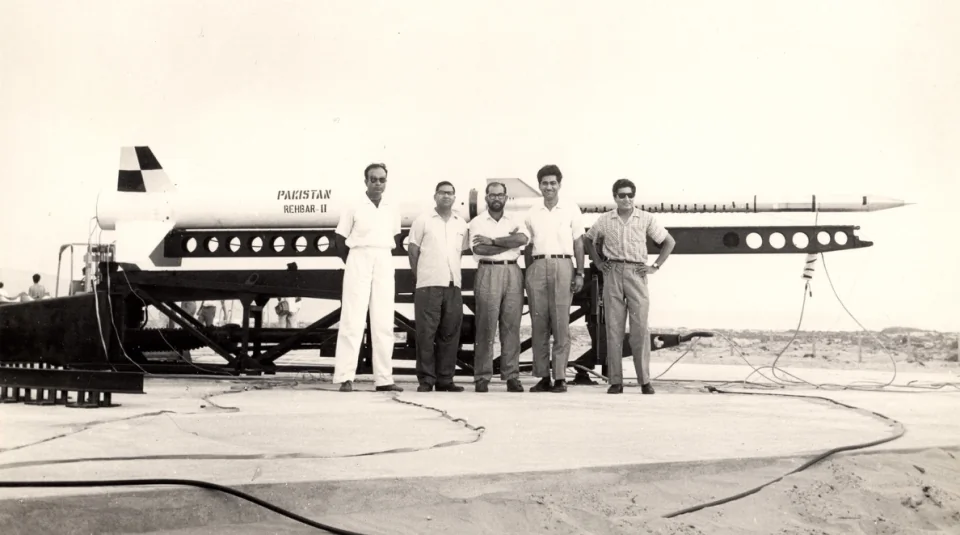
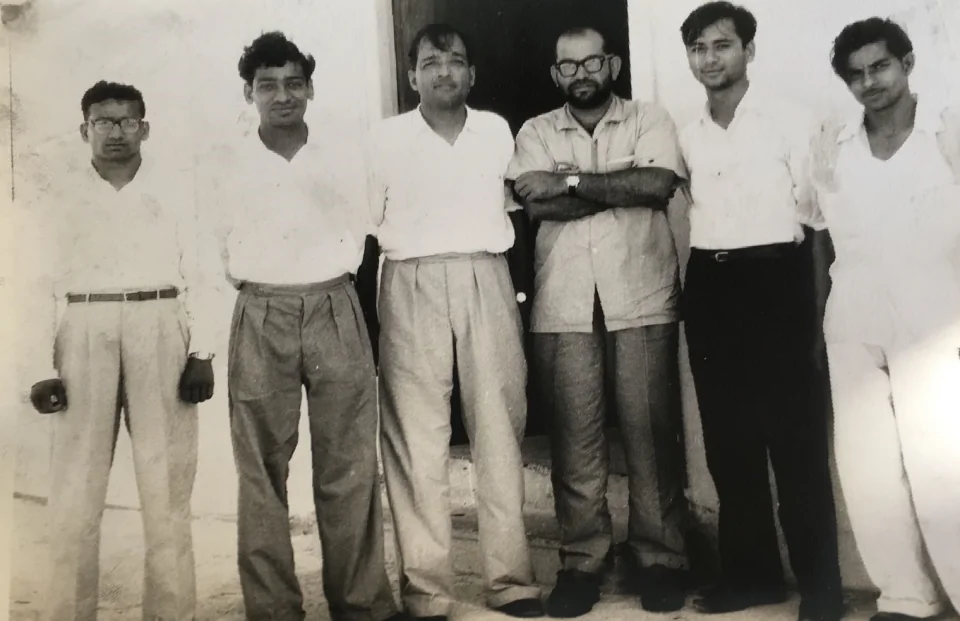
Rehbar-II team, Sonmiani, June 1962
Rehbar-II, Sonmiani Range, June 1962 — Tariq Mustafa (centre), team leader
Jul 1961Picked by Prof. Salam and Dr Usmani to lead Pakistan's effort, with NASA support, to build a rocket range. Trains in range operations at NASA Wallops Island, Virginia.
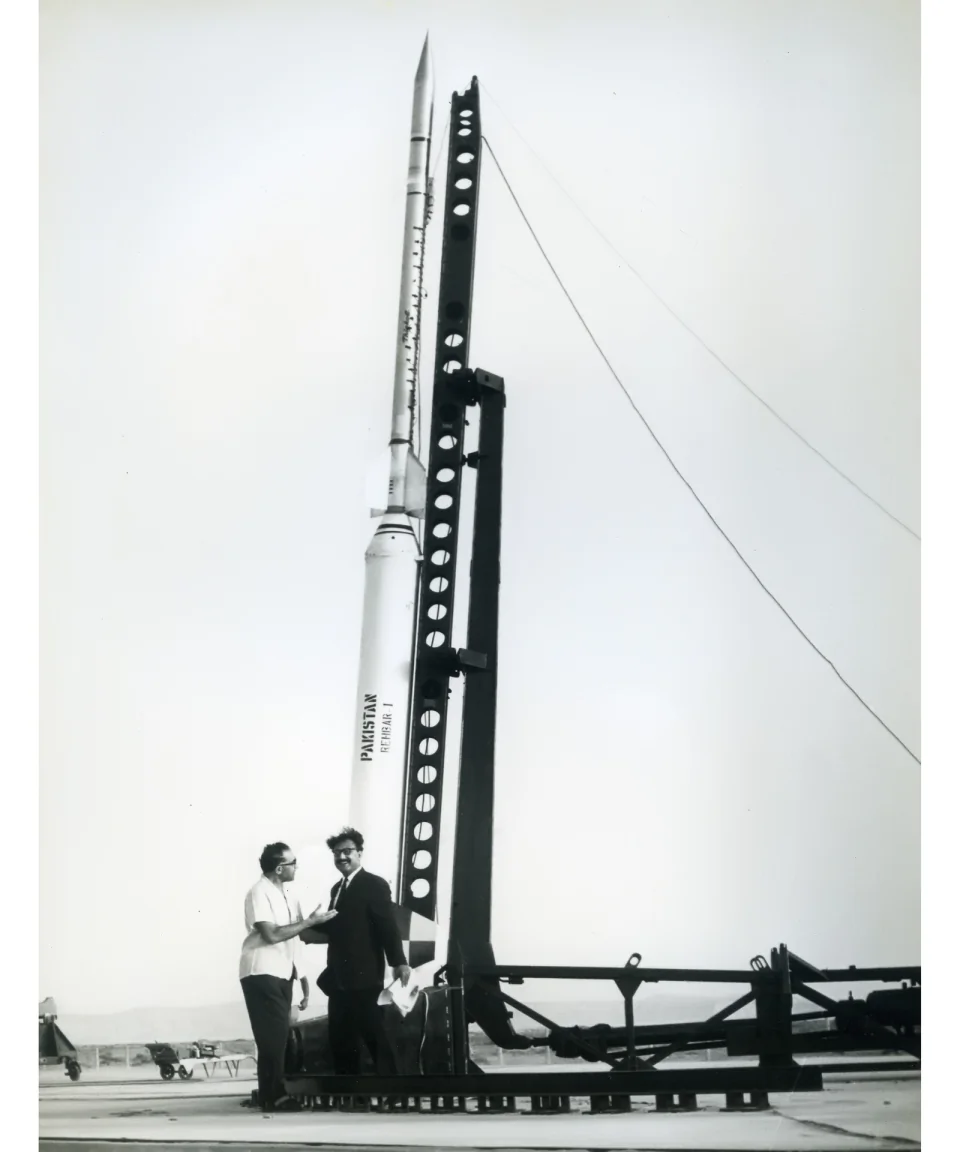
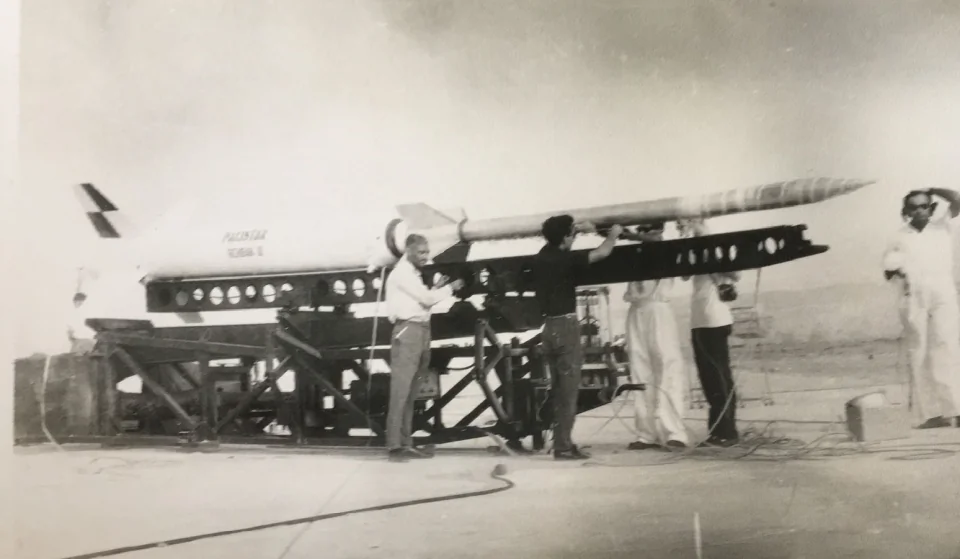
7 Jun 1962Rehbar-I launched from Sonmiani, Balochistan coast, Pakistan— the first scientific rocket of the developing and Muslim world. Rehbar-II follows two days later. To carry out the study of the upper atmospheric winds over the Indian ocean
1962Awarded the Tamgha-e-Imtiaz from the President — the first scientist, technologist and the youngest recipient of such an award at the time in Pakistan.
1962Awarded the Pakistan Atomic Energy Commission- PAEC gold medal.
1962Tariq Mustafa invited to give the first talk on nuclear weapons (The design, effects and protection against Atomic weapons) in Pakistan's defence circles, at the Army Staff College, Quetta. He was invited to repeat the same talk at the army Division stationed at Sialkot commanded by Maj Gen Fazle Muqeem who later became the secretary of Defence under Bhutto.
1962
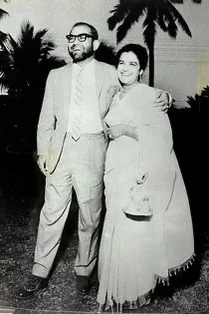
Tariq Mustafa with his wife Akhtar Tariq
Marries Akhtar Tariq2 December 1962An unusual match — chosen as much by his mother-in-law as by his bride, mother and daughter being unusually close friends. Together they had eight children, including a daughter with Down Syndrome who brought the family unusually great joy and became its centre.
1963Promoted Principal Engineer; appointed PAEC's first Director of Karachi Nuclear Powers Plant- KANUPP, finalising its design with Canadian General Electric during a freezing winter in Peterborough, Canada.
1963–64Repeatedly visited France and Japan for building SUPARCO's plants and propellants manufacturing plants in Mauripur, Karachi. With Salam and Usmani in Japan and France; signs technology contracts with Aérospatiale, Service des Poudres and ENSA for SUPARCO's rocket plant at Mauripur — local Dragon rockets, the Rehnuma and Shahpar series, another first.
1965–66Appointed as the leader of the SUPARCO team in Paris — technology transfer, plant design, equipment and training. Visits Europe's defence makers — Thomson-CSF, Aérospatiale, Matra, Bölkow, Oerlikon, Selenia, Elettronica, Contraves etc.
1966–74Project leader for the Mauripur plant and Sonmiani range (1966–69), then Director Technology, SUPARCO (1969–73).
ERA 04 · DEFENCEThe moderniser of defence1971 – 1988 · Karachi · Islamabad · Washington
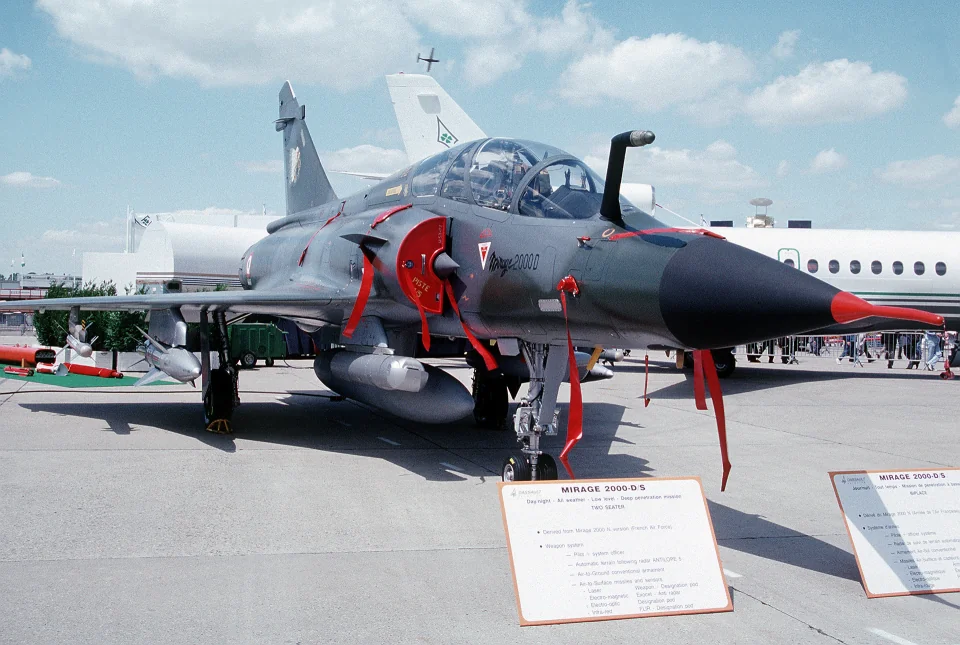
Dassault Mirage 2000 on display at the Paris Air Show, 1991
Dassault Mirage 2000 · Paris Air Show, 1991
1967–69Oversees the establishment of a Space Centre near Karachi University, to further the study of space sciences — with a special focus on earth resources and communication satellites when he was made the Deputy Chief Executive Director - DCED- in SUPARCO
1971Advises Naval HQ in the defence of Karachi against Indian Missile boats— radar reflectors strung on fishing boats to decoy missiles, advised the navy in purchase of Selenia tracking radars at Manora and Ormara, and established the first underground command centre for the navy.
1973Honorary Commander, Pakistan Navy. Only civilian in the military delegation sent to Egypt and Syria to learn lessons from the the Ramazan war.
1974–77Joins the Defence Production Division as Joint Secretary, on deputation from SUPARCO, where he was Deputy Chief Executive Director (DCED); leads Crotale missile negotiations with France. Prepares 19 co-production projects with Libya (1975–77).
1977–81Additional Secretary (1977), then Additional Secretary In-charge (1979–81), Defence Production — exempted from the lateral-entry test, a unique exception. Briefs GHQ on air defence; the anti-aircraft command.
Tariq Mustafa with Prof. Abdus Salam and both families, late 1970s
With Prof. Abdus Salam and both families, late 1970s
1981–85Minister (Technology), Embassy of Pakistan, Washington DC. Patron, Islamic Center of Northern Virginia.
1985–88Federal Secretary, Defence Production — Guided the overhaul and manufacture aircraft, tanks, submarines and missile boats.
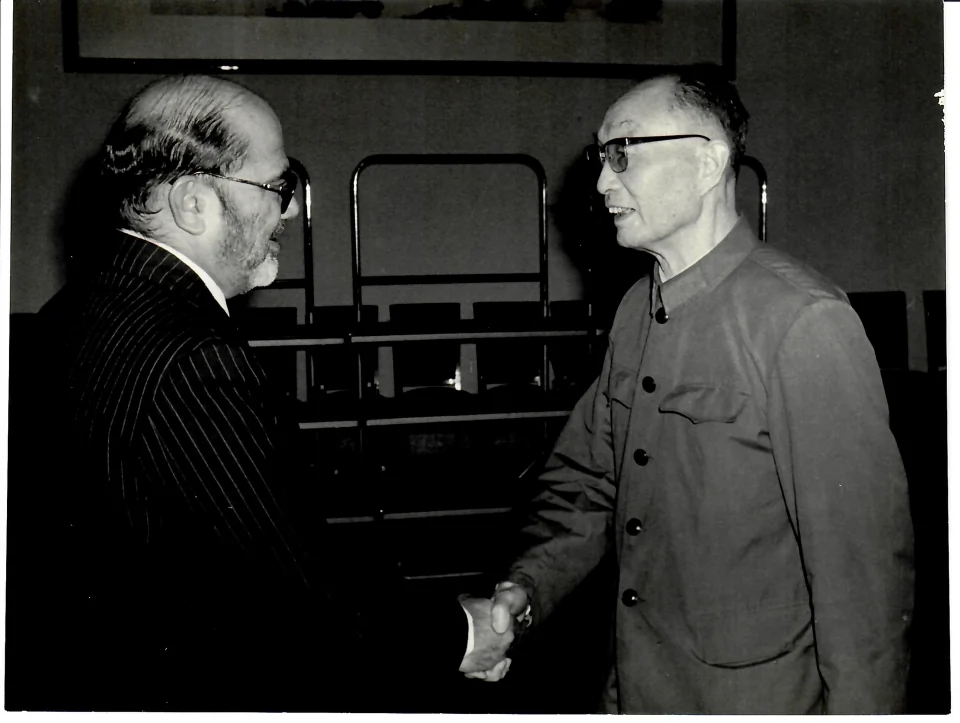
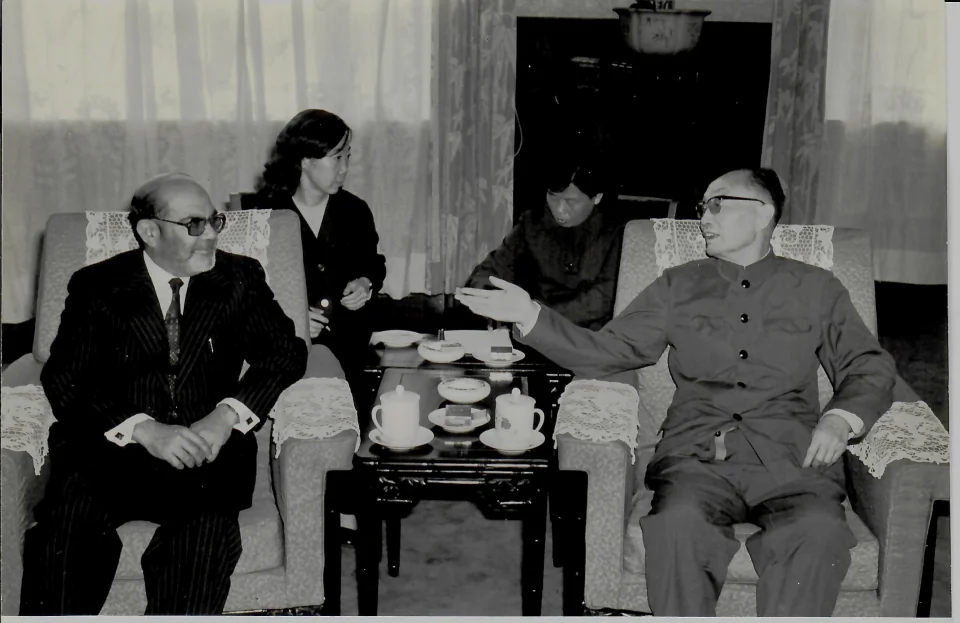
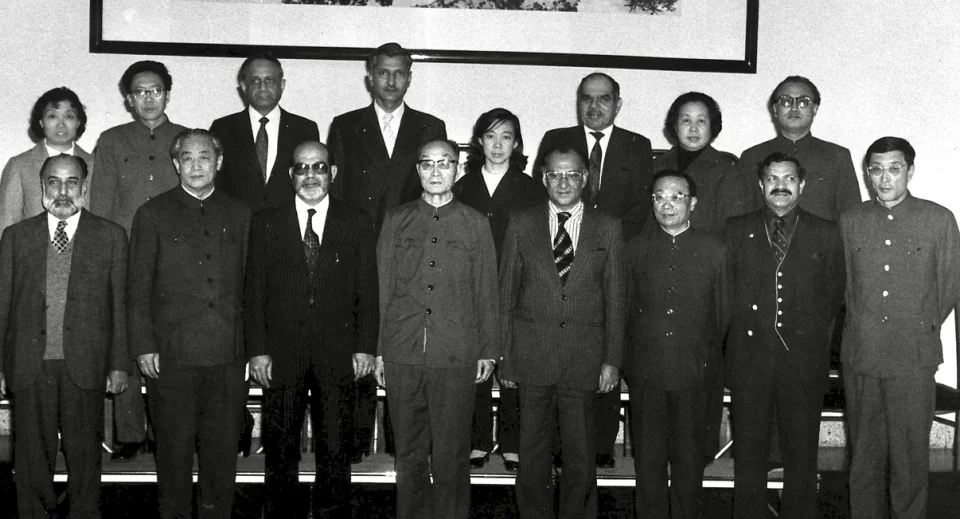
1980CHINATalks in Beijing with the Chinese Defence Minister Marshal Zhang Aiping and with Liu Guomin, Chairman of China National Aero-Technology Import & Export Corporation- CATIC.
Tariq Mustafa in talks with the Chinese Defence Minister
Tariq Mustafa shaking hands with the Chinese Defence Minister
Pakistani and Chinese delegations, Beijing
With Chinese Defence Minister Zhang Aiping · December 1986
1992IRANVisit to Tehran and a meeting with President Akbar Hashemi Rafsanjani.
Meeting with Akbar Hashemi Rafsanjani, Tehran
With President Akbar Hashemi Rafsanjani · Tehran, 1992
ERA 05 · LIFE · PROFESSIONALFive ministries1988 – 1994 · Federal Secretary
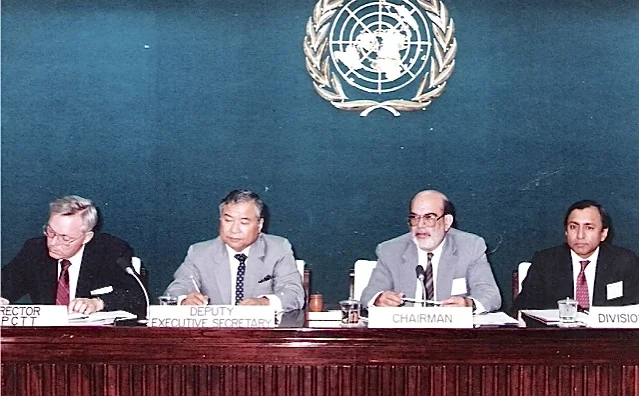
Chairing an ESCAP session
Chairing the Asia Pacific Centre for Technology Transfer board, ESCAP
1988–91Briefly Secretary, Production (1988), then Federal Secretary, Science & Technology.
1989–90Chairman, Board of the Asia Pacific Centre for Technology Transfer (ESCAP).
1990Federal Secretary, Petroleum & Natural Resources.
1991–93Federal Secretary, Production (Public Sector Industry). Ex-officio member of the Privatization Commission — almost five dozen public units privatised.
1993–94Federal Secretary, Privatization — plans the sale of PTCL, banks and WAPDA power stations. Retires 18 May 1994 as Senior Federal Secretary, having served under six Prime Ministers and Presidents.
ERA 06 · LIFE · PROFESSIONALPrivatisation & the World Bank1994 – 2001 · Islamabad · Washington · Haiti · Riyadh
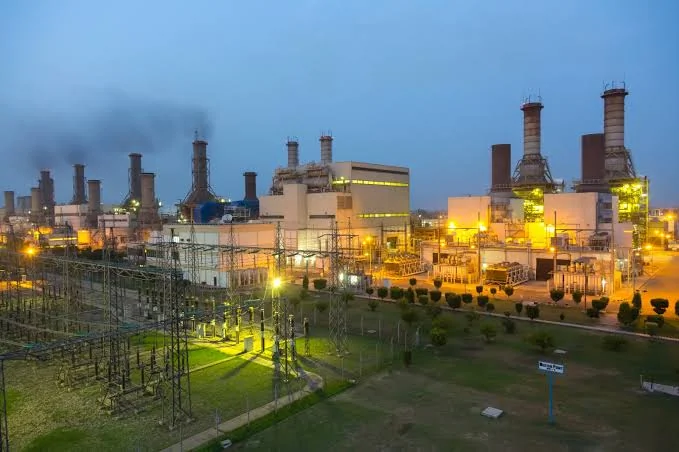
KAPCO's Kot Addu power plant at dusk
Kot Addu Power Company (KAPCO) plant, privatised 1996
1994–96World Bank Advisor to the Privatization Commission — capacity building, valuation, marketing, bringing in foreign buyers.
Kot AdduCoordinates the sale of WAPDA's 1,600 MW Kot Addu plant to National Power (UK) — the first privatisation of a major power plant in Asia, called a model privatisation by the World Bank. Settles issues with the WAPDA labour federation.
AfterLectures World Bank staff in Washington on its lessons; resource person at the Bank's privatisation seminar in Haiti.
c. 1996Invited to critique Saudi Arabia's privatisation plan. World Bank Advisor on Pakistan's National Technology Policy (~18 months).
2000Leads the pre-feasibility for privatising Pakistan Steel Mills.
2001Technical Advisor, Ministry of Science & Technology — plans Pakistan's first Technology Park, Islamabad.
ERA 07 · SERVICEParalympics1998 – now · Athens · Beijing · London · Rio
Awarding a Paralympic medal
1998Founder and President, National Paralympic Committee of Pakistan.
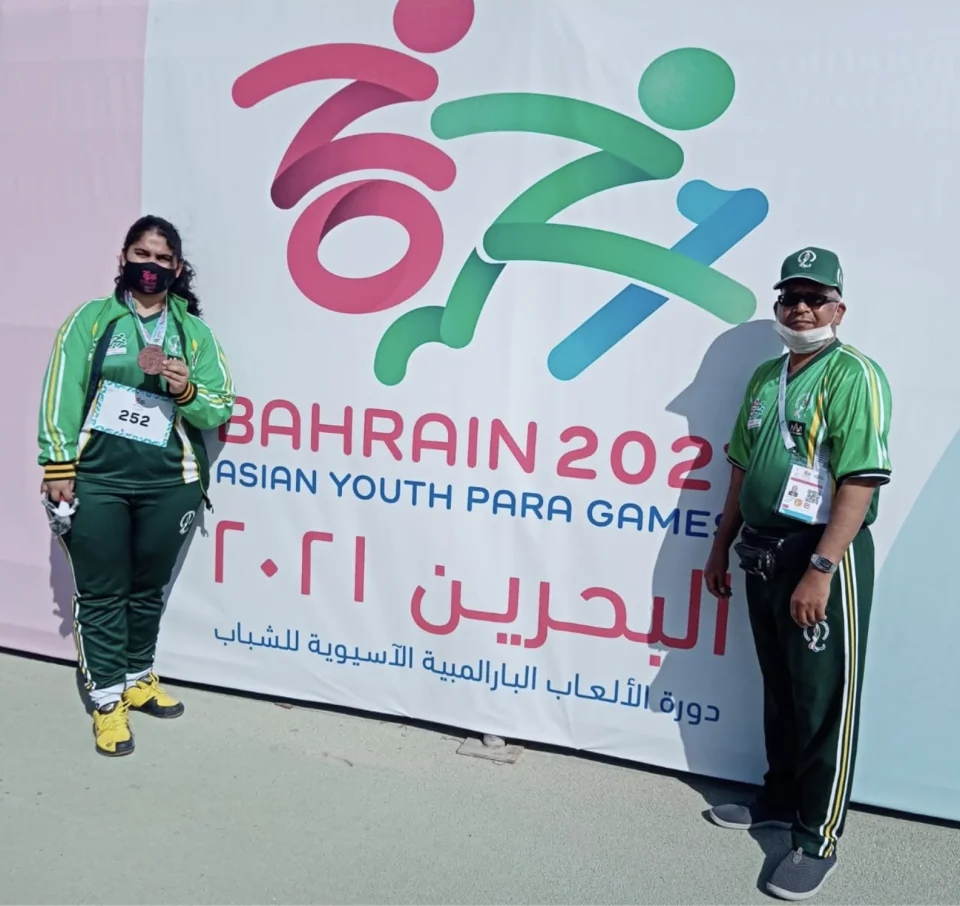
2002–14Vice-President, Asian Paralympic Committee (Kuala Lumpur). Later President, South Asian Paralympic Committee.
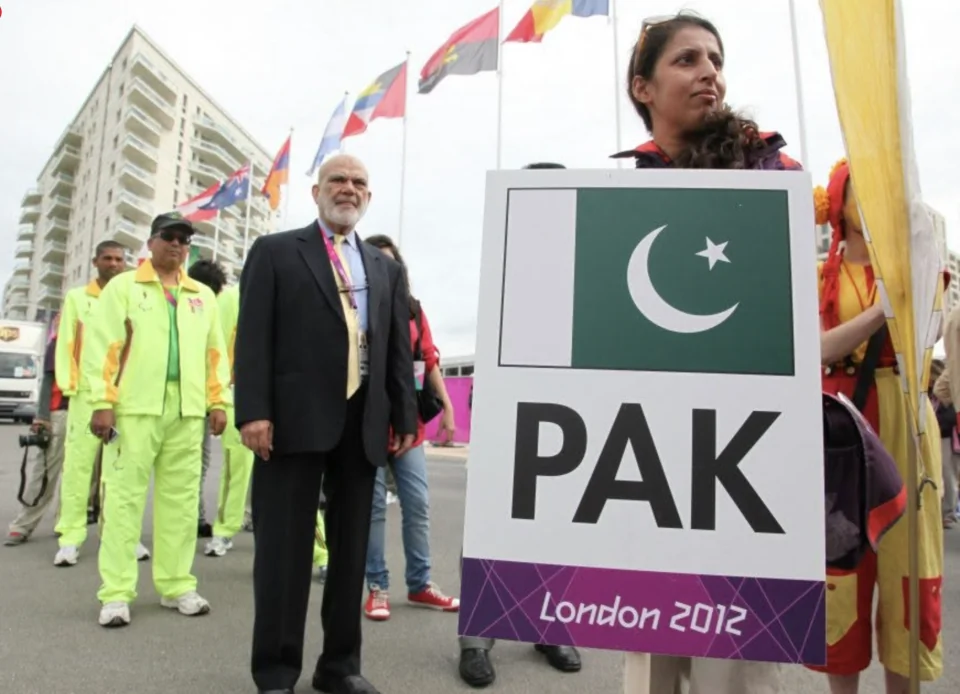
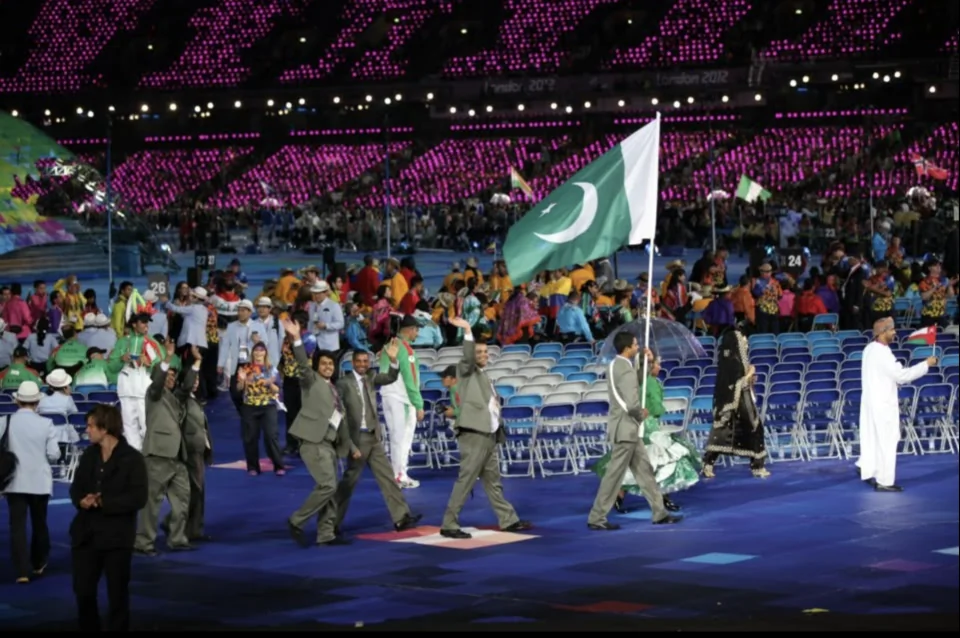
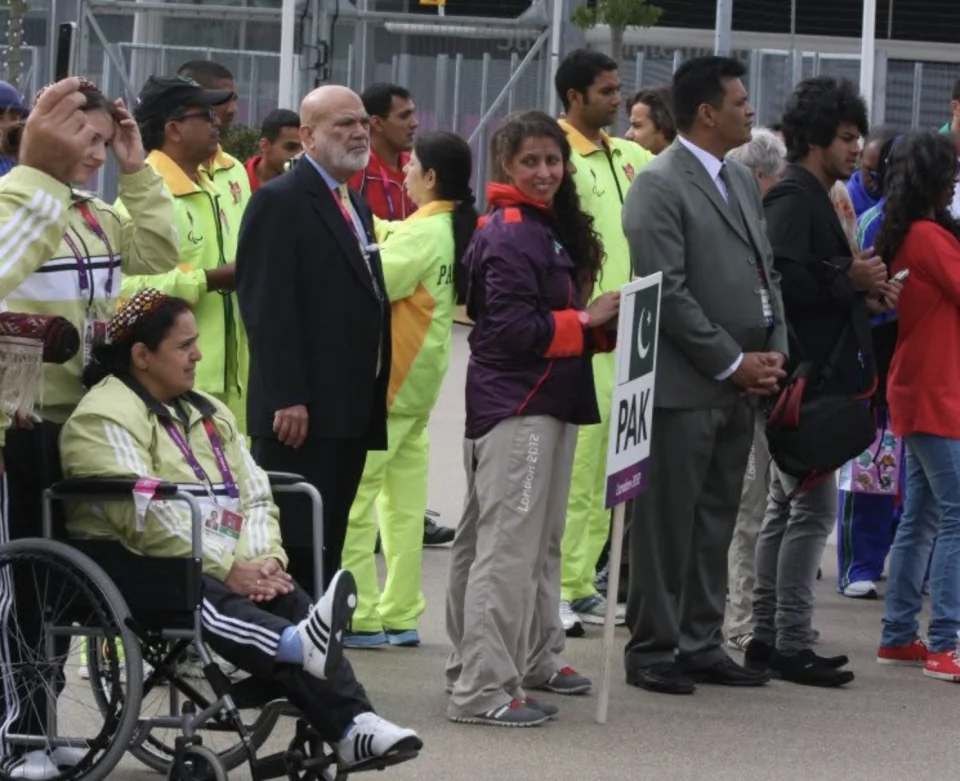
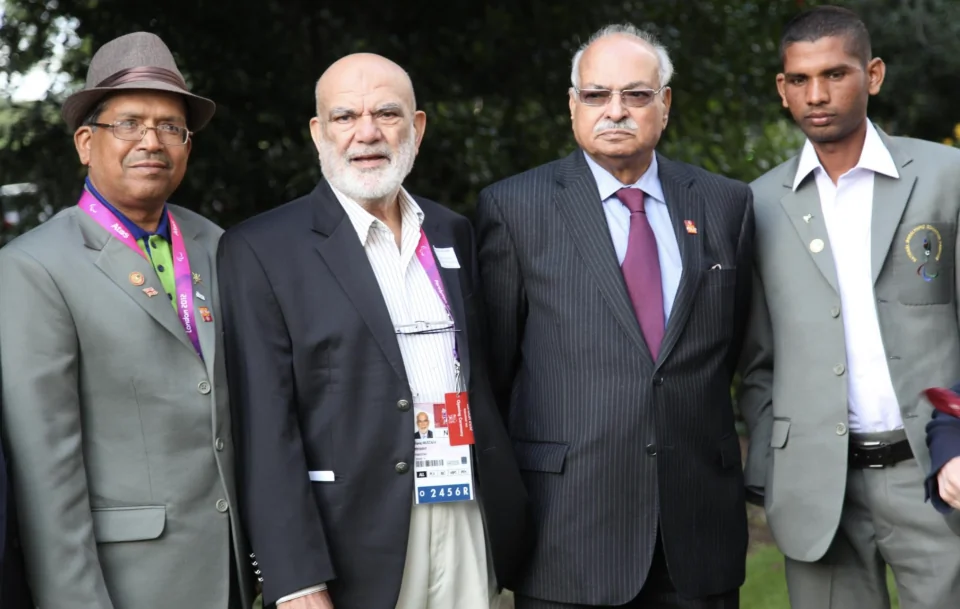
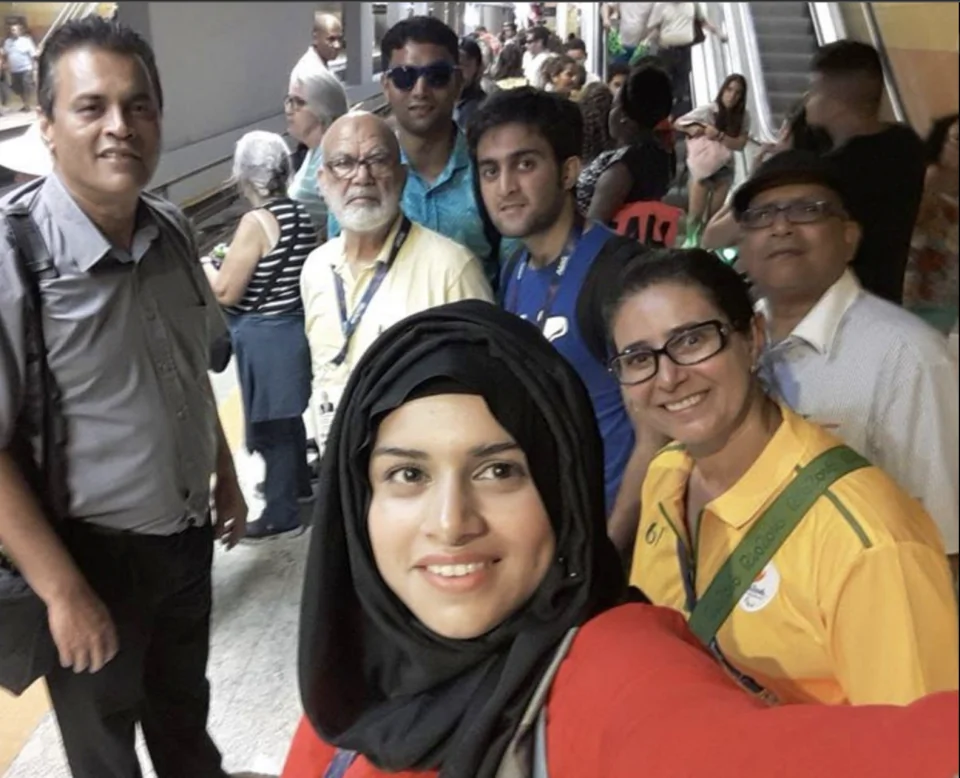
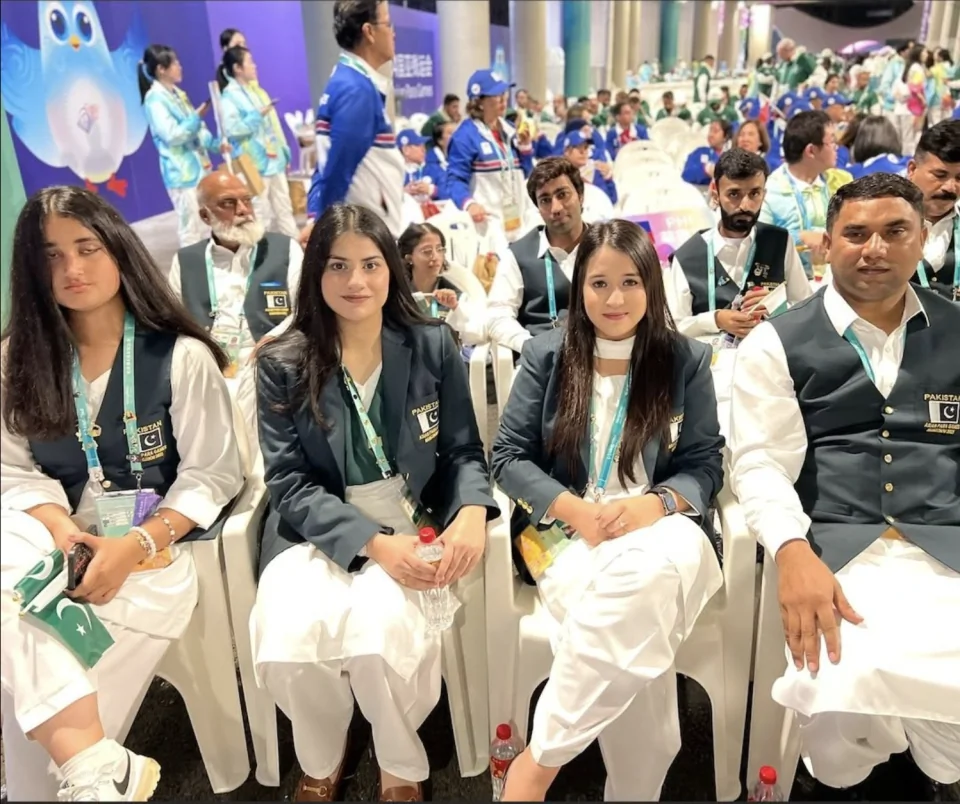
2004–16Takes Pakistan to the Paralympic Games in Athens, Beijing, London and Rio — over 85 medals won across competitions. The full story →
ERA 08 · FUTURE OF MANKINDThe Searcher2007 – now · Science & religion
The Case for God — cover
2007Writes to Newsweek after "The God Debate" left out the Islamic viewpoint — the seed of his book.
2008Paper "The Development of Evaluation Criteria for Authenticity of Revelation" published in Zygon (Sept). Leads a workshop at the IRAS conference, Star Island, USA; later joins the Executive Council of the Institute on Religion in an Age of Science.
2009The Case for God — based on reason and evidence — launched in Islamabad, ahead of Karen Armstrong’s book of the same title.
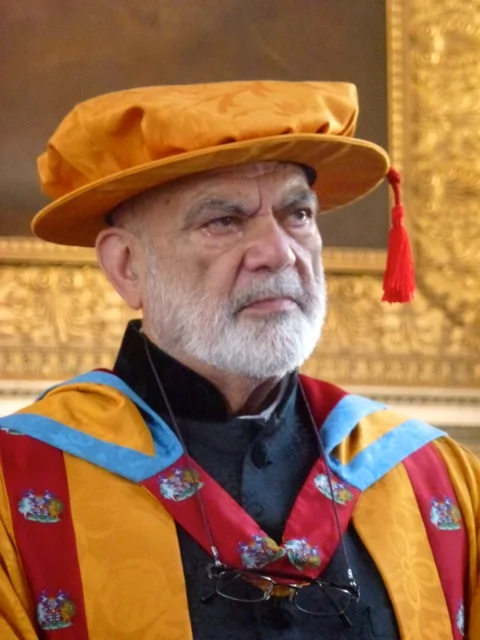
2013Honorary Doctor of Science, University of Greenwich — for space technology, nuclear energy and the Paralympic movement.
Dr Tariq Mustafa in academic robes, University of Greenwich, July 2013
Dr Tariq Mustafa receives an Honorary Doctor of Science (D.Sc.) from the University of Greenwich, July 2013
2015-2017Member, Governing Council, Institute on Religion in an Age of Science (IRAS).
Now"Envisioning the Future of Humankind" — engaging universalist thinkers on humanity's existential challenges. ▶ 5-min introduction
20xx
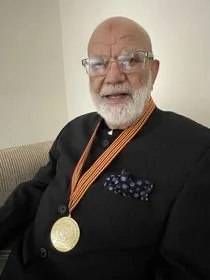
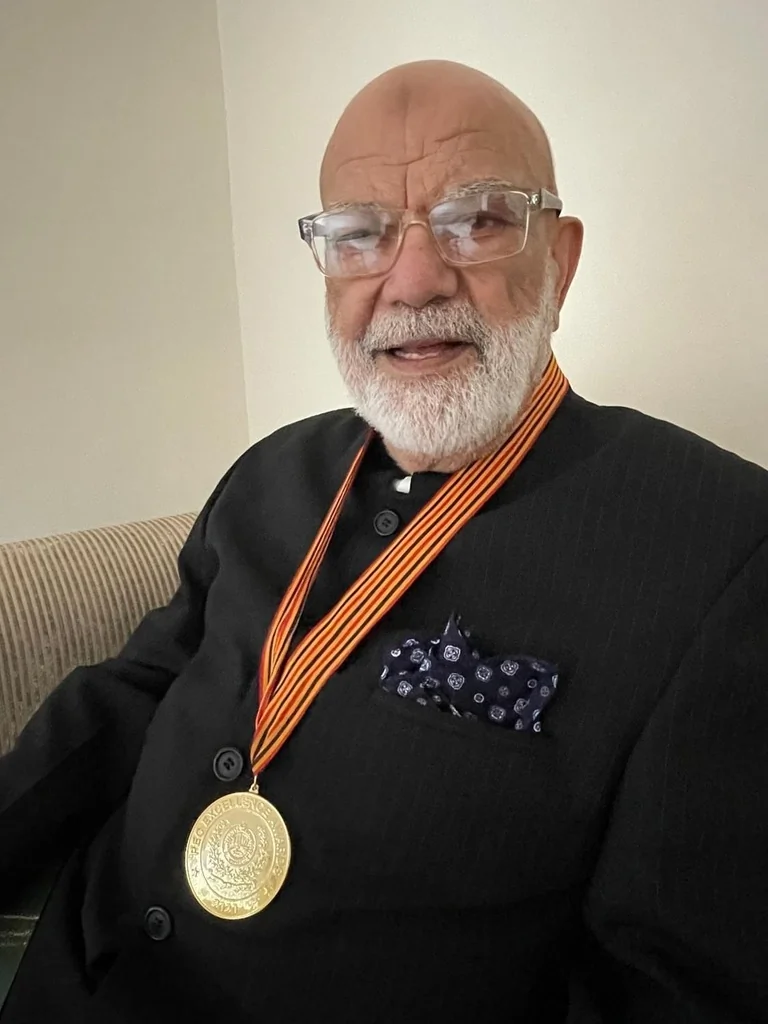
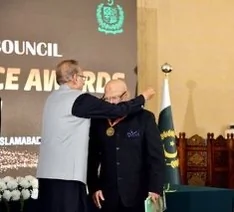
Lifetime Achievement Award for engineering excellence, conferred by the President of Pakistan.
Dr Tariq Mustafa wearing the award medal
The President placing the medal
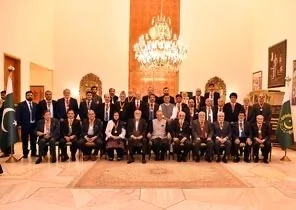
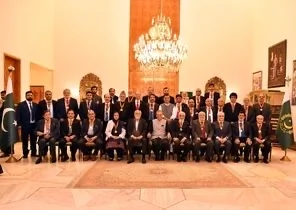
Award recipients with the President
Year, venue & award name to confirm
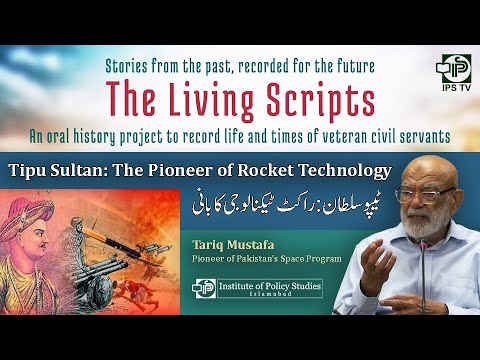
2025Records his life story for the IPS oral history project, The Living Scripts. ▶ Watch
HONOURSPresidential award for lifetime engineering excellence · Tamgha-e-Imtiaz 1962 · Hon. Commander, PN 1973 · Hon. DSc Greenwich 2013
METNixon, Reagan, Thatcher, Deng Xiaoping, the Shah, Khomeini, Rafsanjani, Hafizul Assad, Gaddafi, A. P. J. Abul Kalam and in Pakistan with Bhutto, Zia ul Haq, Benazir, Nawaz Sharif, Shahbaz Sharif, Imran Khan.
LIVED INLyallpur, Lahore, Karachi, London, Paris, Oak Ridge, Washington DC, Bellevue–Redmond and New York — 55+ countries visited, from North Korea and Russia to Cuba, Haiti, Brazil and Argentina
CALLED"A one-man team" — Turkish military delegation · "A renaissance man", "Buddha", "Pope" by various dignitaries.
DOWNLOAD FULL CV ↓NEXT: ROCKETRY →
WITNESS TO A CENTURY

From empire to one world

In his lifetime he has seen the sun set on the British Empire; the Partition of India and the birth of Pakistan; the rise and rivalry of the two superpowers, and the sudden break-up of the Soviet Union with thousands of nuclear warheads still in its arsenal; and the meteoric rise of China — as Napoleon is said to have warned, “wait till the dragon awakes”.

A perceptive, motivated youngster dazzled by the West’s spirit of enquiry, he came in time to his own Islamic heritage — and to the conclusion that the world needs a paradigm shift in its values and attitudes, as Einstein envisaged.

“One world — a brotherhood of humankind, needing one core set of laws, rules and values, while respecting cultural diversity and plurality.”The march of technology is driving us towards globalisation, but our political, social, economic and religious institutions have failed to keep pace. A paradigm shift in our values, thinking and attitudes is essential if humanity is to thrive, and not just survive.— Tariq Mustafa
FROM THE FAMILY ALBUM

Photo gallery

Archive photo 01#01
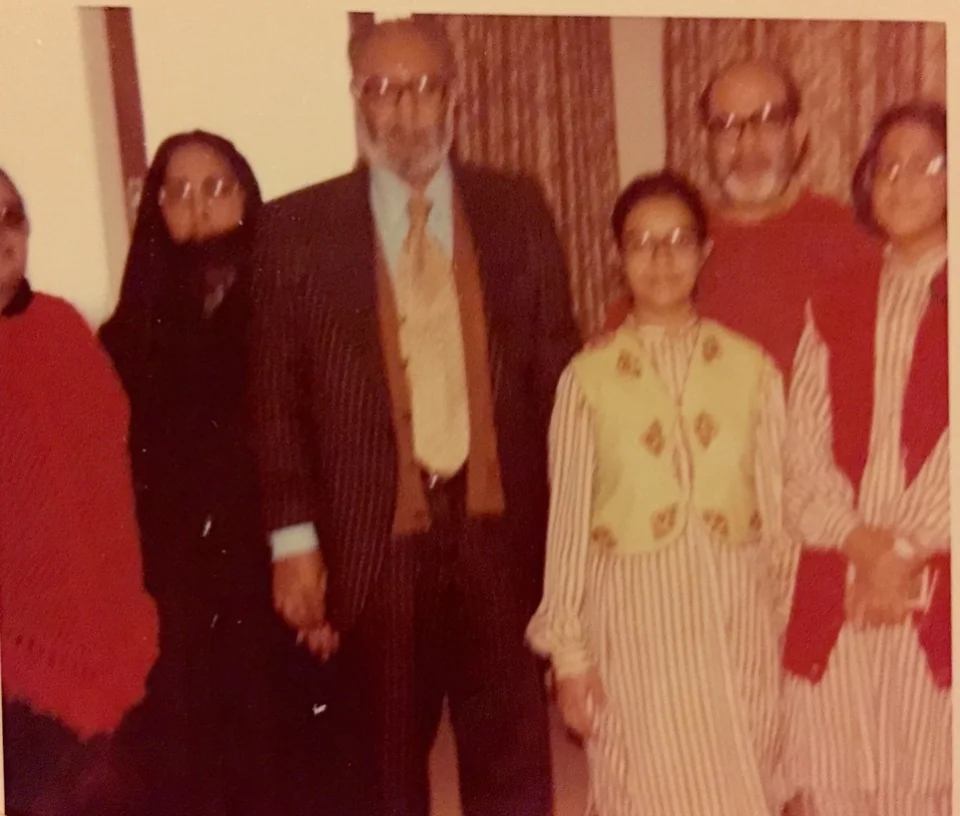
Prof. Abdus Salam with his daughters; at left, Mrs Tariq Mustafa with her daughter · Paris
Archive photo 02#02
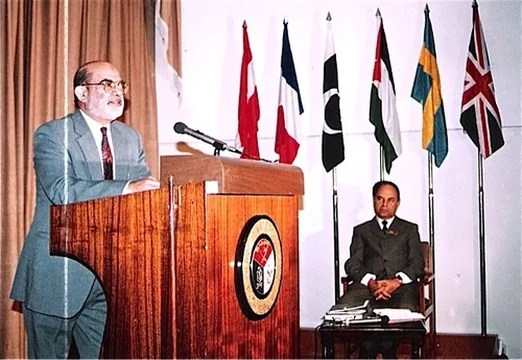
Speaking at a podium before international flags
Archive photo 03#03
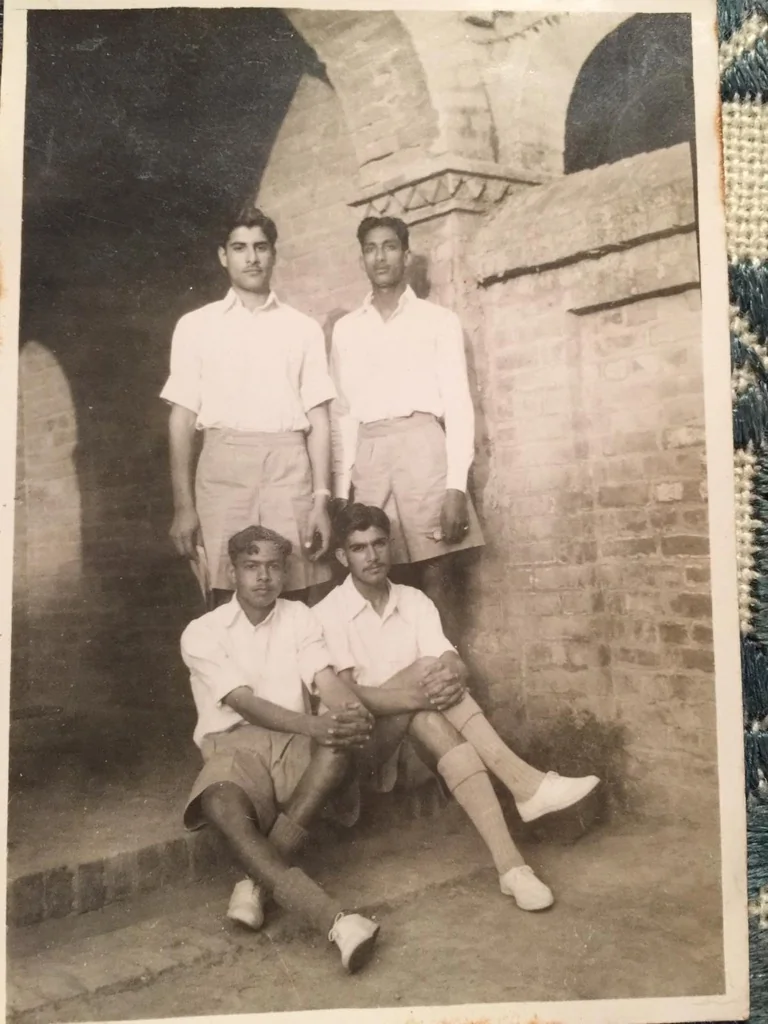
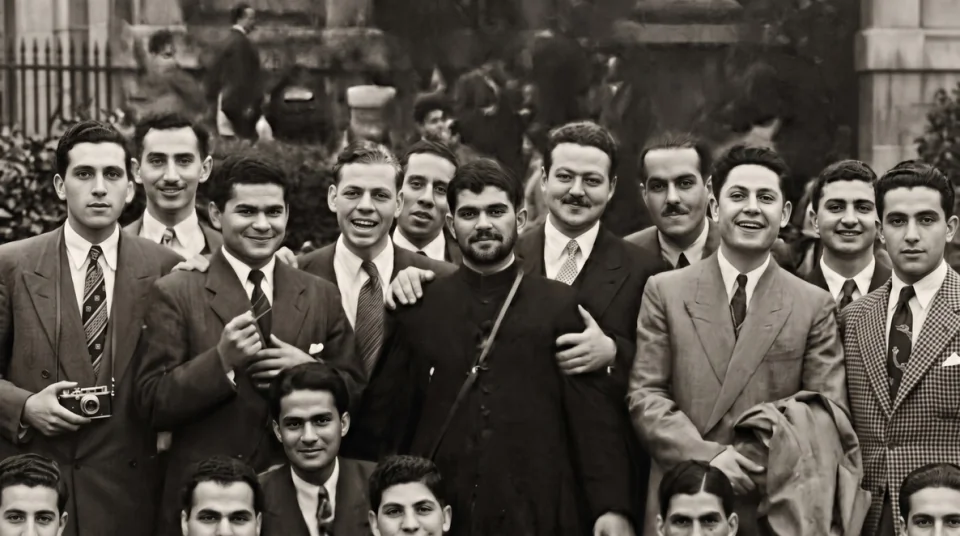
Front row: Tariq Mustafa, Muzammil Siddiqui and friends · Central Model School, Lahore, 1948
Archive photo 04#04
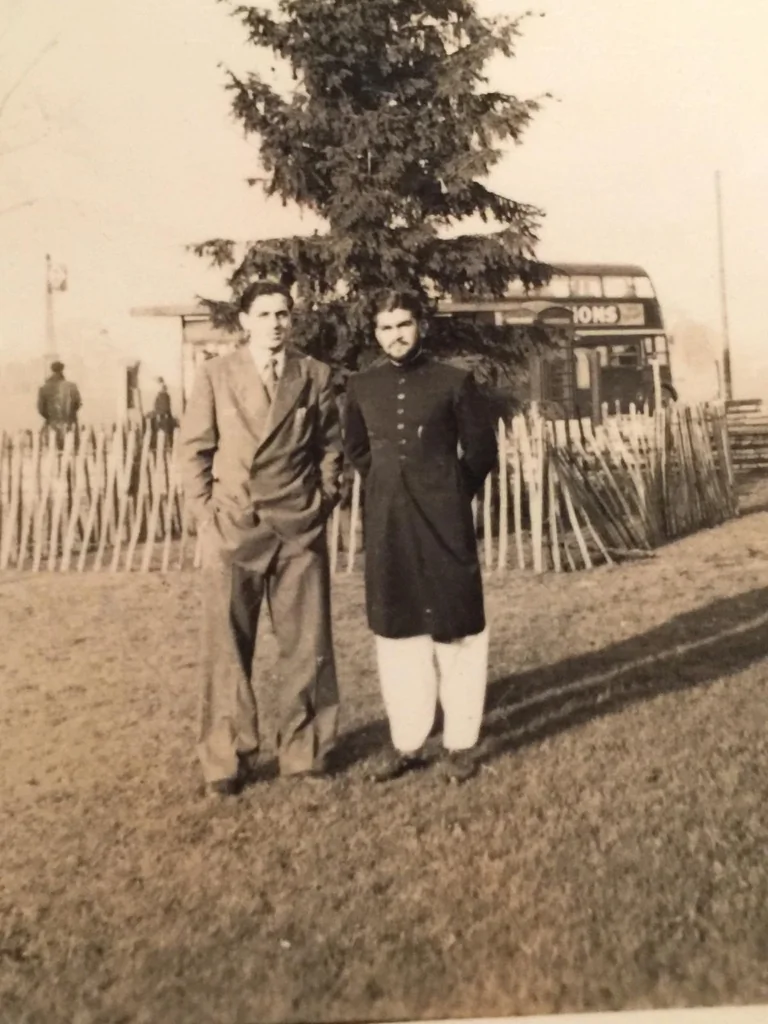
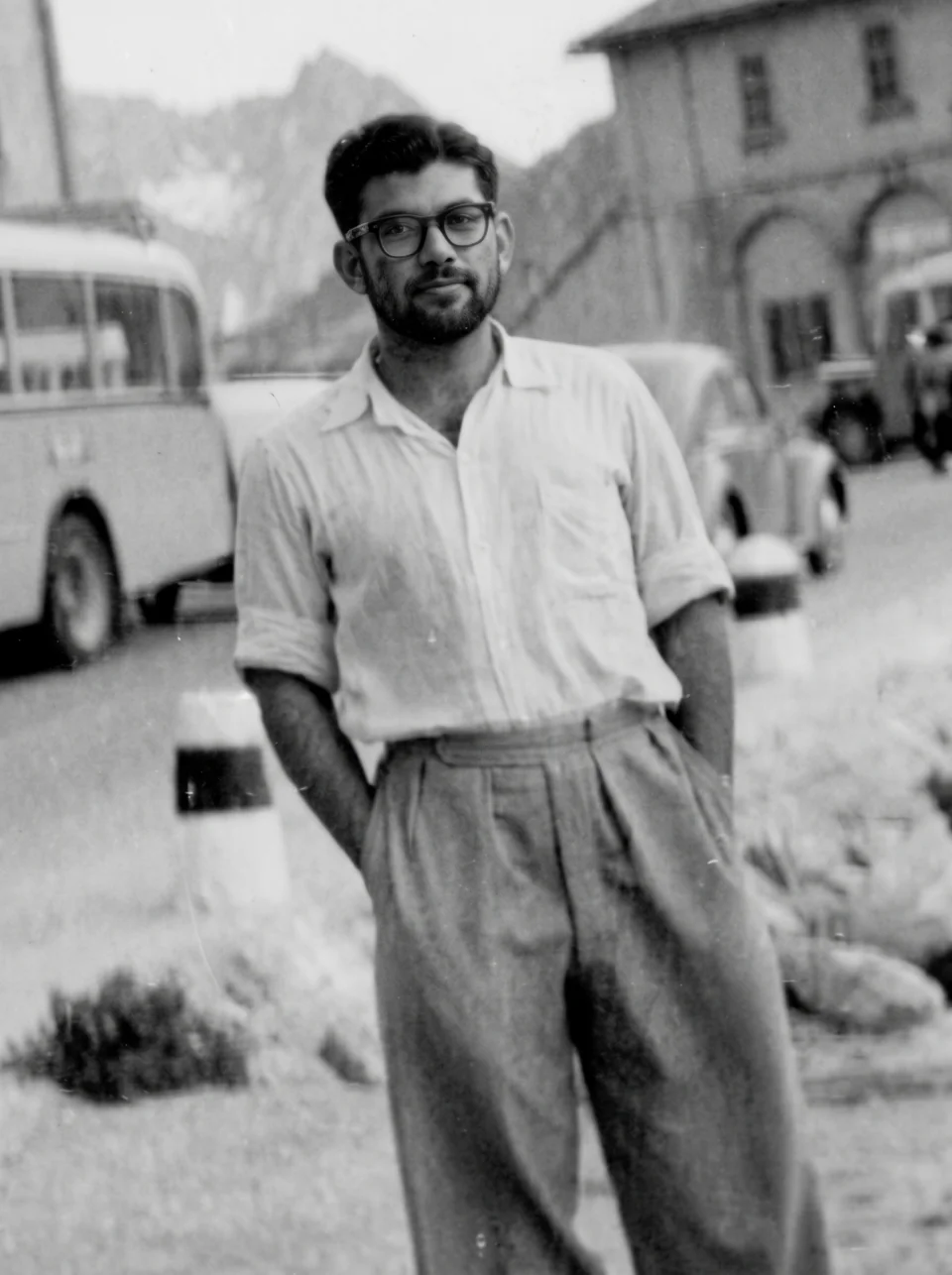
With a friend in England
Archive photo 05#05
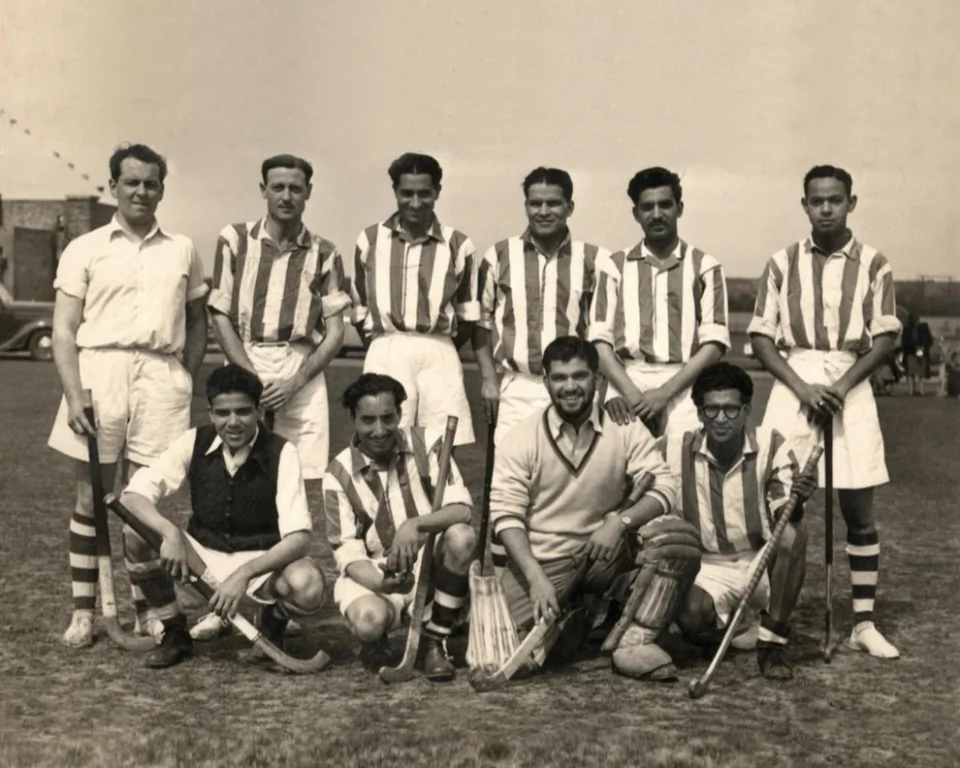
Pakistan High Commission hockey team · London
Archive photo 06#06
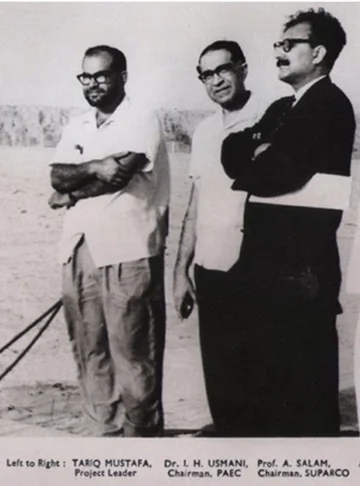
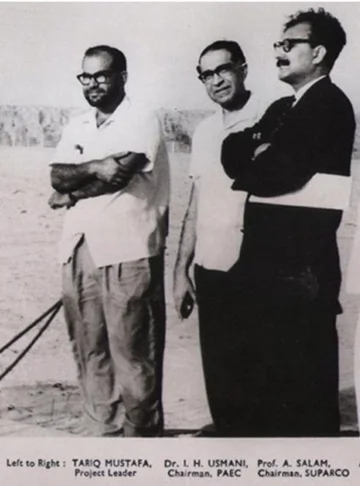
Tariq Mustafa (Project Leader), Dr I. H. Usmani (Chairman, PAEC) and Prof. Abdus Salam (Chairman, SUPARCO)
Archive photo 07#07
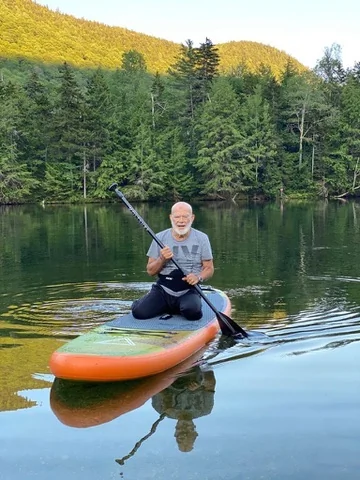
Paddleboarding on a mountain lake · Vermont
Archive photo 08#08
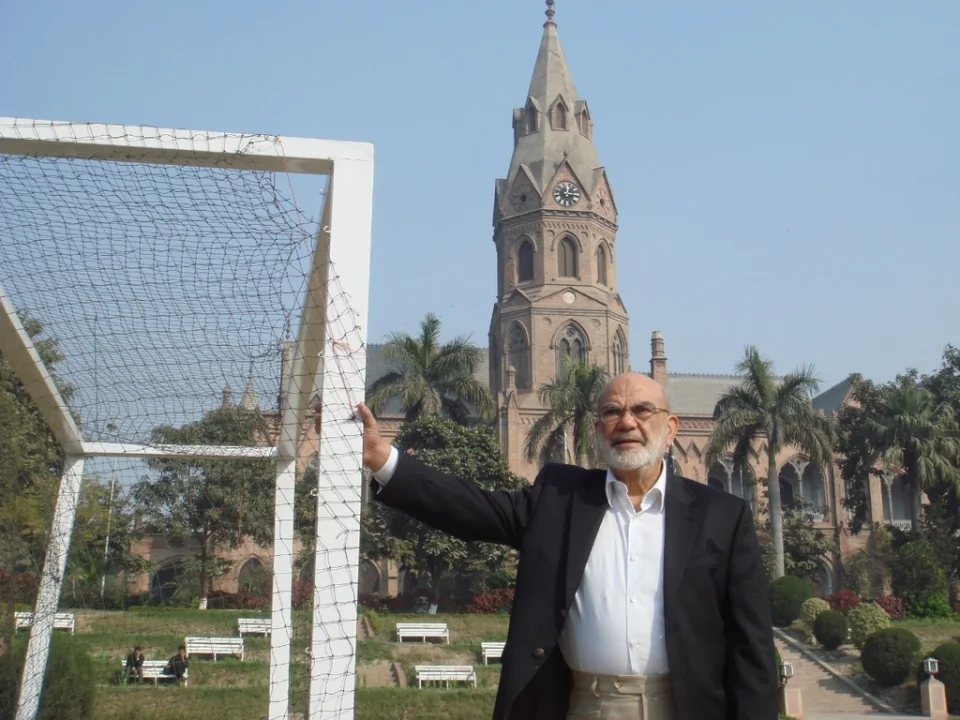
By the goalpost · Government College, Lahore
Archive photo 09#09
Mian Muhammad Nurullah, Tariq Mustafa’s father · London School of Economics (LSE), 1923
Archive photo 10#10
With the billiards championship trophy · Woolwich Polytechnic, 1954
Archive photo 11#11
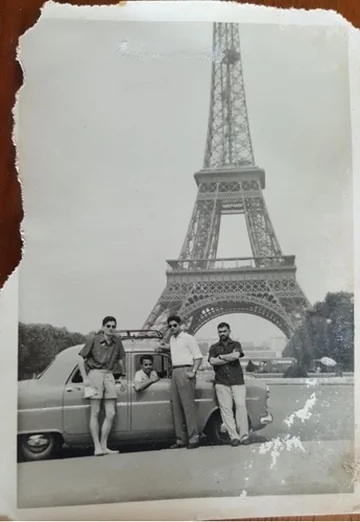
Tariq Mustafa, Saleem Khan, Krishan Kumar Barry and Zahid Zaheer · Paris
Archive photo 12#12
Tariq Mustafa, Saleem Khan, Krishan Kumar Barry and Zahid Zaheer at the Eiffel Tower · Paris
Archive photo 13#13
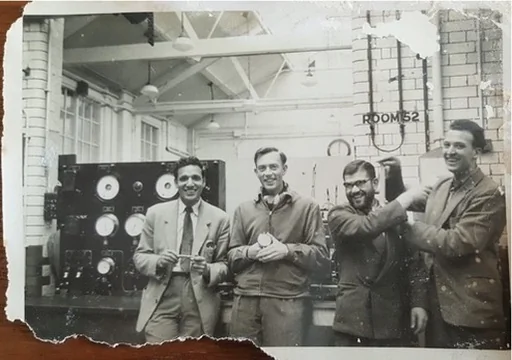
In the laboratory, Room 52 · BSc Engineering class, Woolwich Polytechnic
Archive photo 14#14
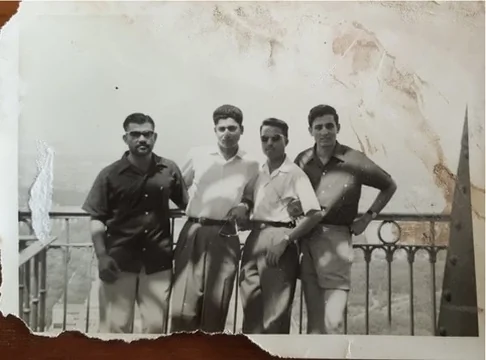
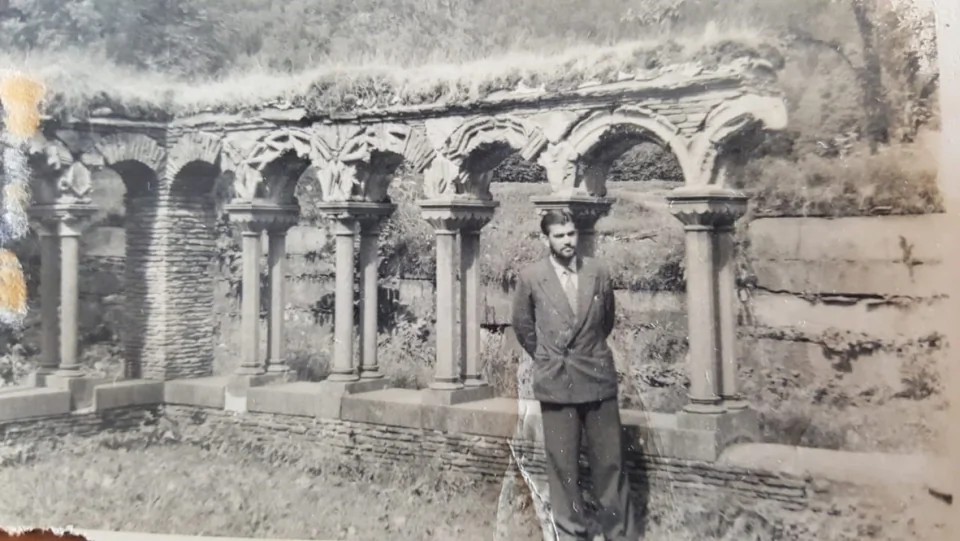
Among the ruins of a cloister
Archive photo 15#15
Zahid Zaheer, Tariq Mustafa, Qadiri and M. M. Qureshi
Archive photo 16#16
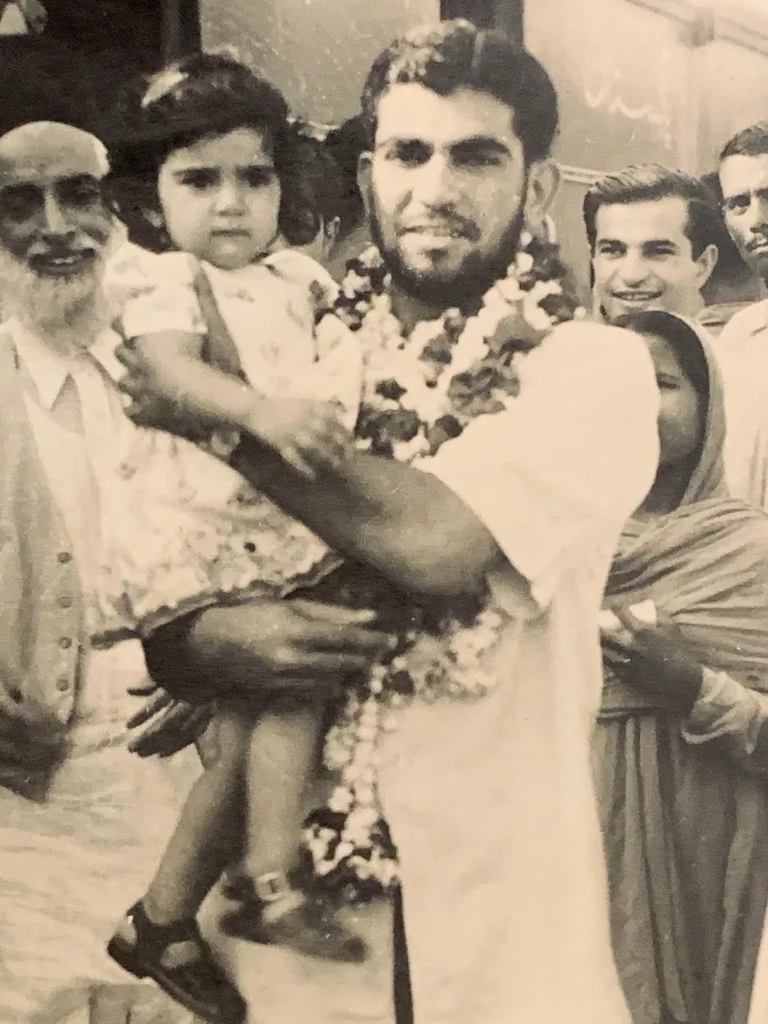
Garlanded before departing for London, holding his sister Tehmina · 1952
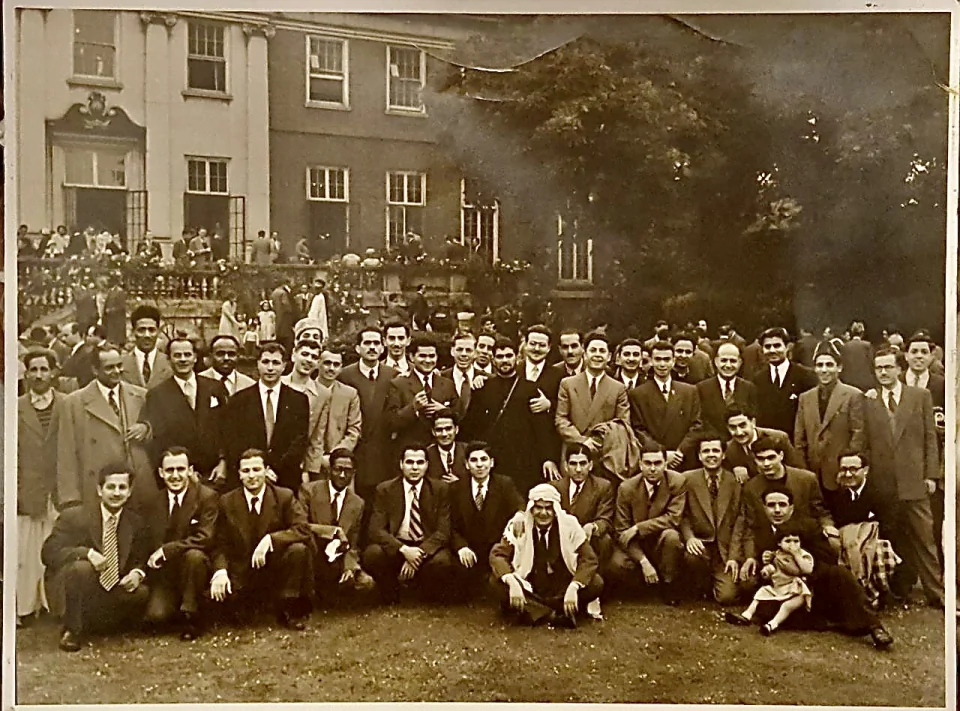
Archive photo 17#17
With Arab students at Eid · London
Archive photo 18#18
Wearing the Lifetime Achievement Award conferred by the President of Pakistan
Archive photo 19#19
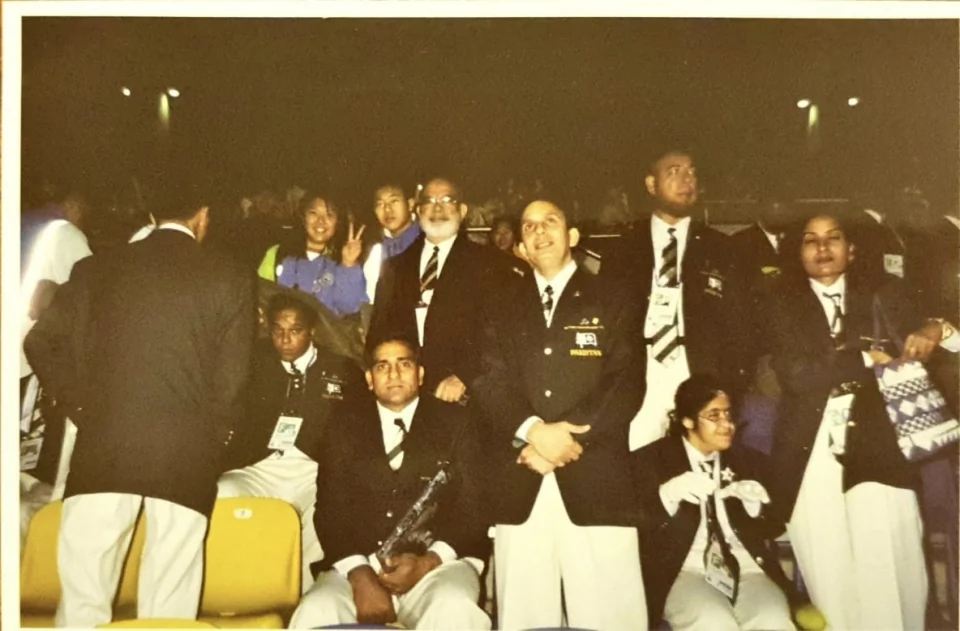
With the Pakistan team at the 8th FESPIC Games · Busan, 2002
Archive photo 20#20
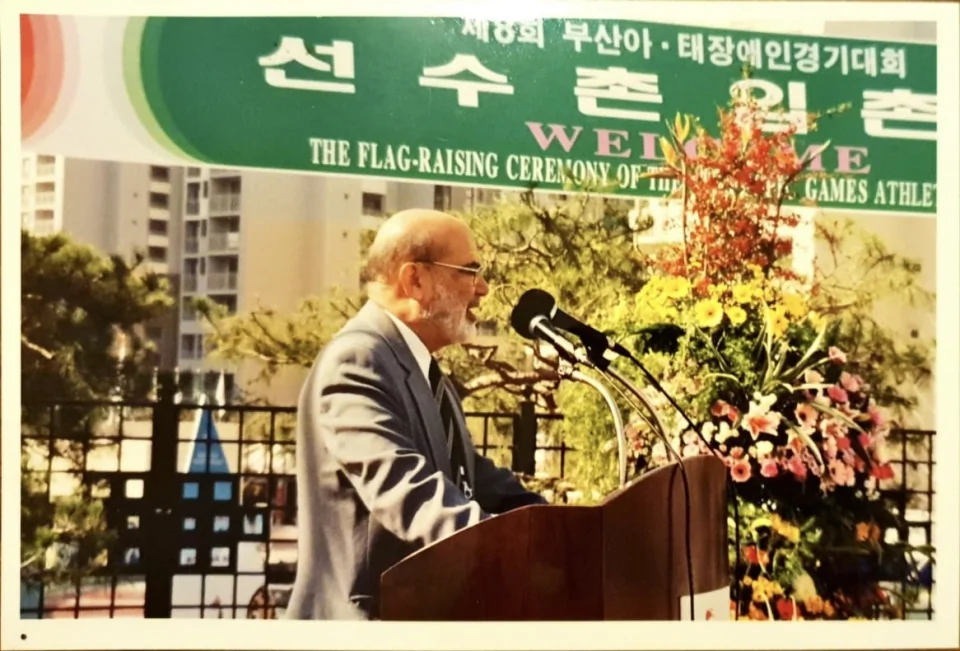
Speaking at the athletes’ village flag-raising · FESPIC Games, Busan, 2002
Archive photo 21#21
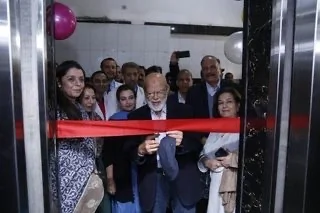
Cutting the ribbon for a lift donated by his daughter Rabia Mustafa · Friends of MAO Hospital
Archive photo 22#22
Receiving an award for excellence from President Arif Alvi · Islamabad
Archive photo 23#23
At the same award ceremony · Islamabad
Archive photo 24#24
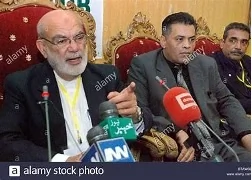
At an NPC Pakistan press conference
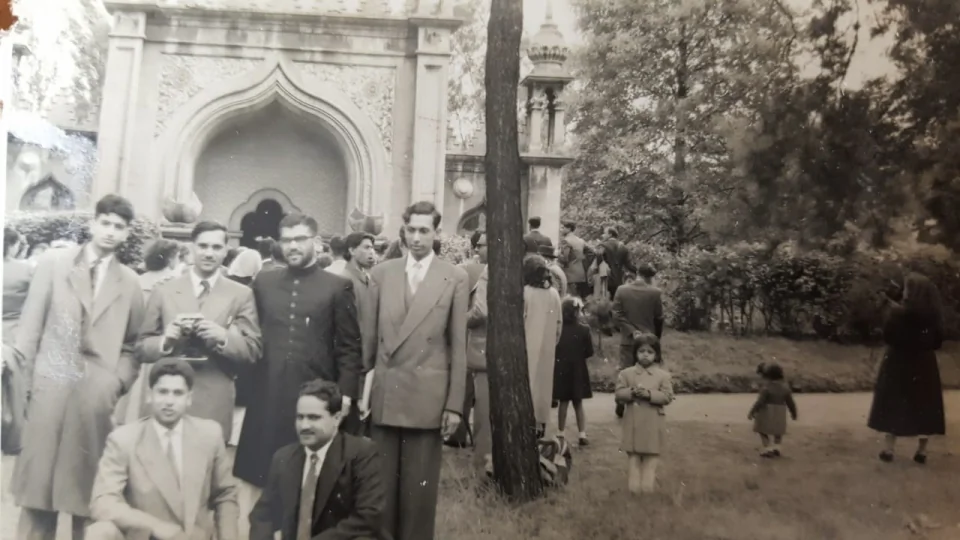
At the Shah Jahan Mosque, Woking, England · 1950s#25
At the Shah Jahan Mosque, Woking, England · 1950s — names to confirm
At the Vigeland sculpture park, Oslo · 1950s#26
At the Vigeland sculpture park, Oslo · 1950s
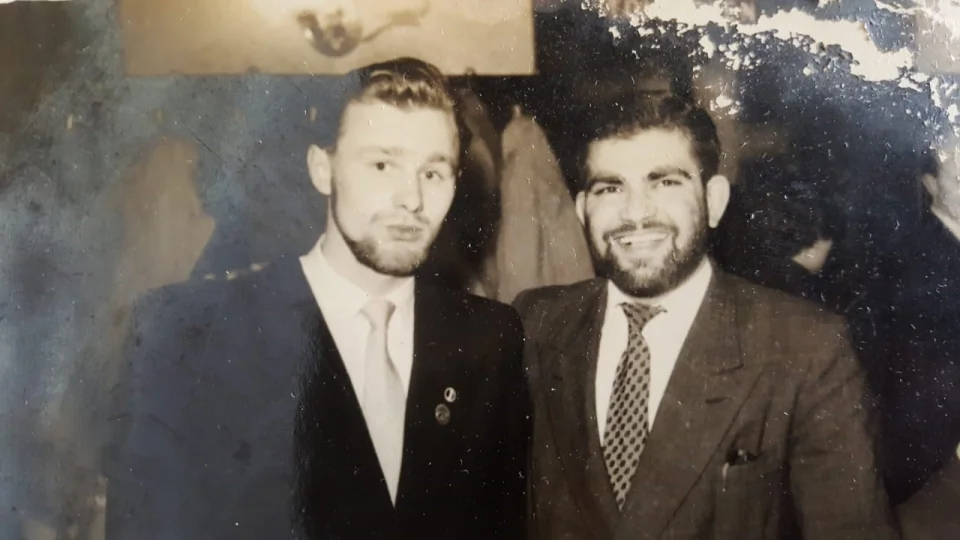
With a friend · 1950s#27
With a friend · 1950s — name and place to confirm
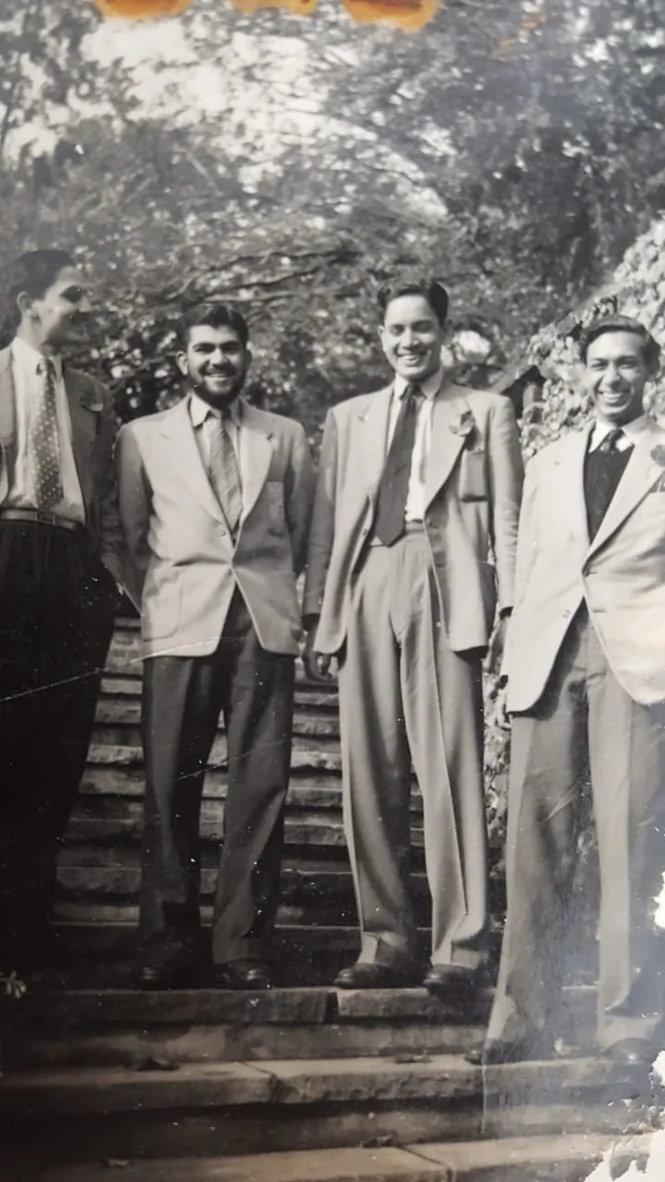
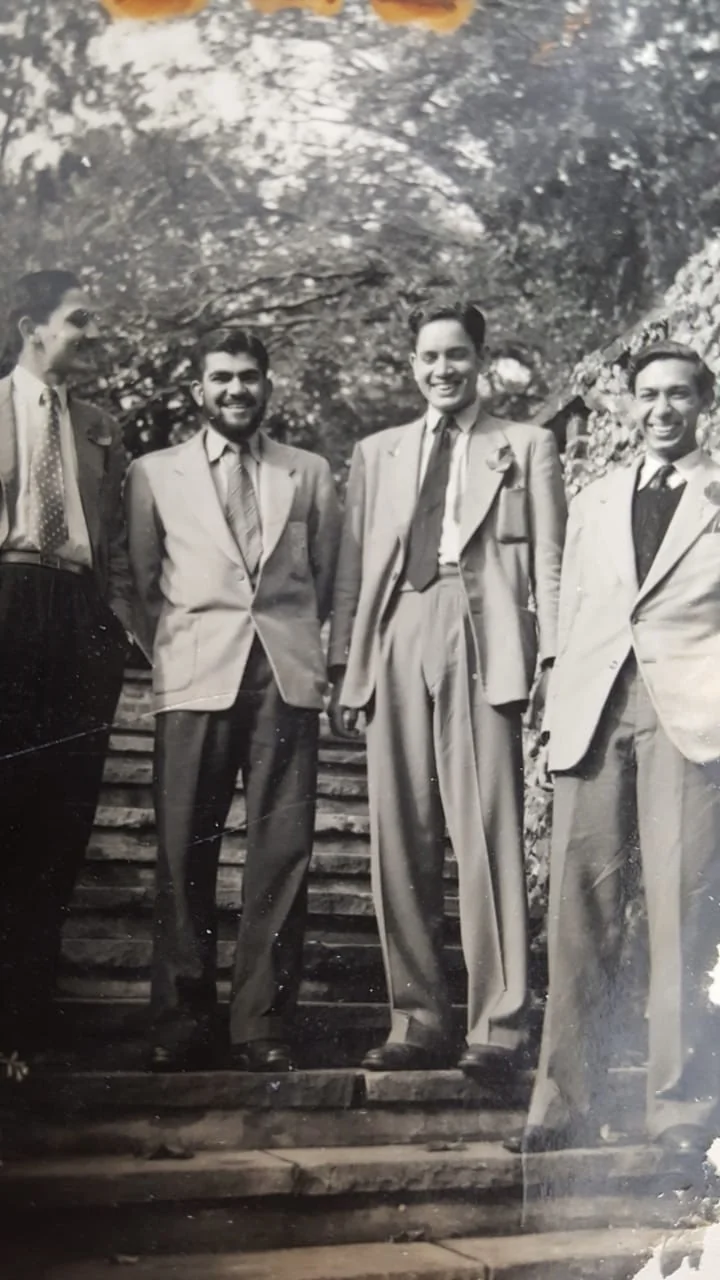
With friends on garden steps · 1950s#28
With friends on garden steps — Zahid Zaheer, Tariq Mustafa, Qadri and A. H. Qureshi · 1960
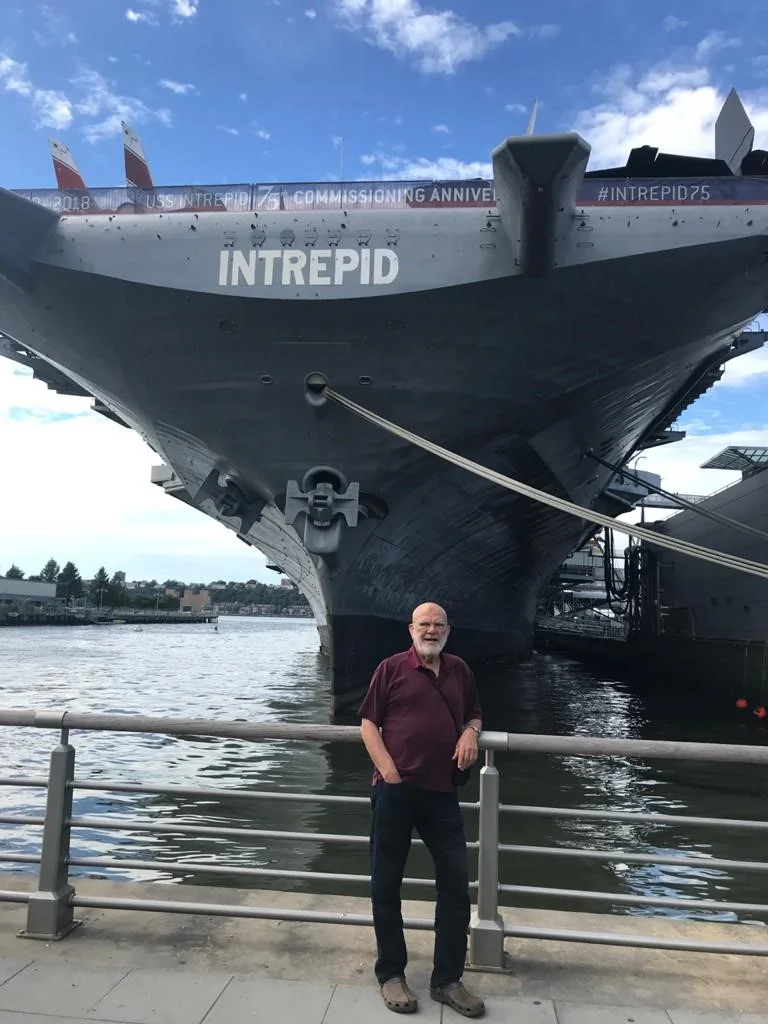
Beside the USS Intrepid, New York · 2018#29
Beside the USS Intrepid, New York · 2018
Archive photo 30#30
As a young man in Europe — label to confirm
Archive photo 31#31
With the team at Sonmiani · 1961
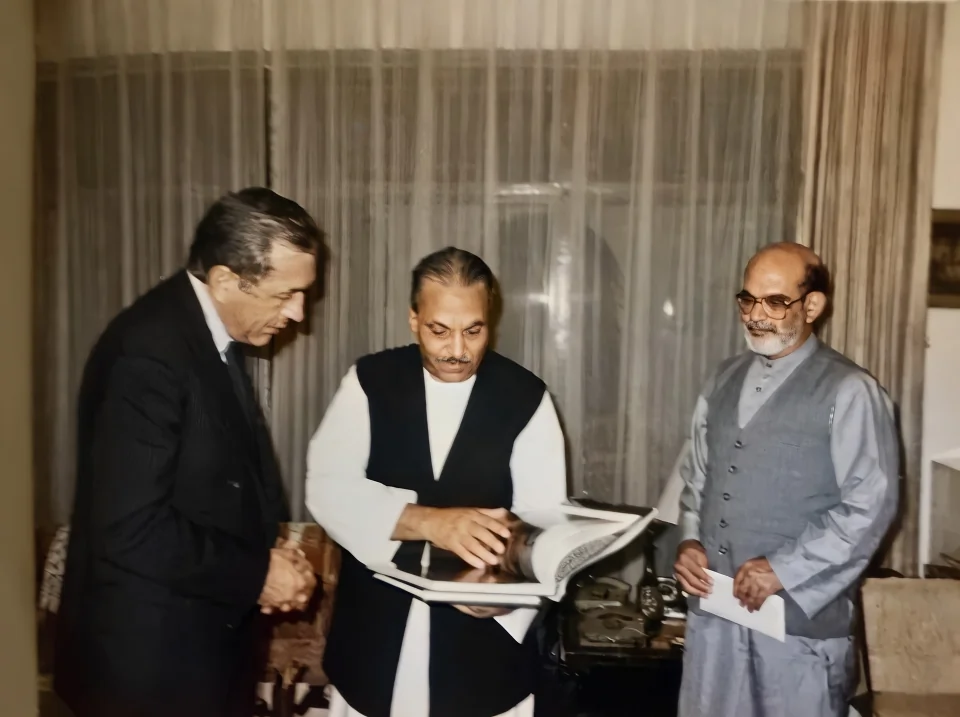
With General Zia ul Haq#33
With President General Zia ul Haq
DR TARIQ MUSTAFA
ROCKETRY · 1961 – 1974

Pioneer of Pakistan's space programme

In nine months, a five-man team led by a 27-year-old engineer built a rocket range on the Baluchistan coast — and put the developing world's first scientific rocket into the sky.

Told in his own words, as the last surviving member of the group that set it in motion.
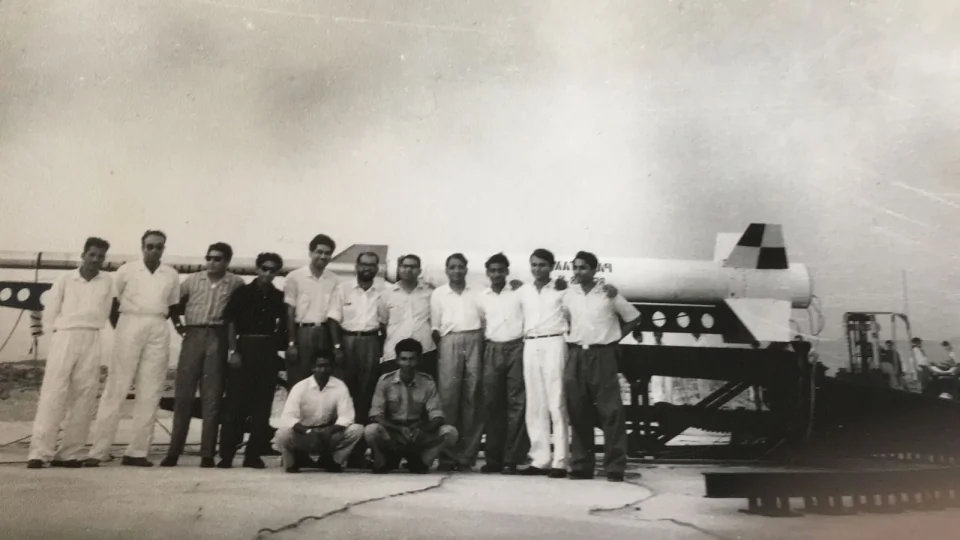
Tariq Mustafa and the launch team before Rehbar-II on its launcher at Sonmiani
Tariq Mustafa and the launch team before Rehbar-II on its launcher, Sonmiani Range, 1962.
T-4 · THE CALL · JULY 1961

"Whether by running or hitchhiking"

Oak Ridge, Tennessee, mid-July 1961. An early-evening call from Washington: Prof. Abdus Salam, travelling with President Ayub Khan, needed him at an important meeting the next morning — however he got there.

At NASA's new headquarters, Director of International Relations Arnold Frutkin came straight to the point. Kennedy had committed America to the Moon. Apollo needed to know the winds of the upper atmosphere — and over the Indian Ocean there was practically no data at all. NASA would supply launchers and rockets free, in exchange for the raw data. Was Pakistan interested?

"Tariq, ki khyal ai?" — Tariq, what do you think?
"This will be our dream coming true."
SALAM AND MUSTAFA, IN PUNJABI, ACROSS NASA'S TABLE

Frutkin read his face and put him on NASA's 1 pm shuttle to Wallops Island. He toured the range, wrote a three-part report overnight — the range, the team, the equipment — and was back in Washington by morning. President Ayub called it short, succinct and to the point, and ordered work to begin at once.

Tariq Mustafa, Dr I. H. Usmani and Prof. Abdus Salam
Left to right: Tariq Mustafa, Project Leader · Dr I. H. Usmani, Chairman PAEC · Prof. Abdus Salam, Chairman SUPARCO
HOW HE KNOW SALAMLondon, 1957

Seventeen Pakistani candidates were interviewed for the new Atomic Energy Commission. He was the only one asked to wait. Where had he learnt about reactors, Salam asked, when no university taught it? From a monograph — Atomic Energy for Engineers — published by his Institution of Mechanical Engineers.

It began a friendship of decades. Salam's family would later visit him in Paris; over 1957–60 his respect for Salam only grew — and it was that trust that put a 27-year-old in charge.

Prof. Abdus Salam with his daughters and Mrs Tariq Mustafa with her daughter in Paris
Prof. Abdus Salam with his daughters; at left, Mrs Tariq Mustafa with her daughter · Paris
The Rehbar-II launch team at Sonmiani, June 1962
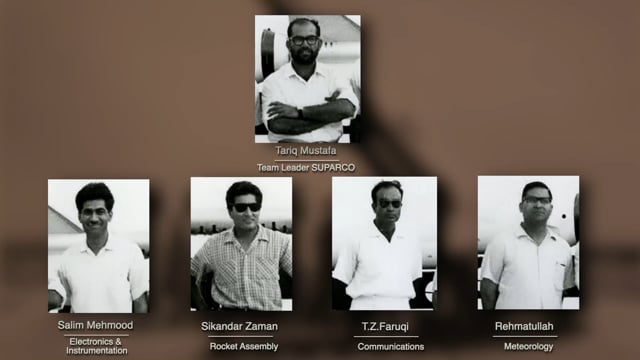
T. Z. Faruqi, M. Rehmat Ullah, Tariq Mustafa (Team Leader), Salim Mehmud, Sikandar Zaman — Rehbar-II, Sonmiani, June 1962
T-3 · THE TEAM · SEPTEMBER 1961

Small, hard-hitting — and new to rocketry

All but one were unmarried youngsters. Within a week he and Salim Mehmud had stuffed his Rambler with their luggage and driven from Oak Ridge to Wallops Island. The US side noted it: the Pakistanis meant business.

Tariq MustafaTeam leader — Recruited a team and strategised and managed the whole process. Later moved to Department of Defence
Salim MehmudElectronics; the control room · later Chairman SUPARCO, 1980–89
Sikandar ZamanRocket assembly and launch · later Chairman SUPARCO, 1991–97
A. Z. FarooquiCommunications · retired Flt Lt, Pakistan Air Force
M. RehmatullahMeteorology · attached to Goddard Space Flight Center
T-2 · SONMIANI · SEPTEMBER 1961 – JUNE 1962

Nine months, before the monsoon

Training at Wallops, design and building in Karachi. President Ayub chose the site himself — an army artillery range on the Arabian Sea, 40–50 miles from Karachi. The Military Engineering Service built the sheds and roads. Purchases were cleared directly by the Economic Minister in Washington, bypassing the usual files — the shortcut that let them beat the season. India, which started a few months later through normal channels, launched a year after them.

01"Let your fingers do the walking"The rockets were built from surplus Nike parts in depots across America. With a NASA code number he phoned them one by one, gathered everything at Wallops, checked it, and shipped it — the delicate instruments in the boot of his Rambler.
02Every anchor, by handThe builders worked in inches; the launcher needed millimetres. He learnt NASA's percussion driver and set every one of the dozens of anchor bolts himself. A Dutch launcher of the same type was dragged off its pad at first firing. Theirs performed flawlessly.
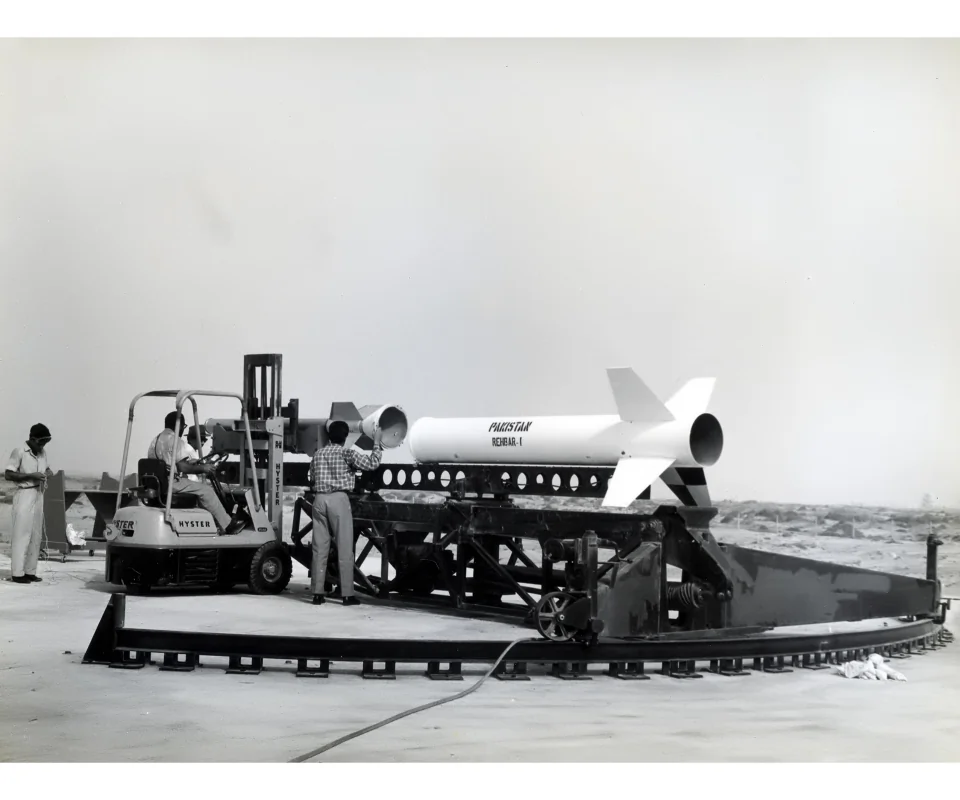
03The team leader drove the forkliftLifting the rocket onto the launcher was precise, delicate work, and there were few forklifts in Pakistan. So they bought one in America, and he learnt to drive it.
04Sunrise to past midnightNo written orders, no nine-to-five. Work from dawn, a siesta through the Baluchistan heat, then back to the range until well after dark — and on occasions well past midnight.
LAUNCH · 7 JUNE 1962 · 19:53 HRS

Pakistan enters the Space Age — with a bang

Film · Rehbar — Pakistan's first rocket in space · watch on Vimeo ↗
9 monthsfrom invitation to launch
80 milesapogee of the two-stage Rehbar-I
3rd in Asia10th country in the world
1stof all developing and Muslim countries

Just after sunset the Nike-Cajun climbed off the Baluchistan coast and released a trail of sodium vapour — lit orange by a sun that had already set on the ground, visible from Karachi and for hundreds of miles along the coast. Pakistan Air Force photographers at three stations a hundred miles apart, synchronised by radio and stopwatch, photographed it to map the winds. Rehbar-II followed two days later.

"You have brought back memories of the glories of our early Islamic ancestors and their notable scientific achievements."
PROF. ABDUS SALAM · HANDWRITTEN NOTE, 8 JUNE 1962
AFTER · 1962 – 1974

From borrowed rockets to building Pakistan's own (Rehnuma & Shahpar series of rockets)

1962–64 · MORE EXPERIMENTSGrenades, chaff and Pakistan's first tracking radar

Grenades exploded at altitude, their sound timed by arrays of microphones around the range. Then Judi-Dart clouds of radar-reflecting chaff for the International Indian Ocean Expedition, followed by a NASA-loaned MPS-19 — the country's first tracking radar, and a skill no defence service yet had.

1963–69 · MAURIPURA rocket plant for Karachi

With Salam and Usmani he toured Japan — Prof. Itokawa, the Kagoshima range — and France, which was chosen as further ahead. Contracts with Sud Aviation, Service des Poudres and ENSA produced a plant at Mauripur for Centaure and Dragon rockets and their propellant. Launched in 1969 as the Shahpar and Rehnuma series; Salim Mehmud built its instrumentation lab.

1962Tamgha-e-Imtiaz — the first and youngest recipient of such a Presidential award at the time
1965–66SUPARCO team leader in Paris — technology transfer, plant design, training
1966–69Project leader for the Mauripur plant and Sonmiani range
1969–74Director Technology, then Deputy Chief Executive Director (DCED), SUPARCO — then called to Defence Production
FROM THE ARCHIVE
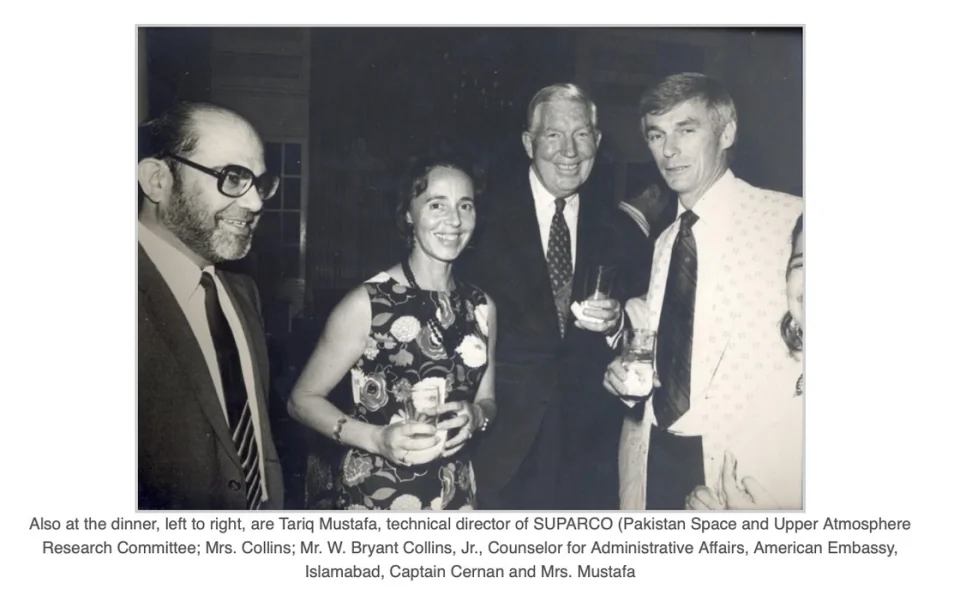
Apollo 17 visit to Pakistan: Tariq Mustafa, Mrs Collins, W. Bryant Collins Jr, Capt. Eugene Cernan, Mrs Mustafa
Apollo 17 visit to Pakistan: Tariq Mustafa, Mrs Collins, W. Bryant Collins Jr, Capt. Eugene Cernan (Captain of the Apollo Mission 17, USA), Mrs Akhtar Tariq Mustafa
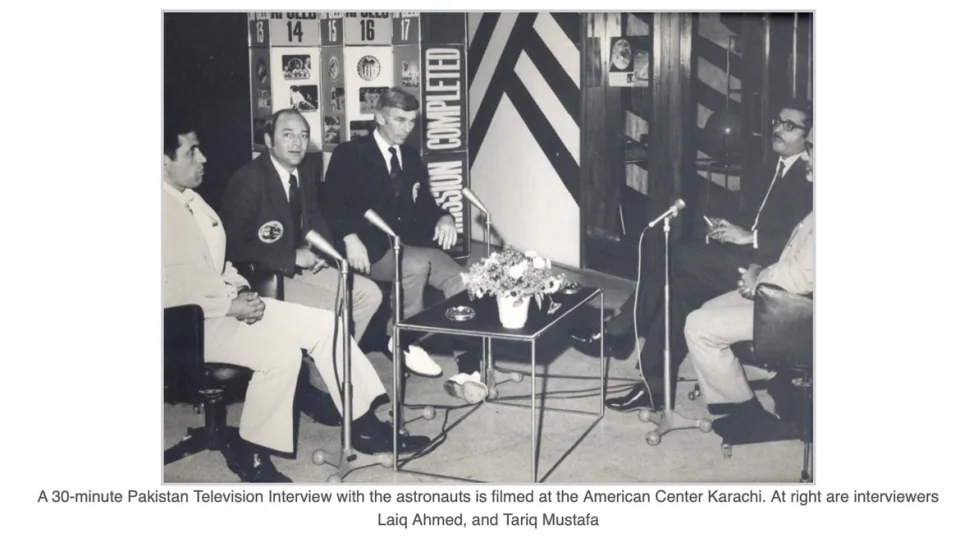
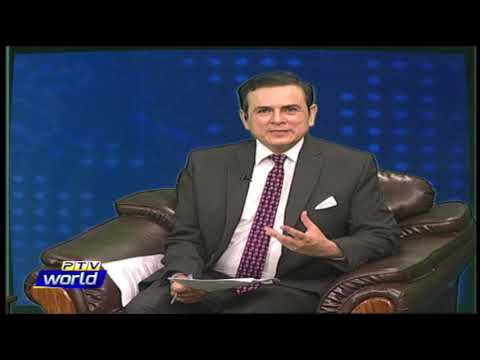
PTV interview with the Apollo 17 astronauts, American Center Karachi. Interviewers Laiq Ahmed and Tariq Mustafa
FROM THE SONMIANI ARCHIVE

On the range, 1962

The launch team before Rehbar on its launcher, Sonmiani
The launch team before Rehbar on its launcher · Sonmiani, 1962
Two men beside Rehbar-I standing vertical on its launcher
Rehbar-I upright on the launcher before flight · Sonmiani, 1962
Rehbar-I being loaded onto the launcher with a forklift
Loading Rehbar-I onto the launcher · Sonmiani, 1962
The team before Rehbar-I on its inclined launcher
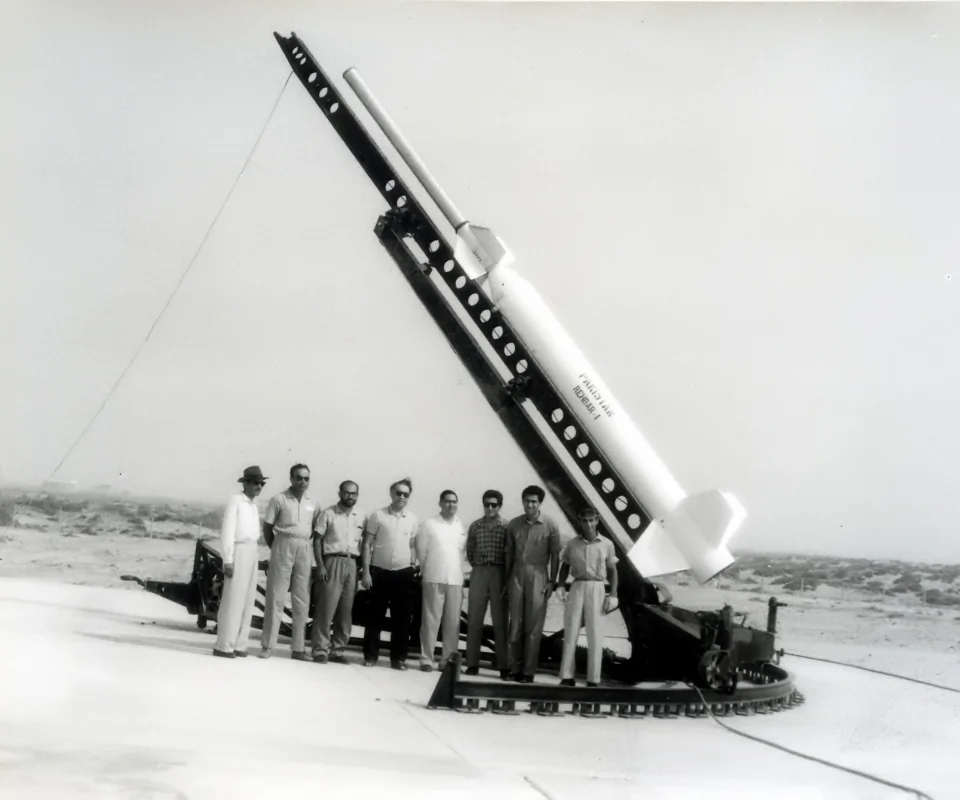
The team before Rehbar-I on its inclined launcher · Sonmiani, 1962
Pakistani and American team members together
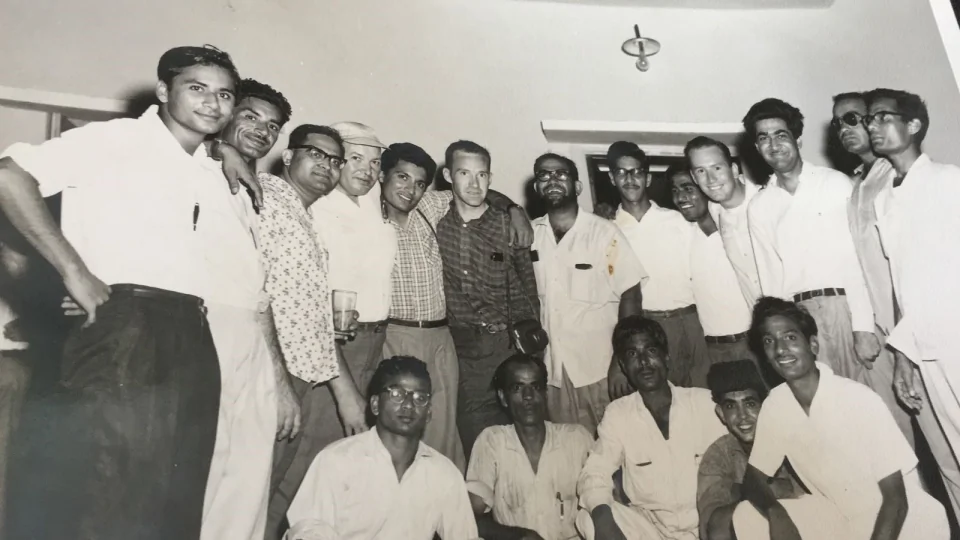
The Pakistani team with their NASA colleagues · 1962
Team preparing Rehbar-II on the launcher
Preparing Rehbar-II on the launcher · Sonmiani, 1962
Six members of the SUPARCO team outside a building
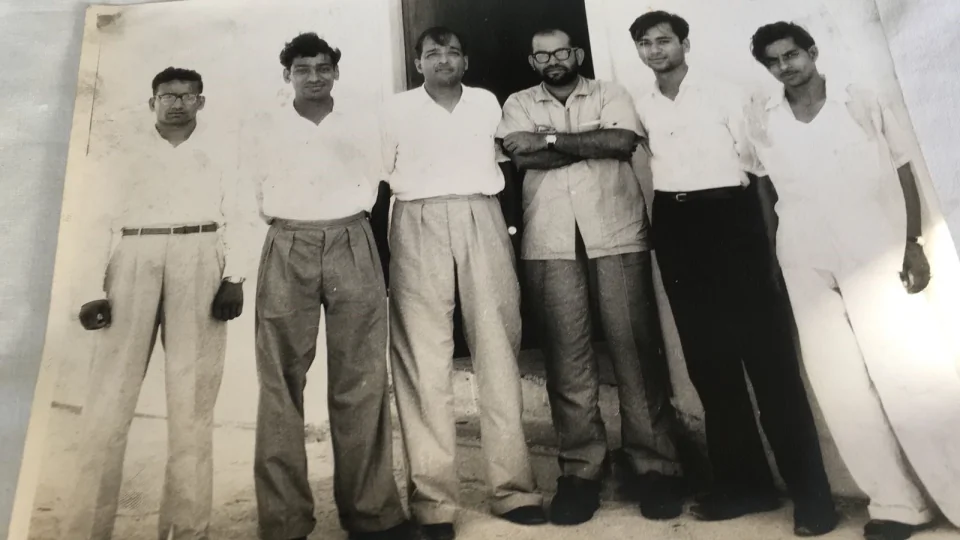
Members of the SUPARCO team · Sonmiani, early 1960s — names to confirm

Rocketry resources

ALL RESOURCES →
DR TARIQ MUSTAFA
DEFENCE · 1962 – 1988

The moderniser of defence

A civilian engineer the armed forces learnt to trust — from decoying missile boats off Karachi in 1971 to fourteen years building Pakistan's defence industry: aircraft, tanks, submarines and missile boats.

A Turkish military delegation called him "a one-man team".
With Chinese Defence Minister Zhang Aiping · December 1986
1962 – 1967 · GROUNDWORK

A rocket man in the staff college

Months after Sonmiani, the Army Staff College in Quetta invited him to speak on nuclear weapon design, effects and protection. It was the first time nuclear weapons were discussed in Pakistan's defence circles. Maj. Gen. Fazle Muqeem asked him to repeat the talk for the Sialkot garrison.

In Paris in 1965–66, running SUPARCO's rocket-plant project, he used his own initiative to visit Europe's defence makers — Thomson-CSF, Aérospatiale, Matra, Hotchkiss-Brandt, Bölkow and Oerlikon. That groundwork shaped the rest of his career.

14 yrsin Defence Production
3services — army, navy, air force — who came to rely on him
6Prime Ministers and Presidents served
50+countries worked and negotiated in
DECEMBER 1971 · NAVAL HEADQUARTERS, KARACHI

Defending Karachi harbour

At the personal request of Admiral Muzaffar Hassan, Commander-in-Chief of the Navy, he spent much of the war at Naval Headquarters in Napier Barracks, advising on the threat from India's Soviet-built OSA missile boats. Their first attack sank a frigate and a minesweeper on a conventional barrier patrol and damaged PNS Dacca.

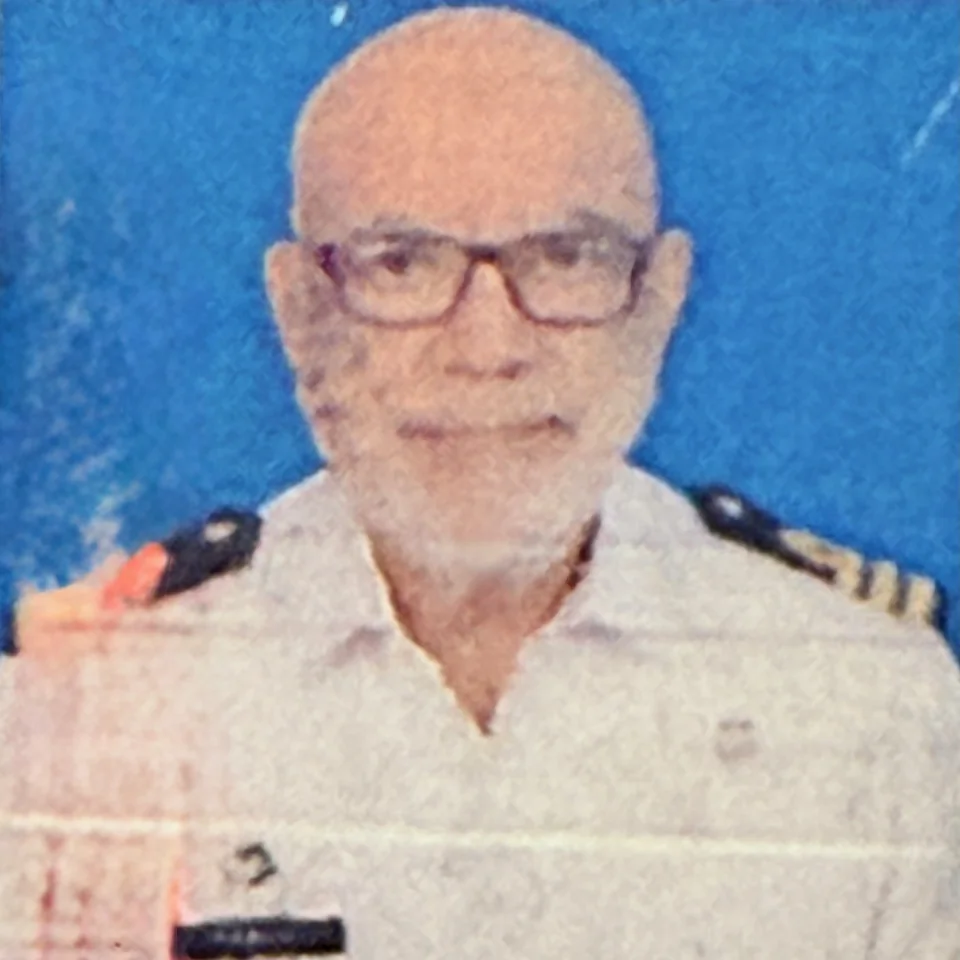
Tariq Mustafa in Pakistan Navy uniform
In Pakistan Navy uniform
01A fleet of decoysAdmiral Muzaffar invited a commander of Egypt's OSA squadron — through his friendship with Egypt's naval chief, a former course-mate. Tariq Mustafa and Salim Mehmud debriefed him over three days and wrote a secret report on the OSA and its Styx missiles. Working with the naval dockyard, they then built dozens of six-foot steel radar reflectors, designed by Salim, and hoisted them on fishing boats across the harbour to give the OSA radars false echoes. No further attack came; Indian press reports later spoke of a second attack that was aborted.
02Tracking radars on the coastIn the 1965 war the Navy had only surveillance radars. As SUPARCO's Director Technology he lent its tracking radar, moved to Manora, to give the Navy far greater detection range. SUPARCO later trained naval staff on modern radars and helped choose and install Selenia radars at Karachi and Ormara.
03Underground commandHe helped set up the Navy's first underground command and control centre at Clifton, bought from Ferranti of the UK.
04Choosing the missileIn 1972–73, in an unusual step, the Navy sent him and Salim — with no naval officer — to watch firing trials of the longer-range Franco-Italian OTOMAT in Sardinia, then for detailed briefings from Aérospatiale in Paris on the proven Exocet, to choose the anti-ship missile for its Sea King helicopters. With Aérospatiale and Matra both vying to host them, he insisted on staying in cheap hotels in the 5th arrondissement.

After the attack, an enraged Admiral Muzaffar took him to a naval safehouse in Clifton to show how the Navy had been watching India's slow-building missile-boat yards at Okha — which had lulled it into feeling safe. Instead, on Soviet advice, India towed its boats from Bombay behind other ships and released them after dark, beyond the reach of the Air Force. The tactic echoed 1967, when Egypt's new OSA boats sank an Israeli destroyer with Styx missiles — and Israel rebuilt its navy around missile boats.

1973 · Honorary Commander, Pakistan Navy (PN-1829) — with Salim Mehmud. Prof. Salam had written to Air Marshal Nur Khan of his exceptional knowledge of weapon systems for all three services.1973 · The only civilian in the military delegation to Egypt and Syria after the Ramazan war
1974 – 1981 · DEFENCE PRODUCTION DIVISION

An outsider brought inside

Asked in 1974 to join the new Defence Production Division as OSD / Joint Secretary, on deputation from SUPARCO — where he was then Deputy Chief Executive Director (DCED) — he made his mark at once — taking over the stalled negotiations with France for the Crotale surface-to-air missile system for the Air Force, which he knew from his Paris years.

Between 1975 and 1977 he travelled repeatedly to Libya with Defence and Foreign Minister Aziz Ahmad and Defence Production Board Chairman Abbas Khalili, preparing 19 defence co-production projects agreed between Bhutto and Gaddafi. On the Minister's own recommendation he was exempted from the civil service's lateral-entry test — an exception not repeated in Pakistan — and made Additional Secretary in 1977, In-charge of the Division by 1978.

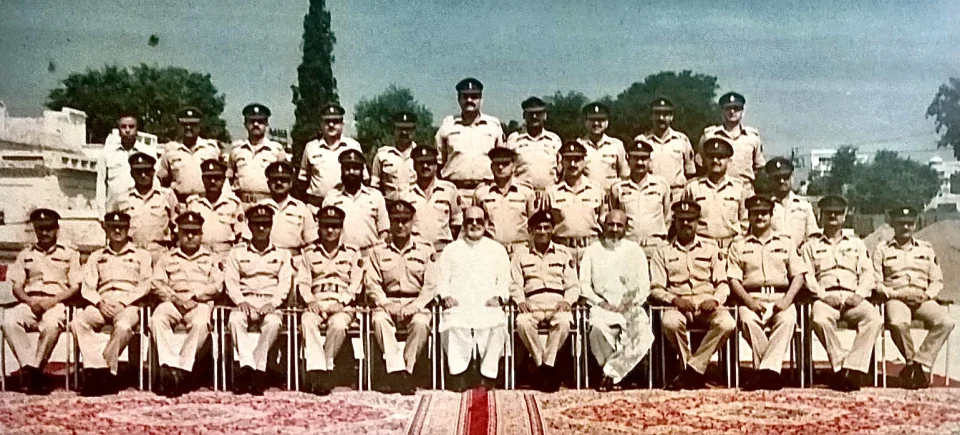
Group photograph with Army officers
GHQ RAWALPINDI · 1977 "Knives are being sharpened"

Offered to give GHQ's officers a technical talk, he chose "Anti-aircraft defence by guns and missiles". The night before, a contractor warned him that the air-defence command were waiting to take apart a civilian who dared speak on their speciality. He went back to work.

He covered air defence from the Second World War and the V1 and V2 to radar and missiles like the SAM-6 and Crotale. When General Zia asked for questions, there were none. Why not, Zia asked the air-defence general.

"We had a list of questions ready — but Mr Mustafa has covered them all."
ON NEGOTIATINGWhere to sit across the table

He learnt most from Rashid Ibrahim, Financial Adviser for Defence, and later from Ghulam Ishaq Khan, then Secretary-General Defence, in talks with the French on Saviem military trucks.

His rule: private firms like Dassault or Thomson-CSF can be negotiated with in Pakistan. Government-to-government deals — submarines, or China's CATIC — are best done in their capital, where you can raise the level and reach the defence minister.

photo — Washington embassy years
Caption to come
SEPT 1981 – APR 1985 · WASHINGTON DC

Minister (Technology), Embassy of Pakistan

Appointed by special commission of the President, he managed US–Pakistan technical relations for four years, and was Patron of the Islamic Center of Northern Virginia.

It was his second long stay in America. The open, confident country he had known at Oak Ridge and Wallops Island in 1960–62 — no armed guards even at NASA headquarters — now needed clearances at every door. It was a change he said he missed deeply.

1985 – 1988 · FEDERAL SECRETARY

Secretary, Defence Production

Back from Washington as Additional Secretary In-charge in February 1985, he was Secretary of the Division by April. Across his fourteen years in Defence Production he oversaw the development of aircraft, tanks, submarines and missile boats.

In office he dealt not only with Western governments but with Libya, North Korea, Syria and Iran — and met heads of state from Nixon and the Shah of Iran to Khomeini, Hafez al-Assad and Gaddafi.

AIRAircraft
LANDTanks
SEASubmarines
SEAMissile boats
FOR THE NAVY, AT THE TABLE
1970sA submarine schoolAs a member of the Defence Production Board, he helped establish the Navy's Submarine School from $15 million in Libyan funds raised by the Board.
1986Submarines over destroyersWhen the Navy pressed to buy three Type-23 destroyers from Britain for well over a billion dollars, he argued as Secretary that more submarines would serve it better — and held that line on a visit to the UK with Prime Minister Junejo, Admiral Sirohi and Foreign Minister Yaqub Khan, including a rough encounter with Britain's deputy defence minister.
1987Two Agosta submarinesHe led the team — with DCNS Rear Admiral Karamat Niazi and the Financial Adviser for Defence — that quickly acquired two nearly finished Agosta submarines built in France for South Africa and blocked by the UN embargo, calling on France's defence minister and his deputy to win concessions. French officials had warned their minister to watch out for "this bearded one" — and at the Le Bourget Air Show the minister later asked Pakistan's Defence Minister, Mir Talpur, half in jest, whether he could spare Monsieur Mustafa for the French team. Naval chief Admiral Abdul Aziz Mirza cited it in a letter to him in 2002.
AFTER DEFENCE
1988–91Federal Secretary, Science & Technology
1989–90Chairman, Asia Pacific Centre for Technology Transfer (ESCAP)
1991–93Federal Secretary, Production (Public Sector Industry)
1993–94Secretary, Privatization — retired 18 May 1994
FULL STORY ON THE LIFE TIMELINE →
FROM THE ARCHIVE
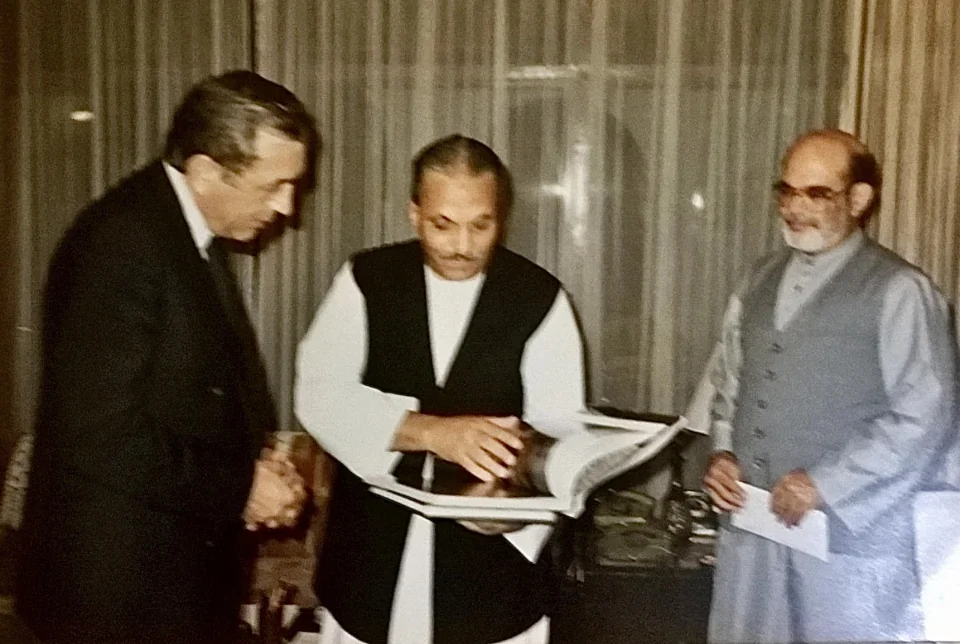
Presenting a book at an official meeting
With Chinese Defence Minister Zhang Aiping · December 1986
With Liu Guomin, Chairman, CATIC
With President Akbar Hashemi Rafsanjani · Tehran, 1992

Defence resources

ALL RESOURCES →
▶ WATCH
PODCAST · EP.109Trailblazing Journey of Dr Tariq Mustafa
▦ gallery — defence years
GALLERYPhotos to come
DR TARIQ MUSTAFA
SERVICE · 1998 – NOW

Pakistan's Paralympic movement

After a career building rockets and industries, he founded the body that sends Pakistan's athletes with disabilities to the world — and has led it, as a volunteer, for more than a quarter of a century.

Founder & President · NPC PakistanVice-President · Asian Paralympic CommitteePresident · South Asian Paralympic Committee
Dr Tariq Mustafa presenting a medal at a para sport ceremony
Presenting a medal at a para sport ceremony · event and year to confirm
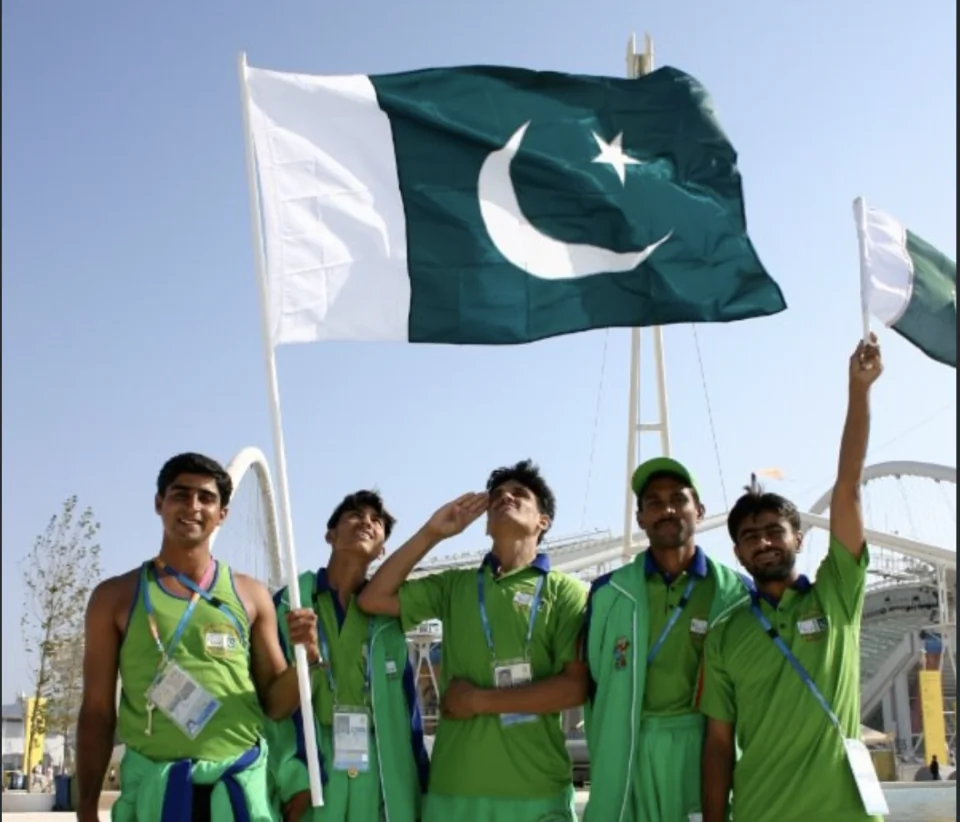
With the team at the Athletes’ Village welcome ceremony
85+medals in regional and international competition
43national training camps
22national sports championships
6National Paralympic Games, one for women only
4Paralympic medals — Pakistan's only four
Figures from NPC Pakistan and the Institute of Policy Studies — to be refreshed with current numbers.
DECEMBER 1998 · FOUNDING

A seat at the table

In December 1998 he founded the National Paralympic Committee of Pakistan. The Government recognised it as the only body that represents Pakistan at the International and Asian Paralympic Committees and runs sport for people with disabilities at home.

It is run by volunteers, and it has the same standing as the Pakistan Olympic Association: one for athletes with disabilities, one for athletes without.

MissionOrganise, supervise and co-ordinate games and competitions for people with disabilities.
TeamsSelect Pakistan's athletes for the Paralympic Games and international meets, and manage the teams there.
NetworkAffiliated with the IPC, the Asian Paralympic Committee, international para sport federations and Asia's regional bodies.
2002 – 2014 · ASIA

Vice-President of Asia

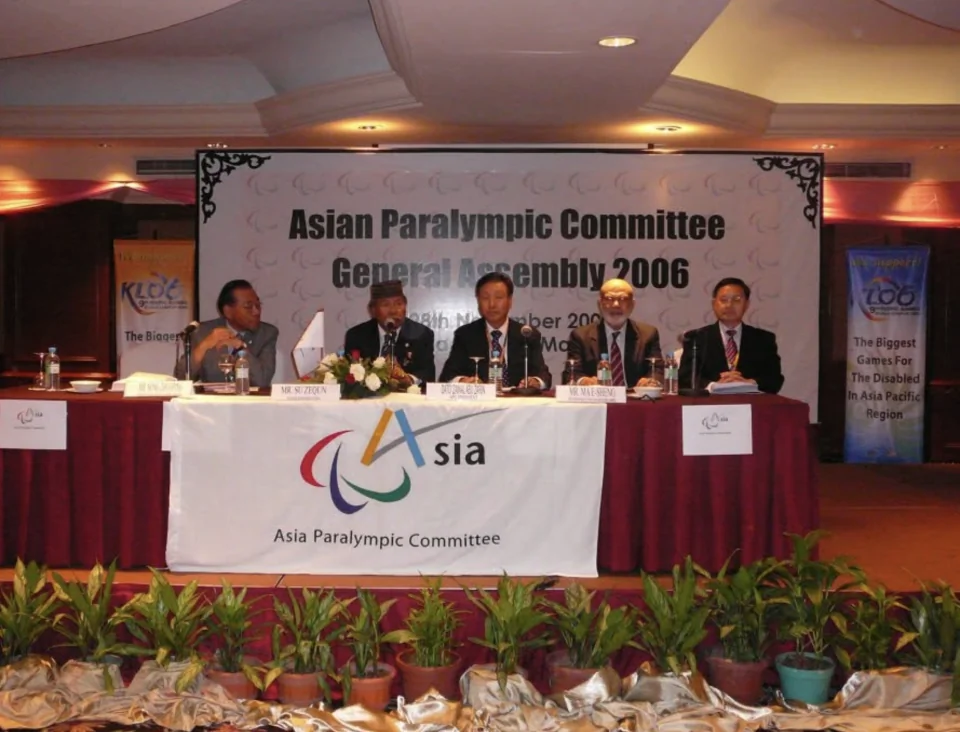
When the Asian Paralympic Committee was formed in 2002, Pakistan took one of its vice-presidencies — and held it, through Dr Mustafa, until 2014. He also became President of the South Asian Paralympic Committee.

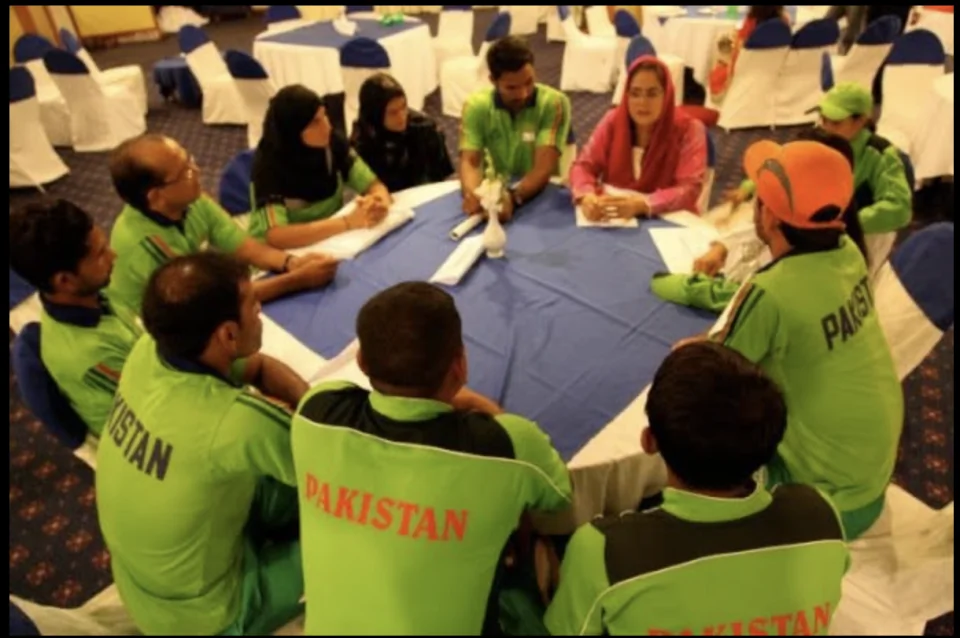
Since 2006 the South Asian countries have elected NPC Pakistan's Secretary-General, Imran Jamil Shami, as their member on the APC Executive Board. In 2015 NPC Pakistan members joined the APC's Women in Sport and Sports Development committees.

12 yrsas APC Vice-President, from its founding
25international and regional events entered
On the top table at the Asian Paralympic Committee General Assembly, November 2006
KUALA LUMPUR 2006
On the top table at the Asian Paralympic Committee General Assembly, November 2006
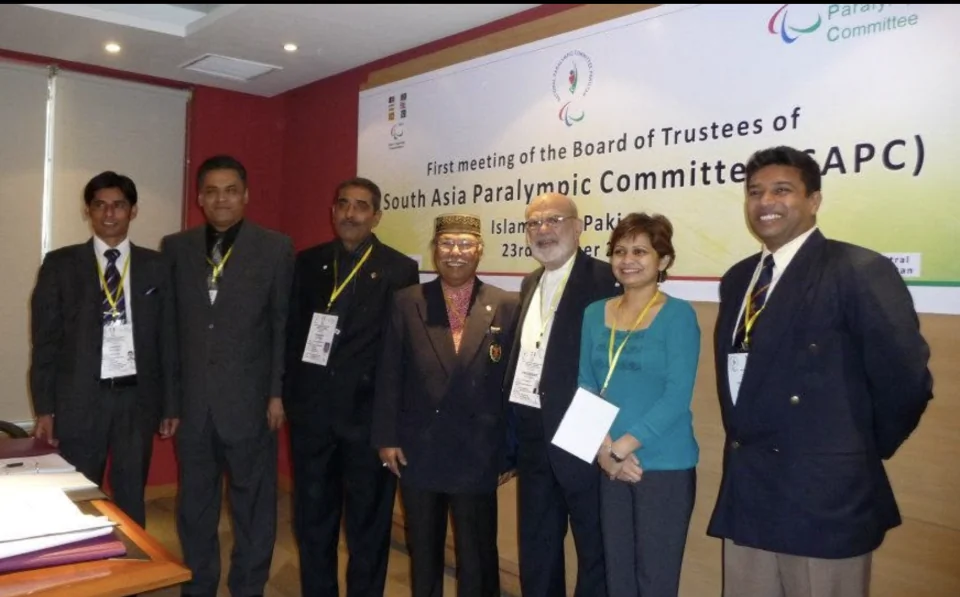
First meeting of the Board of Trustees of the South Asia Paralympic Committee
ISLAMABAD
First meeting of the Board of Trustees of the South Asia Paralympic Committee
2004 – 2024 · THE GAMES

From one runner to a gold medal

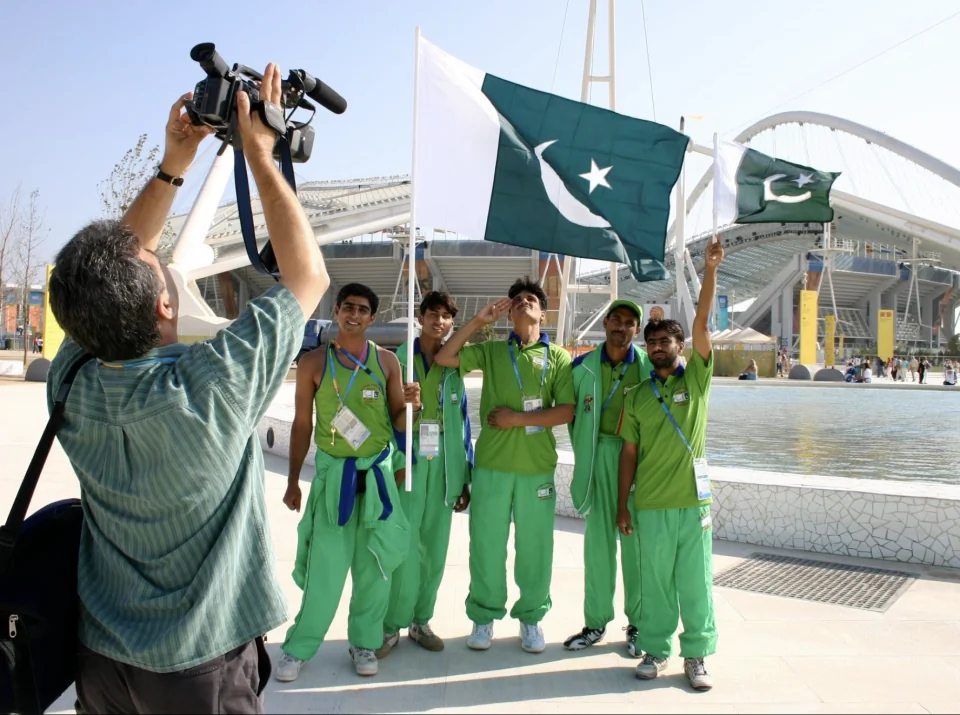
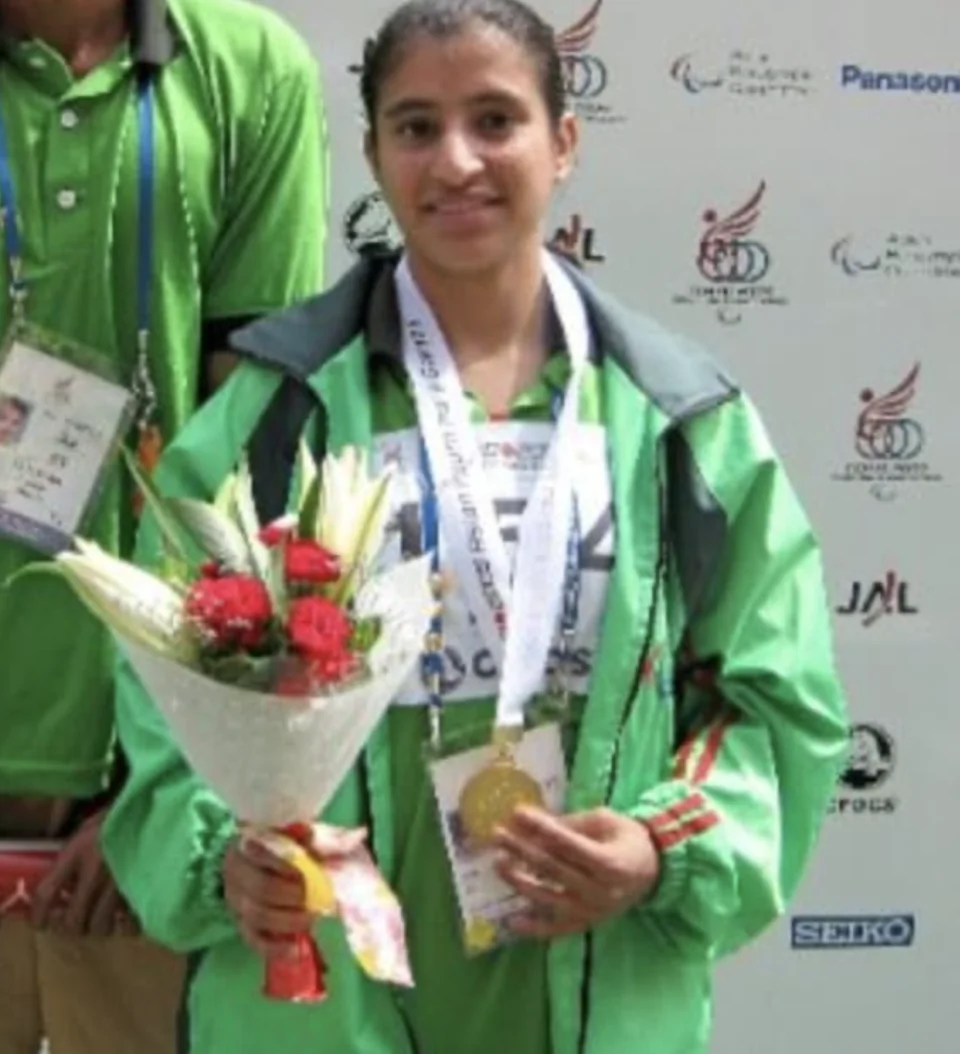
Athens 2004A small squad, including blind sprinter Amina Bibi from Attock. At the send-off, the painter Gulgee painted "Allah" in a few strokes.
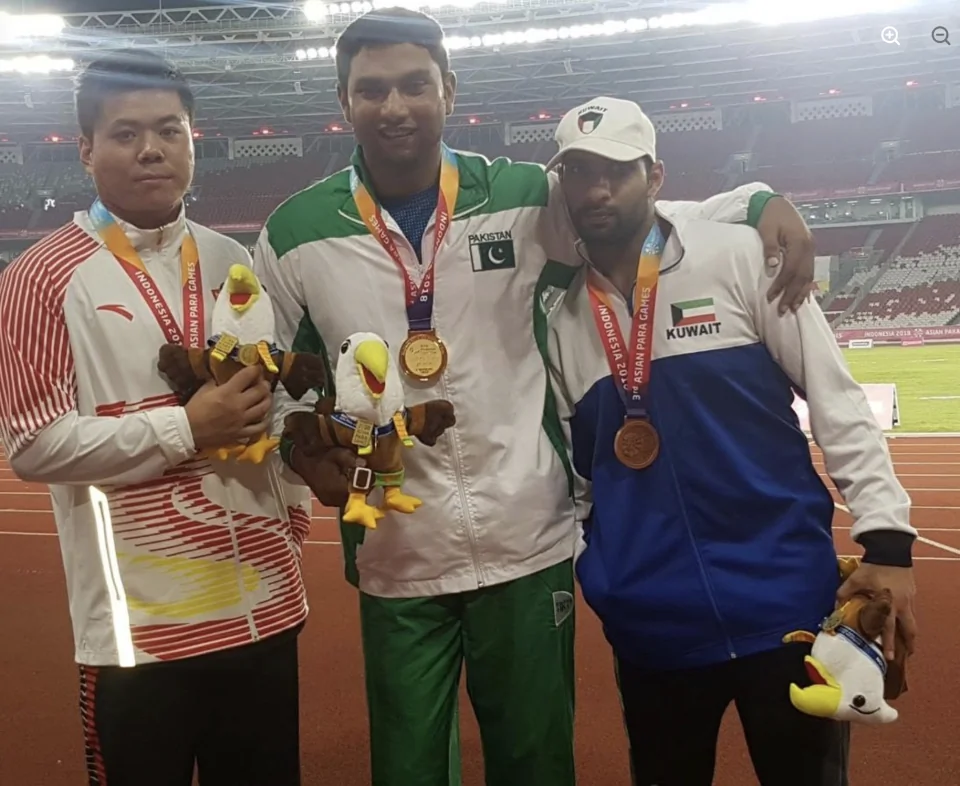
Beijing 2008Pakistan's first Paralympic medal. Haider Ali, silver, long jump F37/38 — 6.44 m, equal to the world record.
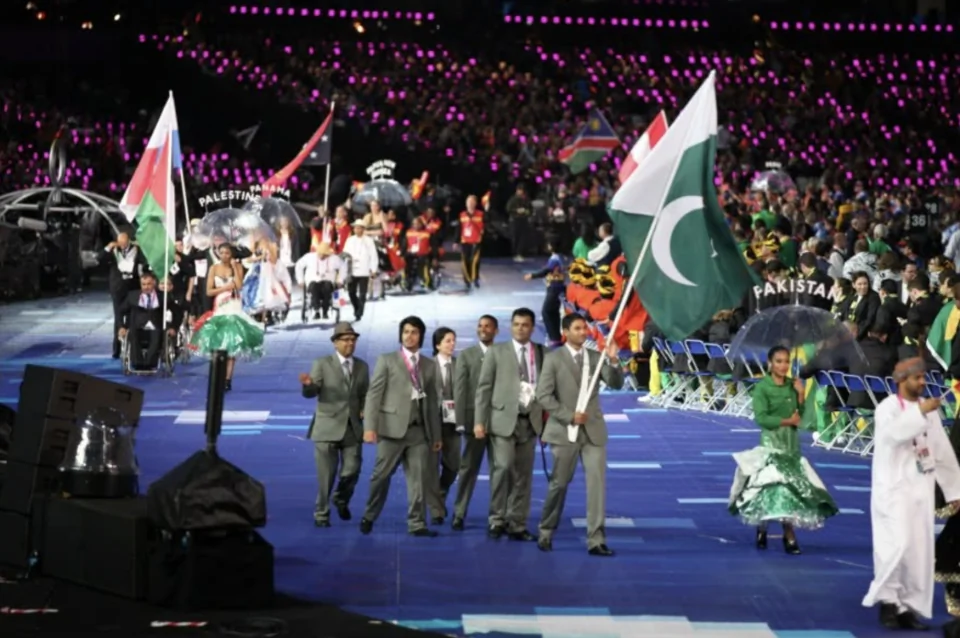
London 2012Pakistan's first "One Year to Go" event, at the British High Commissioner's residence in Islamabad.
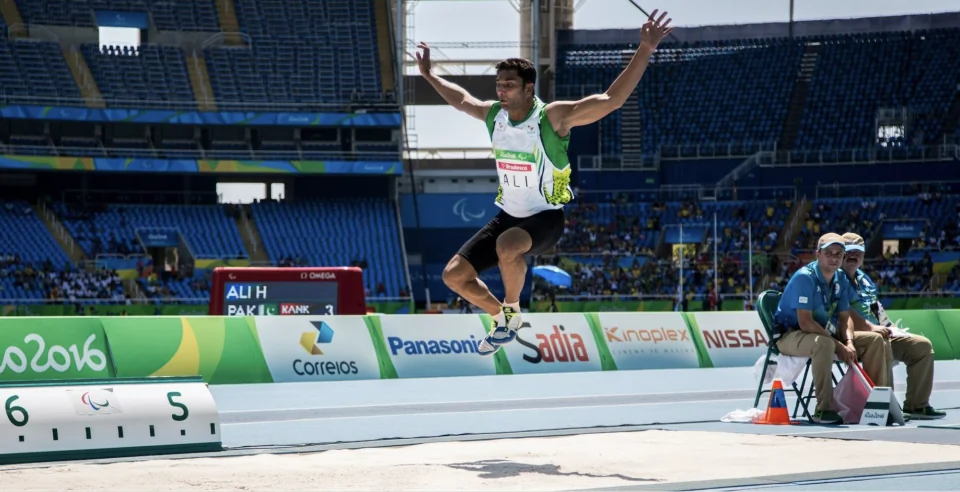
Rio 2016Haider Ali, bronze, long jump T37.
Tokyo 2020Pakistan's first Paralympic gold. Haider Ali, discus F37 — 55.26 m.
Paris 2024Haider Ali, bronze, discus F37 — his fourth Paralympic medal.
ASIAN PARA GAMES · GUANGZHOU 2010Golds for Haider Ali (long jump) and Mudassir Baig (400 m); silver for Muhammad Awais (javelin).
ASIAN PARA GAMES · JAKARTA 2018 · HANGZHOU 2022Three more golds for Haider Ali — discus and javelin in Jakarta, discus in Hangzhou.
Pakistan’s team at the Olympic Stadium, Athens Paralympic Games
ATHENS 2004
Pakistan’s team at the Olympic Stadium, Athens Paralympic Games
Pakistan’s team enters the stadium at the opening ceremony
LONDON 2012
Pakistan’s team enters the stadium at the opening ceremony
Haider Ali in the long jump T37, on his way to bronze
RIO 2016
Haider Ali in the long jump T37, on his way to bronze
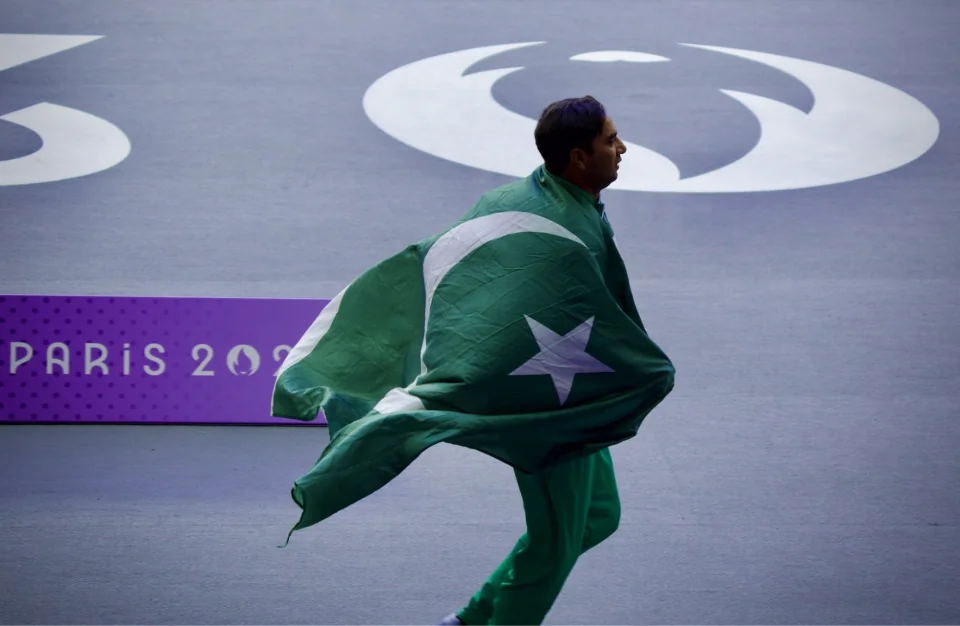
Haider Ali with the flag after discus bronze — his fourth Paralympic medal
PARIS 2024
Haider Ali with the flag after discus bronze — his fourth Paralympic medal
ADVOCACY

Equal reward for equal medals

After Guangzhou, the medallists got a welcome at Islamabad airport and little else. He asked the Government and the Pakistan Sports Board publicly for the same cash prizes other Asian Games medallists received, and for land in Islamabad for a training centre for athletes with disabilities.

"Our young athletes with disabilities will keep the national flag flying."Dr Tariq Mustafa at the team's send-off for the Athens 2004 Paralympic Games, as reported by Business Recorder
FILM · NPC PAKISTAN · VIMEO

The Paralympic movement in Pakistan

▶ WATCH ON VIMEO
Pakistan’s athletes with the national flag — The Paralympic movement in Pakistan▶ WATCH
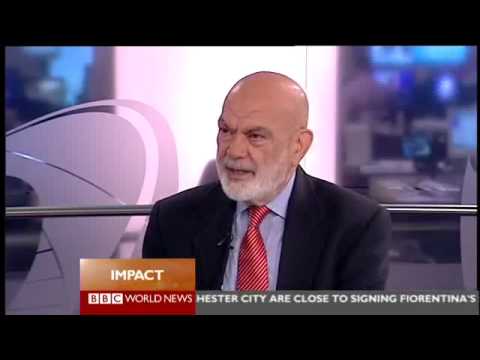
INTERVIEW · BBC

In conversation with Mishal Husain

WATCH ON YOUTUBE ↗
DR TARIQ MUSTAFA
FUTURE OF MANKIND · SCIENCE & RELIGION

Reason and revelation — not blind faith

A searcher all his life, on man's place in the universe and the bond between reason and revelation. Dazzled as a young man by the West’s spirit of enquiry — his mother teased that he was becoming “half an Englishman” — he turned in time to his own Islamic heritage. Since retiring in 1994 he has given himself to the international dialogue on science and religion.

INSPIRATIONis subjective.
REVELATIONmust be objective — from the Creator alone, without distortion or interpretation.
▶ WATCH · 5 MIN
INTRODUCTIONFuture of Humankind — a five-minute introduction
The Case for God by Tariq Mustafa — cover
THE BOOK

The Case for God

Based on reason and evidence — not groundless faith

In November 2007 Newsweek ran "The God Debate" between a pastor and an atheist. The Islamic viewpoint was missing, so he wrote to the editor — and the letter grew into this book.

Sceptics ask what evidence there is for a Creator. The book reverses the question: if a truly unique book exists — one that could not be the work of any person or group — how could it not point to an all-knowing Creator? The Qur'an makes exactly that claim, and invites anyone to verify or falsify it.

Launched Islamabad, Nov 20092013 edition · 204 pagesISBN 978-9699382017
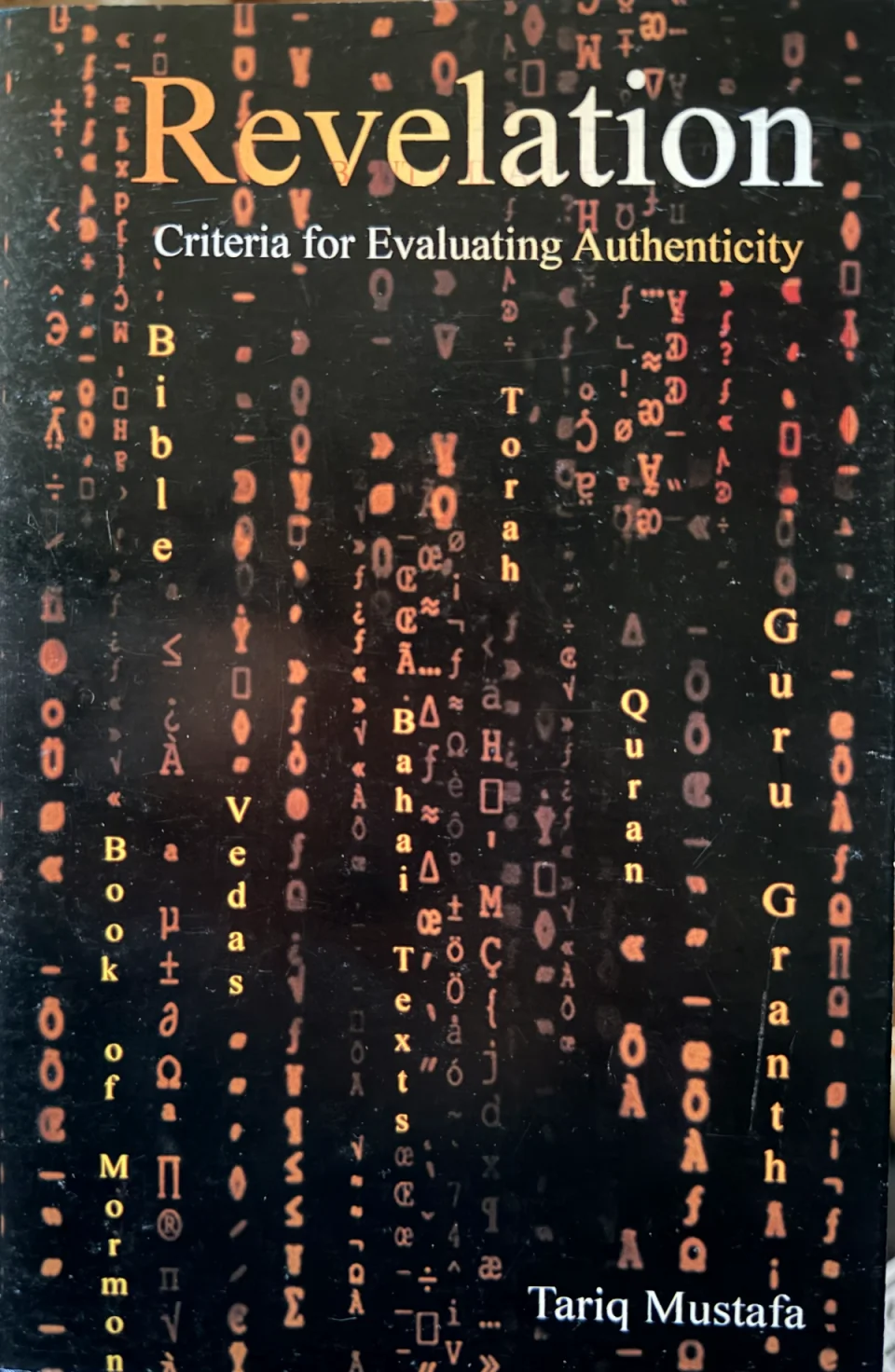
Revelation: Criteria for Evaluating Authenticity — booklet cover by Tariq Mustafa
Booklet edition
ZYGON · VOL. 43, NO. 3 · SEPTEMBER 2008

Evaluation Criteria for the Authenticity of Revelation

His paper in Zygon, the leading journal of religion and science, sets out tests any scripture claiming to be revelation should be able to pass — measured by reason, not belief.

01Unique in language, form and contentIt should be written in clear, intelligible language with exceptional literary qualities worthy of its sublime source — carrying the stamp of a super-intelligent Creator, demonstrably so. It should retain its original form, language and text, so its authenticity holds for future generations.
02Consistent and free of contradictionA message from an all-knowing source cannot contradict itself. It should be internally consistent throughout and free of any contradictions, and should clarify and correct the significant errors and distortions of earlier claimants.
03Explains itself and its credentialsIt should state its own purpose, indicate its origin and establish its credentials, carrying evidence of divine rather than human authorship. It should give meaningful, convincing information about the Creator, the afterlife and humanity’s relationship with its Creator — and the character of its bearer should meet the impeccable standard its status demands.
04Practical guidance, not airy-fairyIt should offer solid, usable guidance: laws and instructions that help people in their individual and communal lives, guide humanity’s development, protect it from needless strife and point the way to genuine progress. Ultimately, it must be judged by its influence on mankind and how it has stood the test of time.
05Speaks to the farmer and the philosopherIt should have depth enough to serve a simple, unlettered farmer and an accomplished philosopher such as Bertrand Russell at the same time. Its appeal must rest on rational grounds, not a call for blind faith — and its essential guidance should reach all peoples and remain valid for all times.
06Contains its own tests of veracityPreferably, it should carry self-tests of its genuineness: statements about the universe and human nature — signs, predictions, observations — that can be verified or falsified, and perhaps a built-in code or pattern, of the kind SETI scientists search for in signals from extraterrestrial intelligence.
+ ALL 15 EVALUATION CRITERIA, FROM THE PAPER
  1. 01The revelation should be in a clear, intelligible, and understandable language, having some exceptional literary and other qualities – worthy of its sublime source, befitting the Creator. It must carry the stamp of the super-intelligent Creator and be demonstrably so.
  2. 02It should be consistent and free of any contradictions.
  3. 03It should have depth of meaning so that it can simultaneously cater to the needs of both a simple farmer and an accomplished philosopher à la Bertrand Russell.
  4. 04Its appeal must be based on rational grounds and must not call for blind faith.
  5. 05It should retain its form, original language, and text to maintain its veracity for the future generations and be attributable to the divine.
  6. 06It should carry evidence of its divine, not human, origin and content in a suitable and convincing fashion.
  7. 07It should contain information, or pointers, which can be verified or falsified, for example, signs, predictions or comments about the universe we live in and about the nature of mankind.
  8. 08It should contain guidance, information, laws, and/or instructions that help mankind with its individual and community existence, assist and guide its development, and protect it from unnecessary strife.
  9. 09Determine if it contains any evidence of a fundamental and genuine code similar to the one, for example, being searched for by NASA specialists while conducting their exploration for extraterrestrial intelligence, under the SETI project.
  10. 10It should contain meaningful, useful, and convincing information about the existence and attributes of the Creator, about afterlife (whether there is one or not), and relationship of humans with their Creator.
  11. 11The character, conduct, and behavior of the bearer of the message should display the impeccable standards befitting his lofty status.
  12. 12It should clarify the role and status of other claimants existing before it was revealed, and correct and rectify their significant errors/distortions.
  13. 13There should be a built-in mechanism of renewal, replacement, or preservation of the revelation, to retain some kind of continuity and authority. The essential contents of the guidance should reach all peoples and be valid for all times.
  14. 14It should focus on the welfare of humanity and identify desirable pathways in the march of mankind towards genuine progress with guiding signposts.
  15. 15Ultimately, as recipients of Divine Guidance, mankind should be able to ask: What influence did the revelation have on mankind in general, and how has it stood the test of time?

The paper develops these six tests into fifteen detailed criteria, and proposes that they be refined with scientific and religious communities of every hue — then applied openly to any claimed revelation, with results put before peers for verification or falsification, as is the custom in science.

NOW · ENVISIONING THE FUTURE OF HUMANKIND

Common origin, common future

Humankind has mostly been driven by groupings — tribe, nation, man-made religion. His current project looks for an answer to humanity's existential challenges by engaging universalist thinkers and world leaders: pluralism and tolerance grounded in a shared Creator, a shared origin and a shared accountability.

2008Workshop at the IRAS conference, Star Island, USA
2015Governing Council, Institute on Religion in an Age of Science
TalksScientific Society of Pakistan, UK universities, Muslim Education Forum, International Islamic University, church and mosque groups
FUTUREOFHUMANKIND.ORG ↗
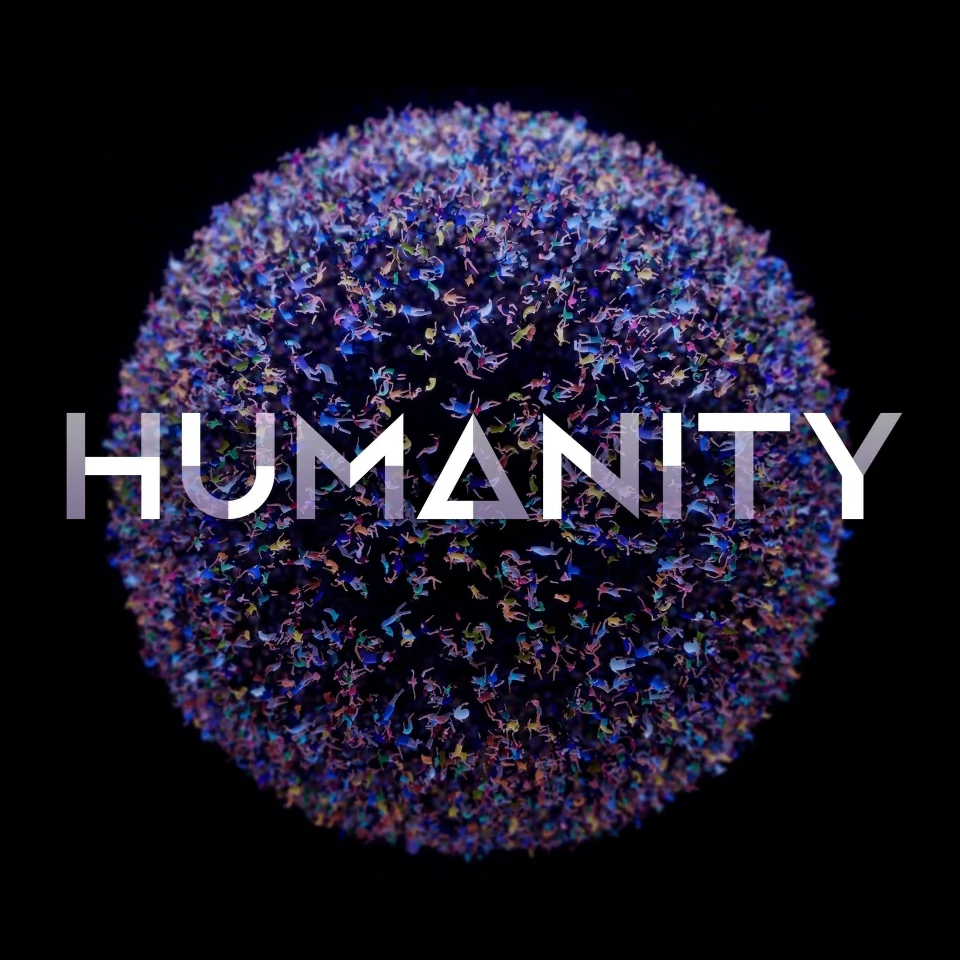
Humanity — a sphere of people
20 PRINCIPLES · IRAS WORKSHOP, STAR ISLAND, N.H. · 7 AUGUST 2014

Steering the future of humankind

↓ DOWNLOAD PDF

Hundreds of organisations and think tanks study the future, but almost all project it from current trends to safeguard the parochial interests of a nation or group — national security, marketing, or outdoing the competition. A fundamental piece is missing: someone must look at the future of humankind as a whole, and at the common interests of all its women and men.

Population explosion, climate change, the depletion of resources, the spread of weapons of mass destruction and the rise of extremism are pushing humankind in an unsustainable direction. At this crossroads of disaster or enlightenment, we need to find what views we hold in common — and that means setting aside prejudices and biases, historical, cultural and religious, accumulated over time.

Imagine a journey to a new world, far from our earth in space and time. What kind of world would we want it to be — and how would we frame its values, laws and guidelines?

One day a large part of mankind will head for another place in our galaxy. Will its pioneers repeat what we have lived through here, or build something we can be proud of? It would help them greatly to inherit a model devised at leisure by the best minds of the days gone by. And the structure that emerges would apply just as directly to the world of today, and the existential challenges facing us now.

GUIDELINES AND PRINCIPLES

The proposed paradigm shift

01All are born equal

It is a self-evident truth that all human beings are born equal (Jefferson). There are no superior races, no chosen people, nor any promised lands. The laws of nature hold equally for all.

02Inalienable rights

All human beings possess certain basic, inalienable rights, and no one has the authority to deny them. No human being has the right to rule another arbitrarily — neither kings, nor priests, nor capitalists, the three greatest exploiters of innocent humanity. Exploitation of every kind must be nipped in the bud.

03Freedom with accountability

There can be no compulsion in faith or belief; freedom of choice must be ensured. But with freedom of choice comes accountability. We are fully accountable for our deeds — we shall reap what we sow.

04Natural moral law

Just as physical laws rule the universe, natural moral laws govern human conduct, and none can escape them.

05Reason — and its limits

The values of the Age of Reason and rationalism must rule the day. Alongside them, it must be accepted that “matter is not all there is”. Science, though dazzlingly successful, has its limitations.

06The rise of consciousness

Humankind has grown through physical, then chemical, then biological evolution. It has now entered a stage that may be called intellectual evolution — the rise of consciousness — which gives humans their uniqueness.

07Protect the mind

The human brain is the acme of evolution; its high degree of consciousness is what principally distinguishes us from animals. Whatever hinders its free and proper use should be discouraged — intoxicating drinks and drugs, but also blind rage, pride and arrogance, and blindly following a cult leader or political ideology.

08The value of life

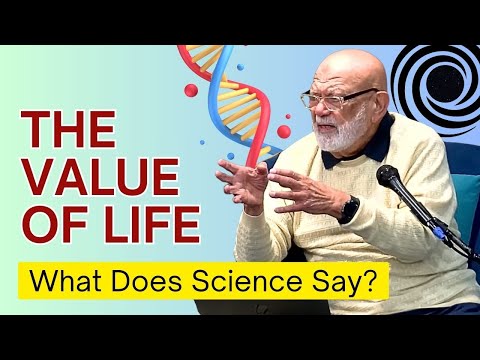
Nature has endowed life with an extremely high, almost infinite, value — we really are children of the stars. Science and religion both recognise this; prevailing economic theory, the ruling paradigm, does not. Economics values things by supply and demand, and nature has made life plentiful, easy and pleasurable to create. Engineering principles — cost of materials plus energy plus labour — give a much truer picture.

09A shift in consciousness

Technology is driving us inexorably towards globalisation, but our political, economic, social, cultural and religious institutions have failed to keep pace. A paradigm shift in outlook is essential. As Einstein reportedly said, “Problems created at one level of consciousness cannot be solved at the same level.”

10Curb Wall Street and Hollywood

The “Wall Street Syndrome” of extortionate capitalism, and the corroding effect on society of the “Hollywood Complex” — a heady mélange of sex and wanton violence, constantly on the increase — must be curbed.

11Justice tempered with compassion

Justice for all is an absolute requirement — but justice tempered with compassion, with the emphasis on preventing society’s ills rather than curing them.

12Meritocracy

Merit must be supreme: no undue favours for the privileged, no old caste system in new bottles, and no racial or other discrimination.

13Truth and true witness

Speaking the truth and bearing correct witness is a fundamental requirement in all circumstances, without exception. Witnesses must not wait to be summoned; it is their obligation to come forward and give true and faithful evidence so that a just judgment can be reached.

14Limits on war

War may be allowed to the aggrieved when peaceful means fail, but within limits. Retribution must never exceed the initial aggression, and even then forgiveness is better, for its healing influence on society. “All is fair in love and war” is patently false, and “my country, right or wrong” must no longer be taught.

15Economic balance

Society needs economic balance. The resourceful must not be able to exploit the poor and underprivileged. The power of money should be controlled, and monopolies must not be allowed to exist.

16Welfare and enterprise

The need for a welfare state is almost obvious, but private initiative and drive also need space. The dignity of labour and the freedom of capital and enterprise must be balanced — by appropriate laws, and equally by a shift in our overarching values towards compassion and equity.

17Trustees of nature

Humans have been endowed with the ability to exploit the resources and forces of nature. This must not be done indiscriminately or carelessly, lest it become unsustainable. We should act as trustees, not owners, of nature and non-human life.

18Competition with cooperation

Competition is the essence of life, but it must be mixed with cooperation if strife is to be avoided and each is to receive a due share — a win-win outcome.

19Beyond nationalism

Nationalism has outlived whatever usefulness it had. It is outmoded and grossly out of tune with our globalising world, yet it remains today’s ruling paradigm — is it any wonder humanity has tied itself in knots? We must grow out of it and build a new order suited to an increasingly global world.

20Democracy by consultation

As Churchill said, democracy has its weaknesses but is the best political system developed to date. Its emphasis, however, must shift from securing a “majority vote” to the consultation and inclusion of all stakeholders in governance.

Workshop participants were asked to review these guidelines on purely rational grounds, after freeing themselves from acquired cultural, national and other preconceived biases and Weltanschauungen. Workshop given by Tariq Mustafa at the IRAS Conference, Star Island, New Hampshire, 7 August 2014.

A CLARION CALL

Clarion call for action for the UN

Saner elements of the world, unite — before our fragile civilization is destroyed by the extremists of both sides.

Chairing the Asia Pacific Centre for Technology Transfer board, ESCAP

How can one explain the madness spreading across this beautiful earth of ours?

  1. 01When some followers of a faith whose very name means “peace and submission” (Islam) are driven to indiscriminate killings and suicide bombings. Whatever the provocations, surely the gentle Prophet of Islam would never have approved of such a course.
  2. 02When the most powerful nation and sole superpower on earth, the USA, allows its leaders to act as “judge, jury and executioner” all rolled into one. Surely the founding fathers of the USA would not have approved of such a course.
  3. 03When the United Nations — an international agency created for the second time in the 20th century — is crippled and neutered by the veto rights of the victors of World War II, and even after 50 years we are still only talking of reform without getting much done.
  4. 04When the saner elements of the world can only assemble periodically and protest weakly to show their disappointment and anger, but are unable to mobilize and stop, or even slow down, the extremists on both sides.
  5. 05When human rights are constantly being curtailed in the name of fighting “terrorism” in the world’s most powerful democracy. What was once a torch-bearer of freedom is in danger of sliding back into the old imperialist mold through the doctrine of “pre-emption” and the New World Order.
  6. 06When walls, borders, prejudices and armaments proliferate, when might is declared right, and the focus shifts to regime change as and when it suits the high and mighty.

Then something has clearly gone seriously wrong with our world order — and it calls for urgent, resolute action by those affected: you and me. Unless we, the people of the world, take matters into our own hands and drive the saner elements to press the world’s leadership to change course or step aside, our occasional protests will be of no avail, and may come too late.

PART II

What needs to be done

Let all who share these ideas join hands and raise their voices together, building into such a rising crescendo that it can no longer be ignored and drowns out the madness of the neoconservatives and the fanatics of this world. Let a tidal wave of world opinion brush aside the extremists, and let sanity once again rule the world.

Even if we cannot yet abolish war, power no longer resides in the “barrel of the gun” — it is steadily shifting to the citizens of the world, through “clicks on the internet”.

The best instrument for this purpose, despite its inadequacies, is still a rejuvenated, reformed, refocused and strengthened United Nations. Much work has been done by the forums set up by successive Secretaries-General; there is the Millennium 2000 effort with its targeted programme, and many bureaucratic reforms have already been enacted.

Yet the basic problem remains untackled. By its very nature the UN — especially at policy level, in the General Assembly and the Security Council — is dominated by representatives of nation states. There is no real voice for the common citizens of the world, and no one has the sole and primary responsibility to study the present and future challenges facing mankind.

The world is fast becoming a global commons. Accelerating technology has outpaced the growth of our social and moral institutions, and may even have undermined them. The systems of the 19th and 20th centuries, centred on nationalism, are outdated and can no longer serve mankind. Agencies such as the UN were created to overcome these limits; they have served a useful purpose, but they need drastic redirection and reform to meet the challenges of the 21st century. We must demand that the following happen now — and make our voices heard and count.

PART III

Action plan

A committee to be established by the UN Secretary-General, mandated to produce a reform package within three months — building on the work of the many committees before it — covering:

  1. 01Review the size and workings of the Security Council, and abolish or dilute its veto powers.
  2. 02Make the UN more of a people’s organization, rather than a representation of nations, by strengthening the role of civil society.
  3. 03Find and develop independent sources of income to lessen the UN’s dependence on contributions from nations. In the transition, if member nations are unwilling to help, let the resources be generated by the civil sector, NGOs and motivated private enterprises and foundations.
  4. 04Give the UN suo motu powers — the authority to take up any issue of vital concern to the world, whether or not the parties concerned want it.
  5. 05Give the UN a judicial rather than merely a recommendatory role — moving towards world government with the ability to implement decisions.
  6. 06Move quickly towards a world parliament elected by adult franchise, on the pattern of the European Parliament.
PART IV

A Council of Sages

Pending a world parliament, the Secretary-General should move to establish a “Council of Sages”: people with a demonstrated record of service to the common interests of mankind. Members would be chosen through a transparent process, perhaps on the pattern of the Nobel prizes, and could be endorsed — if not elected — by the world’s citizens via the internet.

The kind of person who could serve is exemplified by Nelson Mandela, Jimmy Carter, the Aga Khan, Prince Hassan of Jordan, Archbishop Desmond Tutu, Dominique de Villepin, Arundhati Roy, George Soros, Gro Harlem Brundtland and Fernando Henrique Cardoso — drawn from different parts of the world, but willing, able and committed to put the common interests of the world and its citizens ahead of allegiance to their own nations, states or groupings.

Such a council would give the Secretary-General — acting as managing director of the board — the collective insight and clout to resist pressure to turn the UN into a debating society where national and regional interests reign supreme. Unless its attention shifts to international and common citizens’ issues, the UN will not fulfil the tasks its founders set in its Charter, nor help save the world from the follies of the neoconservatives and the fanatics.

SUMMARY

In brief

OBJECTIVES
  • Mobilize the citizens of the world as a counterforce to the pressures exerted by the neoconservatives at one end and the fanatics at the other.
  • Strengthen and reform the UN so it can act autonomously and effectively in the true interests of the world’s citizens — not be dominated, as today, by the powerful veto-wielding states.
WHAT YOU CAN DO
  • Sign this call to convey your support for its contents and objectives.
  • Help circulate the Clarion Call worldwide, in different languages.
  • Pledge your time and finances to further the cause.
  • Urge the UN Secretary-General to form a committee to finalize UN reform on a time-bound plan.
  • Urge the Secretary-General to establish, transparently, a Council of Sages with the confidence of the world’s citizens — in preparation for a truly representative world parliament.
SIGN THE CLARION CALL →Tariq Mustafa · mustafatariq@hotmail.com
ARTICLES & TALKS

Writings on the future of humankind

ALL AT FUTUREOFHUMANKIND.ORG ↗
ESSAY · PERSONAL CREDOWhat religion means to meA searcher’s credo: religion as guidance from the Creator, tested by reason and evidence — and the principles it holds, from one brotherhood of mankind to “children of the stars”.↓ READ PDF ESSAY · FUTUREOFHUMANKIND.ORGWhy think of the future?The starting point of his project: why humankind must look ahead to meet its existential challenges.READ ONLINE ↗ ESSAY · 20 PRINCIPLESFuture of Humankind — a required paradigm shift in values and attitudesImagining the founding charter for humans settling a new world — and why the same principles apply to the world of today.DOWNLOAD PDF ↓ ESSAY · GLOBAL GOVERNANCEPutting life into the United NationsFrom nationalism to universalism — how humankind can "thrive in the future rather than merely survive".DOWNLOAD PDF ↓ ESSAY · 2021The "Nelson Mandela moment" for AfghanistanA case for compassion over revenge, and for the world to meet Afghanistan's humanitarian crisis together.READ ONLINE ↗
DOCUMENT LIBRARY · ESSAYS, TALKS & PRESENTATIONS
c. 1990Cry of Khana Kaaba (Urdu) — written at MeccaCOMING SOON
2007The God Debate — response to Newsweek↓ PDF 2008Reason and Revelation — evaluation criteria (Zygon)↓ PDF 2008The Case for God — IRAS presentation, incl. the rise, decline and future of Islam↓ PDF c. 2006A Clarion Call for Action — saner elements of the world, unite↓ PDF
TalkWhat I have learnt in my 80 yearsCOMING SOON
IRASWhat religion means to me↓ PDF 2014Steering the future of humankind — IRAS workshop, Star Island↓ PDF
—The Qur’an, an enemy of all man-made religionsCOMING SOON
2015Finding solutions to our existential problems — IRAS presentationCOMING SOON
2015The Qur’an, the queerest of the queer — IRAS conferenceCOMING SOON
—The value of life, per science and per revelationCOMING SOON
2018Man’s place in the universe — IRAS presentation (text version)↓ PDF
—Five foundational weaknesses of human civilizationsCOMING SOON
FROM THE ARCHIVE
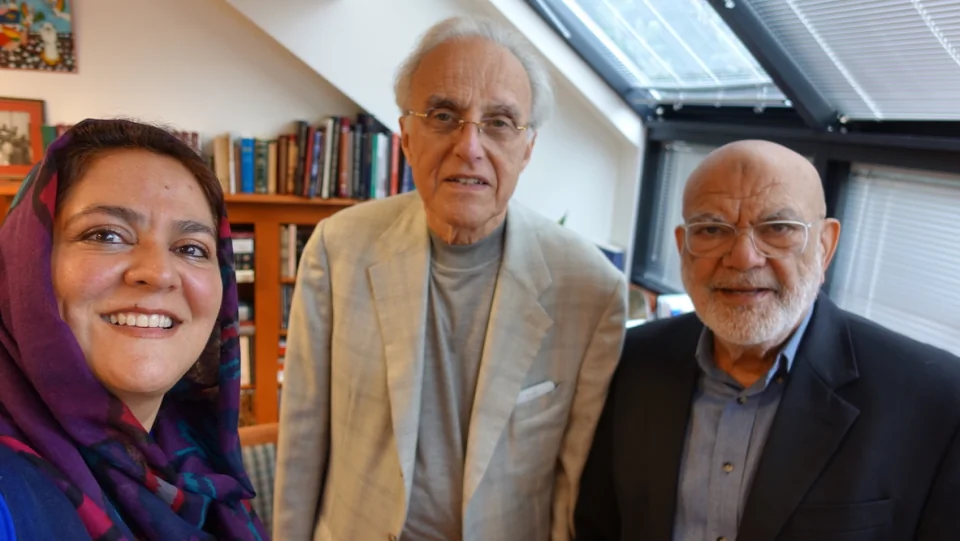
With Dr Esposito and Huma Beg
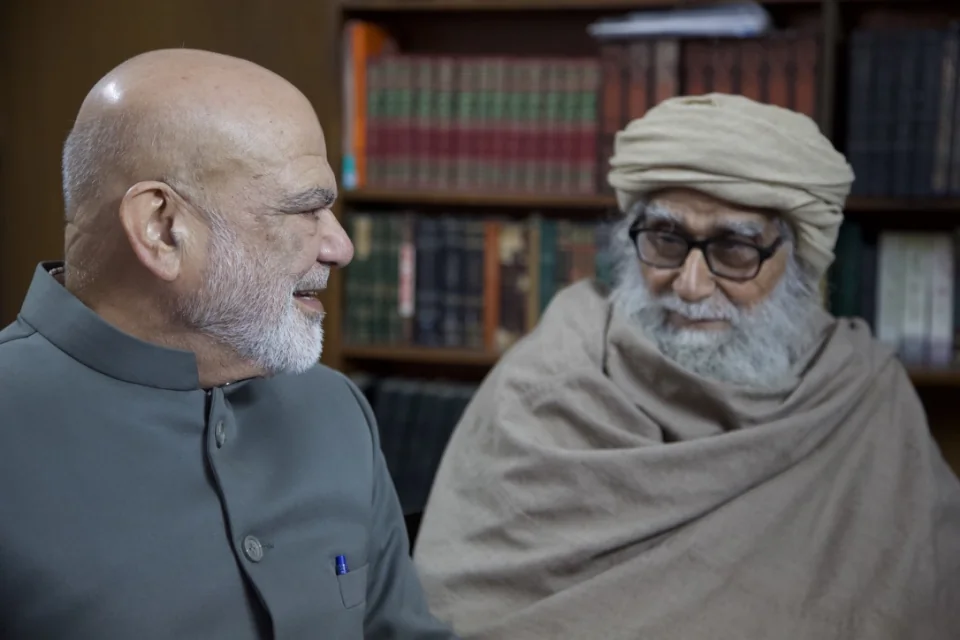
With Maulana Wahiduddin Khan
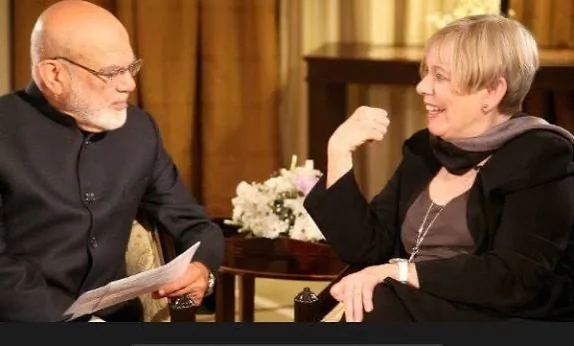
In conversation with Karen Armstrong
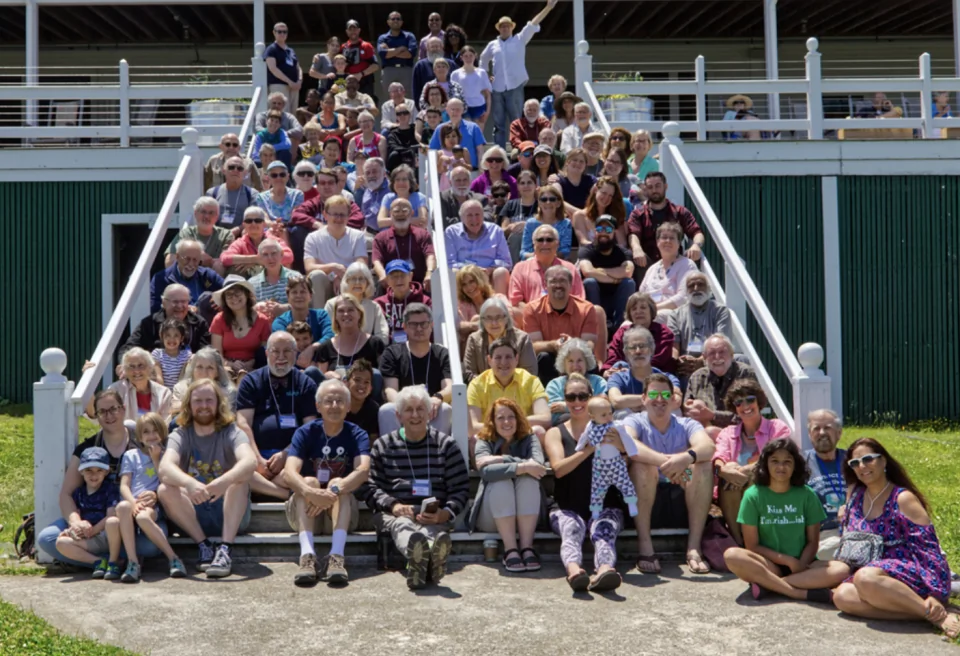
IRAS conference group photo, Star Island
IRAS conference group, Star Island, USA

Science & religion resources

ALL RESOURCES →
DR TARIQ MUSTAFA
WATCH · LISTEN · READ

Media Library

Films, interviews, talks and writings by and about Dr Tariq Mustafa — and the press that has covered his work.

01 · WATCH & LISTEN

Films & interviews

02 · TALKS

Talks & presentations

Scripts and slide texts of his lectures, available to read and download.

03 · READ

Books, papers & essays

BOOK · 2009The Case for GodBased on reason and evidence, not groundless faith — a response to the “New Atheism”.
PEER-REVIEWED · ZYGON · 2008Objective criteria to evaluate the authenticity of revelation
04 · IN THE PRESS

Coverage & profiles